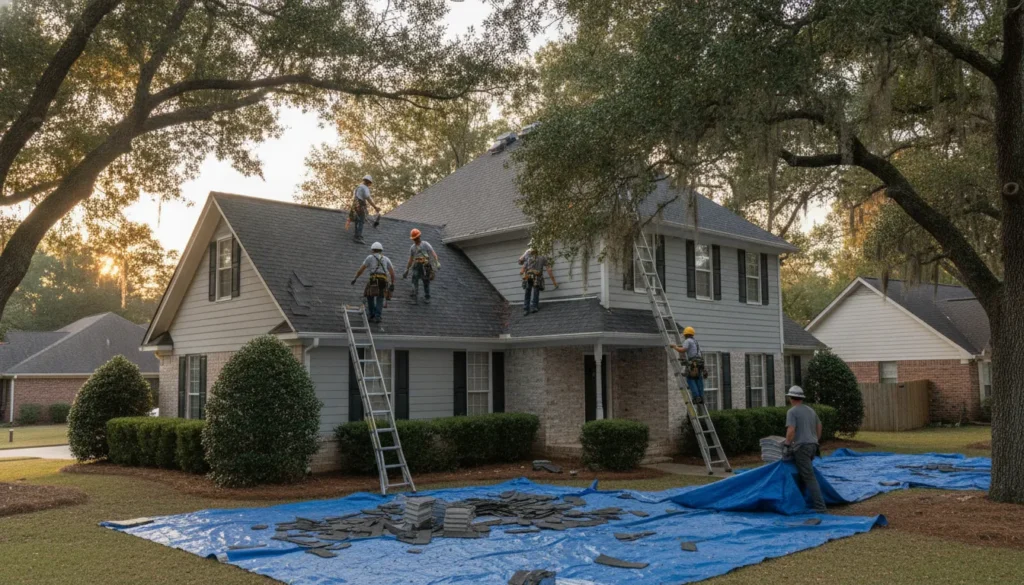

Replacing a roof in Georgia is more than the days a crew spends on the property. The full calendar includes an assessment, written proposal, material and crew coordination, installation, and final closeout. Weather, roof complexity, access, material availability, and whether the property is residential or commercial can all affect the sequence.
Request a roof replacement assessment from All In One Exteriors to discuss your property, scope, and scheduling considerations.
A roof replacement timeline georgia project usually has separate planning, scheduling, installation, and completion phases. All In One Exteriors states that a customized written proposal is typically delivered within 1-2 business days after assessment. But that turnaround is not a promise about the full project duration. The on-site replacement may be shorter than the time needed to prepare and schedule the work.
For homeowners and property managers, the most useful starting point is to separate what must happen before installation from the work completed on the roof. That distinction makes it easier to plan access, operations, materials, and realistic timing without treating one roof’s schedule as a universal rule.
What Is a Typical Roof Replacement Timeline in Georgia?
A roof replacement timeline in Georgia includes more than the days crews spend on the roof. The full calendar schedule usually moves through assessment, a written proposal, material and crew coordination, on-site installation, and final closeout. The installation itself may be relatively brief, while the planning and scheduling before it can add meaningful time.
For All In One Exteriors, the process begins with an assessment of the roof’s condition, damage, and material needs. The company then prepares a customized written proposal, coordinates materials and crew availability, completes the installation, and handles final inspection, debris removal, warranty registration, and payment processing. The stated one-to-two-business-day proposal turnaround applies to that proposal, not to the entire replacement project.
There is no single duration that safely applies to every Georgia roof. A small, accessible residential roof with a straightforward scope may move differently from a large home with multiple roof planes. A commercial property that must remain operational may follow another schedule. A project where removal reveals additional deck or assembly work may also take longer. OSHA describes roofing work as removal, repair, or installation. It also notes that recovery can range from replacing a few tiles to rebuilding the deck and everything above it. That difference in scope can change the schedule substantially.
As a cautious planning reference, one roofing-industry source describes one to two days as an ideal duration for the replacement itself. That is not a Georgia-wide standard or a promise for a particular project. Weather, roof access, material selection, site conditions, crew scheduling, and changes discovered during removal can all affect the calendar. A contractor should confirm the expected work sequence and the factors that could move it after assessing the property.
For homeowners, residential roof replacement planning can help organize the questions to ask before scheduling. If you are still deciding whether replacement is necessary, review the Georgia roof replacement warning signs first. Commercial property managers may need additional coordination around occupancy, access, and business operations. Their project timeline should be built around the specific building and roofing system rather than a generic day count.
Stage 1: Inspection, Scope, and the Written Proposal
The first phase turns a general concern into a defined roofing project. An assessment looks at the roof’s current condition, visible damage, drainage and ventilation concerns, access, and the surrounding property. For homeowners, this may clarify whether repair or replacement deserves closer consideration. A useful starting point is this guide to residential roof replacement planning.
Roof condition matters because the apparent problem may not show the full scope of work. OSHA describes roofing work as including removal, repair, or installation. It also notes that roof recovery can range from replacing a few tiles to rebuilding the deck and the roof assembly. That does not mean every Georgia roof needs extensive reconstruction. It does mean the assessment should document what can be observed and identify conditions that may affect the eventual scope. Roof surfaces can also be steep, slippery, or deteriorating, so inspection and access should be handled with appropriate care.
What the assessment should clarify
A thorough conversation should connect the inspection findings to the property’s use and priorities. For a home, that may include the roof’s age, recurring leaks, damaged areas, and how the roof integrates with other exterior components. For a commercial property, the review may also consider access, occupied areas, and operational coordination. The goal is not to force a decision during the first visit. It is to give the owner enough information to make a responsible next-step decision.
Material recommendations should follow the project rather than lead it. Roof slope, existing conditions, building use, and the desired performance of the system all influence what may be appropriate. Georgia property owners who want background before reviewing a proposal can also read about Georgia roof replacement warning signs; that resource addresses lifespan and warning signs without replacing a site-specific assessment.
The written proposal and the timeline
After assessment, All In One Exteriors prepares a custom written proposal. The stated turnaround is 1-2 business days. That is the time for the proposal, not a promise that installation will begin or finish within that period. The project still requires owner review, material and scope decisions, scheduling, crew coordination, and consideration of conditions that may emerge later.
A written proposal should make the intended scope understandable, including the recommended approach and the next planning step. Treat it as the bridge between inspection and scheduling, not as an installation guarantee. This distinction keeps a roof replacement timeline in Georgia realistic from the beginning.
Stage 2: Materials, Crew, and Scheduling
Once the scope and written proposal are clear, scheduling turns the project plan into a workable sequence. The roof system, slope, property use, material availability, crew timing, site access, and weather all affect the calendar. A residential replacement and a commercial project may require different coordination, even when both involve similar installation steps.
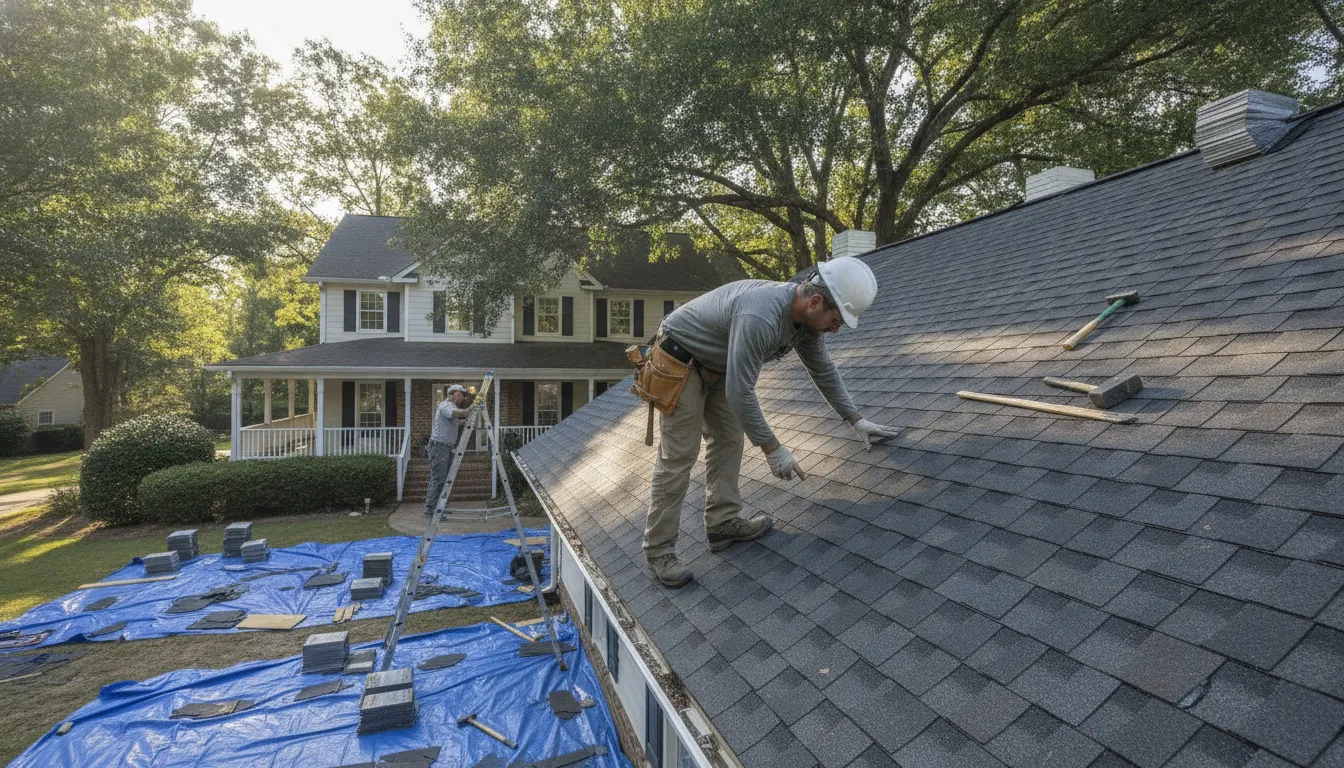
- Select materials for the actual roof. Material selection should follow the building’s requirements and roof slope rather than a one-size-fits-all preference. The University of Georgia’s construction standards identify TPO, asphalt shingles, and metal roofing categories, with the appropriate choice dependent on project requirements and roof slope. Review the options in this guide to choose roofing materials for Georgia, then confirm how the selected system fits the property’s design and intended use.
- Order and confirm the materials. After the material and scope decisions are made, the contractor can coordinate ordering. Availability is not a universal Georgia rule, but one competitor reports that ordering can take two to six weeks, or longer during a shortage. Treat that as a possible planning risk, not a prediction for every project. Confirm whether the selected products are available, whether substitutions would change the scope, and when materials are expected on site.
- Assign the crew and working window. Scheduling includes coordinating the timeline, materials, and crew assignment. The right window depends on project size, roof complexity, access, and whether the property is occupied or operating. For a commercial building, discuss delivery access, tenant or employee activity, customer traffic, and any work-area coordination early. Property managers can use this commercial roofing project planning resource to frame those conversations.
- Prepare the site. Before installation, confirm where vehicles, equipment, deliveries, ladders, and debris will be managed. OSHA notes that roof work commonly requires ladders or scaffolding and that surfaces may be steep, slippery, or deteriorating. Clear communication about access and protection helps the crew begin safely and reduces avoidable disruption.
- Build in a weather buffer. Do not schedule the work as though every planned day will have ideal conditions. Leave room for weather changes, material arrival, unexpected roof conditions, or a change in scope discovered after removal begins. A buffer is planning guidance, not an exact completion promise, and it helps set a more realistic roof replacement timeline in Georgia.
What Can Delay a Georgia Roof Replacement?
A roof replacement can take longer when conditions discovered during planning or installation change the original scope. The most common variables are weather, material availability, roof design, hidden damage, crew scheduling, site access, and decisions made after work begins. A careful schedule leaves room to address these issues rather than treating an early estimate as a guarantee.
Weather and material availability
Roofing work depends on safe, workable conditions. Rain can interrupt tear-off, drying, installation, and cleanup, while high winds or other severe conditions may require the crew to pause. Weather is not a reason to rush an unsafe installation. Material selection can also affect the calendar. A product that is not immediately available, or that requires special ordering, may move the installation date. One industry source describes material ordering as potentially taking two to six weeks or longer during a shortage. That is a possible delay factor, not a universal Georgia rule. Confirm the selected products and expected availability before setting a start date.
Roof complexity and concealed damage
A simple roof plane is easier to stage than a roof with multiple slopes, valleys, penetrations, additions, or difficult transitions. Steep or deteriorating surfaces also require additional attention to safe access and work setup. OSHA notes that roofing work can involve steep, slippery, or deteriorating surfaces and generally requires ladders or scaffolding for access: OSHA roof inspection and replacement guidance.
Once old materials are removed, the crew may find damaged decking or other conditions that were not visible during the initial assessment. That can require a documented scope change, additional materials, and owner approval before the affected area is completed. OSHA describes roof recovery as ranging from replacing a few tiles to rebuilding the deck and the roof assembly. This illustrates why the final scope can differ from the first visual estimate.
Crew availability, access, and changing scope
Contractor availability, crew assignment, delivery timing, and access to the property all influence scheduling. A commercial site may need coordination around tenants, deliveries, parking, or operating hours. At a home, limited driveway space, landscaping, pets, or neighborhood access can affect staging. Changes to materials, ventilation, flashing, or other agreed work can also extend the schedule. Ask how these decisions will be documented and approved before they affect the work sequence.
Emergency tarping or stabilization is separate from a full replacement. After storm damage, temporary plastic sheeting may protect a roof when permanent repairs cannot be completed immediately, while the later assessment determines whether repair or replacement is appropriate. For that separate process, review storm damage roof repair planning.
How Residential and Commercial Timelines Differ
The same planning phases apply to both property types, but the work is organized around different operating conditions. A home replacement usually centers on the household and the roof’s physical layout. A commercial project must also account for tenants, employees, deliveries, customer access, building systems, and the consequences of disrupting normal operations. These distinctions can change the sequence and schedule even when the replacement area looks similar.
Residential and commercial roof replacement timeline factors
| Factor | Residential replacement | Commercial replacement |
|---|---|---|
| Occupancy | Planning typically focuses on household routines, pets, vehicles, and safe access around the home. | Work may need to account for tenants, staff, customers, inventory, and building operations. |
| System and material | Sloped roof areas commonly require a material recommendation based on roof condition, slope, and the property’s needs. | Commercial systems may include TPO or EPDM, along with other options selected for the building and project requirements. UGA standards likewise identify TPO and other roofing categories while emphasizing project requirements and roof slope. Review the cited roofing standards. |
| Access | Driveway, yard, landscaping, and nearby structures may affect staging and material movement. | Roof access, loading areas, mechanical equipment, parking, and pedestrian routes may require more detailed site coordination. OSHA notes that roofing work generally requires ladders or scaffolding. See OSHA’s roofing safety guidance. |
| Coordination | The property owner usually coordinates decisions with the household and contractor. | Property managers may coordinate with occupants, vendors, facility staff, and other contractors before work begins or as conditions change. |
| Inspection and closeout | Closeout can include a final inspection, debris removal, and confirmation that the home and surrounding areas are usable. | Closeout may also require confirming affected access areas, rooftop equipment zones, tenant communication, and operational handoff. |
| Schedule risk | Weather, roof complexity, material availability, and concealed deck damage can change the planned sequence. | The same physical factors apply, with additional risk from access restrictions, occupancy coordination, system details, and the scope of work. OSHA describes roof recovery as ranging from limited tile replacement to rebuilding the deck and roof assembly, so an assessment matters before setting expectations. |
For a commercial property, begin coordination before the installation date is treated as fixed. A written scope should identify the roofing system, access assumptions, areas that must remain usable, and how newly discovered conditions will be handled. Property managers can use this commercial roofing project planning resource for related TPO and EPDM considerations. Homeowners can review how to choose roofing materials for Georgia before comparing proposals. Neither property type has a universal calendar: the dependable timeline is the one refined after the roof, materials, access, and operating constraints are evaluated.
What Should You Do Before Work Begins?
A little preparation can make the installation phase easier for everyone involved. Before the crew arrives, use this checklist to confirm what is included, how the property will be managed, and what should happen when the work is complete.
Document the questions you want answered
Write down concerns about visible damage, ventilation, drainage, access, noise, cleanup, and the expected sequence of work. If you manage a commercial property, note tenant schedules, deliveries, customer access, and any operating areas that may need special coordination. Keeping questions in one place makes the assessment and proposal easier to review.
Confirm the scope in writing
Read the proposal carefully and ask which roof areas, removal work, repairs, flashing, ventilation components, cleanup, and closeout steps are included. Ask how a change in visible or concealed conditions would be handled before authorizing additional work. The goal is a shared understanding of the project, not an assumption that every roof follows the same scope.
Review materials and site logistics
Confirm the proposed roofing system, color or finish where applicable, and any material choices that affect appearance or building use. If you are still comparing options, this guide can help you choose roofing materials for Georgia. Also confirm where materials, vehicles, dumpsters, and equipment will be placed. Roof work may require ladders or scaffolding, so identify gates, driveways, landscaping, fragile surfaces, and access restrictions in advance.
Protect belongings, occupants, and operations
Move vehicles and outdoor items away from the work zone when possible. Secure belongings in attic or upper-floor areas if vibration or dust could be a concern. For businesses, notify occupants about access changes and identify a contact who can make timely decisions if the scope needs clarification.
Ask about weather contingencies and closeout
Ask how rain or unsafe conditions could affect the planned start, daily work, and material protection. Do not treat a scheduled date as an unconditional completion promise. Before work begins, also confirm the closeout process: final inspection, debris removal, warranty registration, and payment processing. For a local example, review information about roof replacement in Marietta. You can also use the roof replacement costs and permits guide as an adjacent planning resource without treating any online figure as a project quote.
How Do You Know the Project Is Ready to Close Out?
Closeout is more than the crew leaving the property. It is the point at which the completed work is reviewed, the site is returned to a usable condition, and the remaining administrative steps are documented. For a homeowner, that process helps confirm that the replacement matches the agreed scope. For a commercial property manager, it also creates a clear handoff for occupants, staff, or future maintenance planning.
Start with a final inspection
The contractor and property owner should review the finished roof and the surrounding work area. This is an opportunity to discuss visible installation details, confirm that the agreed work was addressed, and identify any questions that should be resolved before the project is closed. The inspection should reflect the actual roof system and scope rather than a generic checklist. Roofing work can involve removal, repair, or installation, and the completed condition should be considered in that context. OSHA describes these activities as distinct types of roofing work.
Installation quality also depends on using compatible products and following the applicable manufacturer instructions. Public roofing specifications commonly require approved products and installation according to manufacturer recommendations, which is a useful general quality principle. These practices do not create a universal warranty term or guarantee a particular outcome, so ask what documentation applies to the specific project.
Confirm cleanup and project records
Debris removal is part of completion, not an optional extra after the timeline ends. Walk the property for leftover materials, packaging, and roofing debris, while also checking areas that may have needed temporary protection during the work. The closeout conversation should cover warranty registration, if applicable to the selected products and project, along with any care or maintenance information the owner should retain. Registration requirements and warranty terms vary, so keep the actual documents supplied for the project.
Payment processing is the final administrative step in the company’s stated completion workflow. Confirm the balance, receipts, and any agreed documentation before filing the project records. If the inspection, cleanup, registration, or payment questions are still unresolved, the project is not ready for a clean handoff.
When you are planning a replacement in Georgia, request an assessment for your roofing replacement project and ask how closeout will be handled before work begins.
Frequently Asked Questions
How long does a roof replacement take in Georgia?
There is no universal end-to-end schedule. A project typically moves through assessment, a written proposal, material and crew scheduling, installation, and completion. All In One Exteriors states that a customized proposal is generally delivered within 1-2 business days, but that is not the installation duration. Weather, roof complexity, material availability, access, and whether hidden damage changes the scope can affect the calendar.
What can delay a roof replacement project?
Common planning variables include severe weather, material availability, crew scheduling, difficult access, a complex roof design, and concealed deck or assembly damage discovered after work begins. For a commercial property, tenant activity and business operations may also require additional coordination. Emergency tarping or stabilization after storm damage is a separate response and should not be treated as the full replacement schedule.
How long is a roof replacement good for?
Service life depends on the roofing system, material, installation quality, exposure, maintenance, and roof conditions. A timeline article can help you plan the project, but it cannot establish a universal lifespan for every Georgia roof. Ask for a condition assessment and a material-specific explanation rather than relying on a single number.
What are signs that my roof may need to be replaced?
Consider an assessment when you see recurring leaks, widespread or worsening damage, aging materials, or conditions that make repairs unreliable. Storm damage may require immediate stabilization before a replacement decision. An inspection can help distinguish a repairable problem from a larger replacement scope and clarify the next planning step.
Ready to Plan Your Georgia Roof Replacement?
A clear assessment can help you understand the work involved, identify scheduling considerations, and plan the next phase with fewer surprises. Georgia homeowners and commercial property managers can request a roof replacement assessment or project consultation from All In One Exteriors. Share your property’s needs, access considerations, and timing goals so the conversation starts with practical project details.