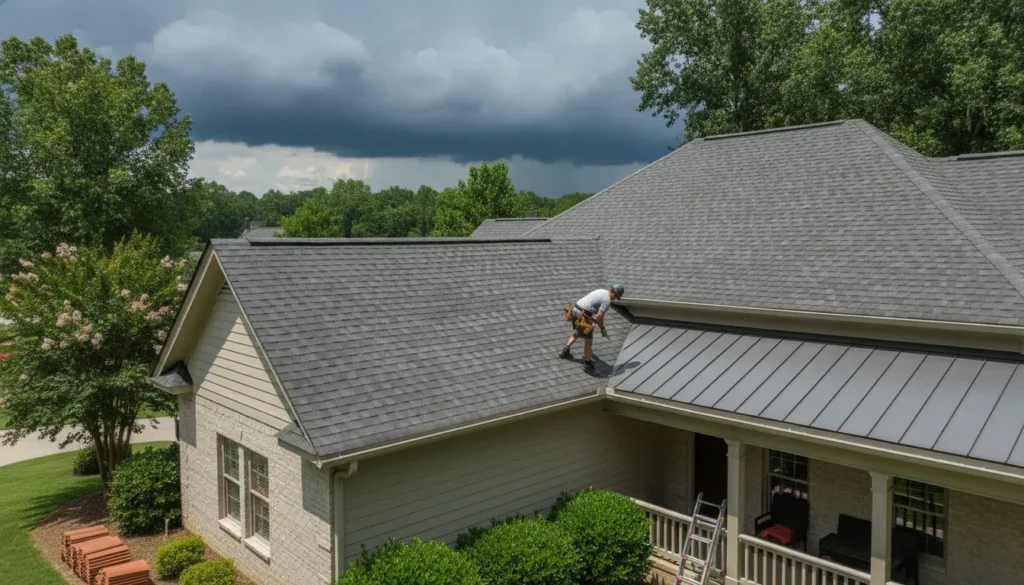

The best roofing materials for Georgia’s climate balance heat, humidity, heavy rain, wind, and hail with your home’s design, structure, and maintenance needs. For many Georgia homeowners, architectural asphalt shingles offer the most practical combination of value and weather performance. The broader residential roofing in Georgia guide provides the foundation, while this comparison focuses on how asphalt, metal, and tile respond to local conditions. Metal and tile can be better fits when long-term durability, heat reflection, or architectural style justifies their different installation requirements.
Ready to compare materials for your home? Schedule a roofing evaluation with All In One Exteriors so the recommendation starts with your roof’s actual condition, pitch, ventilation, drainage, and storm exposure.
There is no single material that wins for every North Georgia home. The right choice is a complete roofing system, not just the visible roof covering. Underlayment, flashing, ventilation, edge details, fasteners, and drainage all influence how well a material performs through Georgia’s weather.
Why Georgia’s Climate Demands Different Roofing Choices
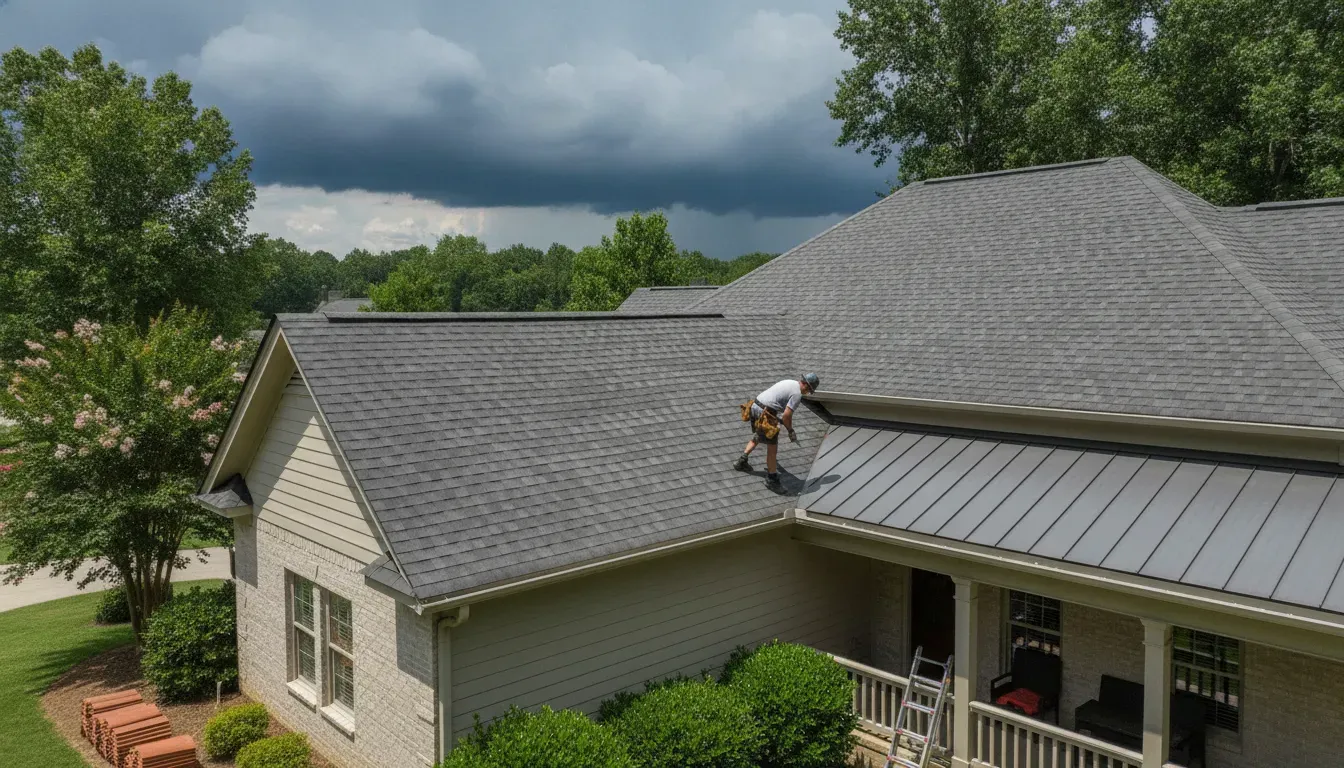
Georgia roofs face several stressors at the same time. Summer heat and ultraviolet exposure can age roof coverings, while humidity and shade can keep surfaces damp after rain. Heavy downpours test valleys, flashing, gutters, and other water-management details. Severe thunderstorms can add wind and hail damage to the list.
That combination changes how homeowners should compare materials. A roof that performs well in a dry climate may still need different ventilation, algae-resistance, drainage, or storm-performance considerations in Georgia. Start with the conditions around your home rather than choosing from a color chart alone.
- Heat and UV exposure: Dark roof surfaces absorb solar energy, and repeated heating and cooling can stress materials, sealants, and flashing.
- Humidity and organic growth: Moisture, shade, leaves, and limited airflow can encourage algae or moss-like buildup and make drainage problems harder to spot.
- Heavy rain: Water must move efficiently through valleys, roof-to-wall transitions, gutters, and downspouts without backing up beneath the covering.
- Wind and hail: The roof covering, fasteners, flashing, and installation details all matter during a severe storm. Impact resistance can be an important product-selection question.
- Roof design: Steep slopes, low-slope sections, complex valleys, dormers, and additions can require different details within the same roofing project.
For a broader look at residential roofing decisions, use the residential roofing in Georgia guide as the foundation. This article focuses more narrowly on how common materials respond to the state’s climate.
Asphalt Shingles in Georgia: What You Need to Know
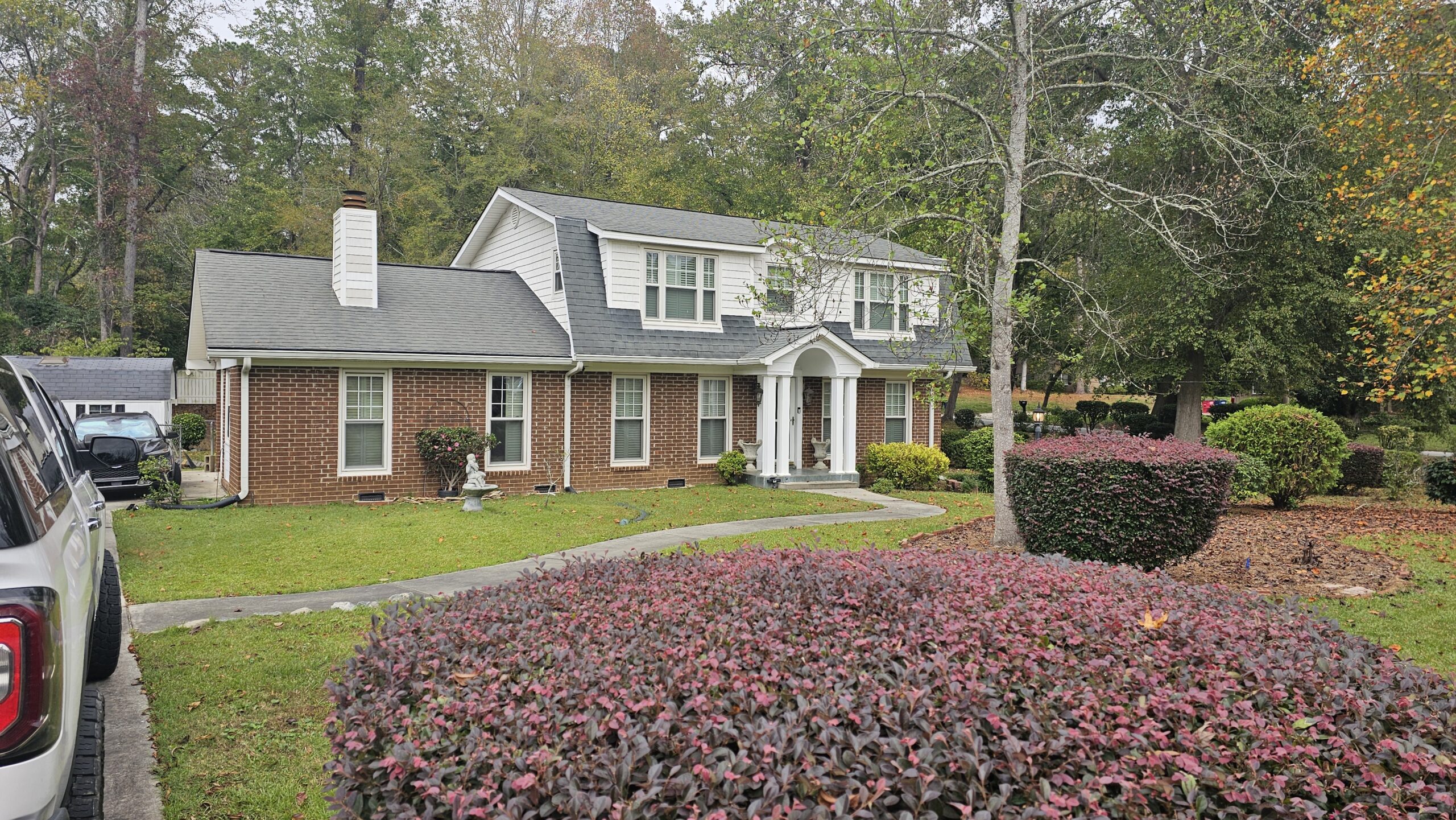
Asphalt shingles remain a leading choice for Georgia homes because they are widely available, adaptable to many roof designs, and offered in a range of performance and appearance levels. Architectural or dimensional shingles are generally thicker and more layered than basic three-tab products, giving homeowners more options for wind performance, appearance, and long-term value.
Why architectural shingles work well for many homes
- They fit common residential roof shapes and can be installed without the structural demands of heavier materials.
- They are available in algae-resistant options that help manage the dark staining associated with humid conditions.
- They offer many colors and profiles for brick, fiber cement, stone, and other exterior styles.
- They make it easier to balance project scope, appearance, and budget without moving to a heavier roofing system.
- Many product lines include wind, algae, or limited lifetime warranty language, but the exact terms depend on the product and installation.
Three-tab shingles may still be appropriate for some projects, but homeowners should compare their wind performance, appearance, expected service life, and replacement plans with architectural options. A small difference in product selection can affect how the roof looks and how it responds to repeated weather exposure.
What to look for in Georgia asphalt shingles
Ask about algae-resistant granules, wind ratings, impact classifications, compatible underlayment, and ventilation requirements. If hail is a concern, ask whether an impact-resistant product is available and what the manufacturer actually covers. Do not assume an impact rating guarantees that a roof will avoid damage or that an insurer will approve a discount. Those outcomes depend on the product, installation, storm, policy, and insurer.
Asphalt shingles are also sensitive to installation quality. Exposed fasteners, poor valley detailing, inadequate ventilation, or blocked drainage can shorten the useful life of a good product. That is why the roof system and the installer deserve as much attention as the shingle brand.
All In One Exteriors offers several GAF shingle options, including products designed for different appearance and impact-resistance goals. Review the available choices on the GAF roofing shingles page, then confirm which products fit your roof and project requirements.
Metal Roofing in Georgia Heat and Humidity
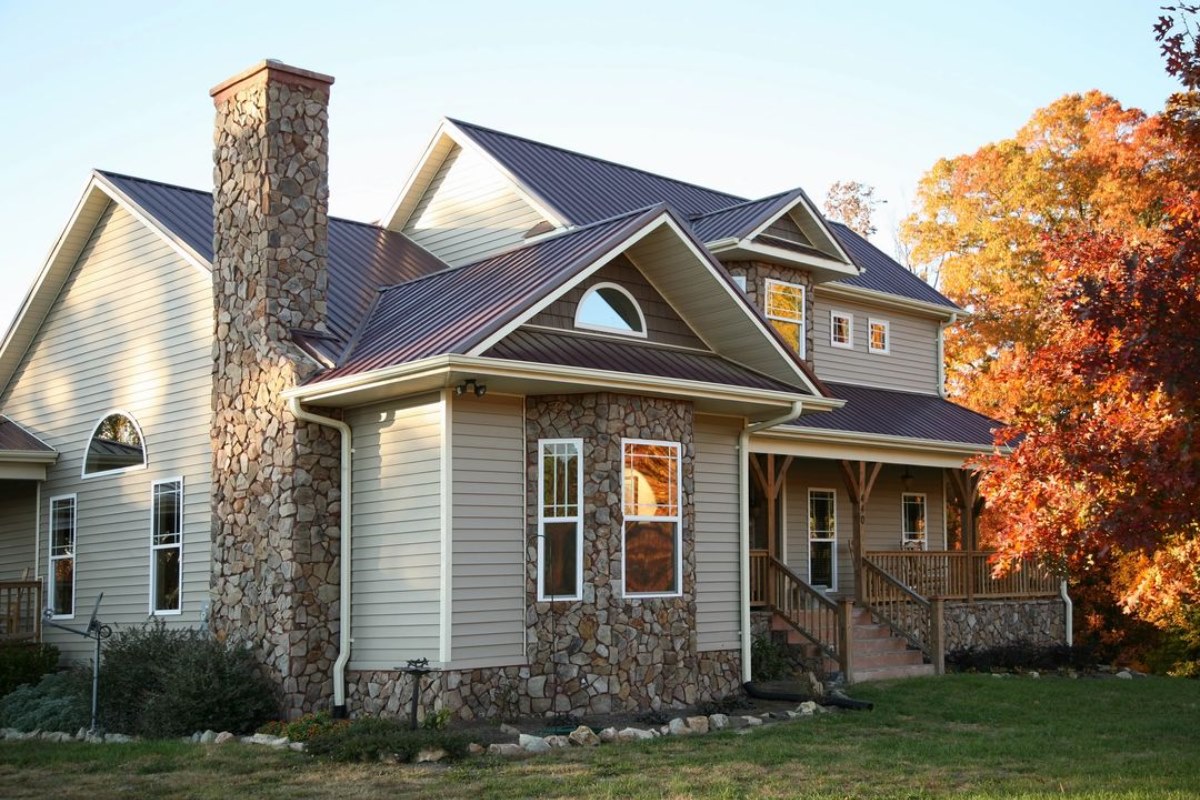
Metal roofing can be a strong choice for Georgia homeowners who want a long-service roofing system and are comfortable with a higher level of planning and investment. Properly selected and installed metal can reflect more solar energy than a dark, conventional roof surface, and its surface does not provide the same conditions for algae growth as many organic roof coverings.
Strengths of metal roofing
- Heat performance: Reflective finishes and appropriate color selection can reduce heat absorption at the roof surface.
- Moisture management: Metal does not absorb water like some roofing materials, although seams, penetrations, valleys, and fasteners still require careful detailing.
- Storm considerations: Metal panels can provide strong wind performance when the system is engineered and attached correctly. Severe hail can still dent panels or damage finishes.
- Design flexibility: Standing seam and metal shingle profiles can complement modern, traditional, farmhouse, and other home styles.
- Low algae concern: The panel surface is less likely to show the same type of algae streaking common on some asphalt roofs.
Metal is not maintenance-free. Fasteners, coatings, penetrations, transitions, and areas where dissimilar metals meet should be inspected periodically. The roof also needs an installer who understands thermal movement, underlayment, flashing, and the specific panel system. A metal roof that is not detailed for expansion, drainage, and penetrations can develop problems even when the panels themselves are durable.
Homeowners comparing metal systems should ask whether the proposed product is standing seam, exposed-fastener, or a metal shingle system. They should also review finish information, hail expectations, noise concerns, attic insulation, and the manufacturer’s warranty terms. The standing seam metal roofing overview provides a starting point for that conversation.
Tile Roofing in Georgia: Cement and Clay Options
Clay and concrete tile can suit Georgia homes where the architecture, structure, and budget support a heavier roofing system. Tile handles sunlight well and can offer a distinctive appearance, especially on Mediterranean, Spanish, stucco, or other style-driven homes. Individual tiles can still crack from impact, improper walking, or installation damage, so the underlayment and replacement process matter.
Advantages of clay and concrete tile
- Tile can provide a durable exterior layer with strong resistance to heat and sunlight.
- Its profiles and colors can reinforce a home’s architectural character.
- Tile can allow air movement beneath individual units, depending on the system and installation.
- Many tile roofs can be repaired in sections when the supporting system and underlayment remain serviceable.
Important limitations
- Concrete and clay tile are heavier than common asphalt shingles, so the home’s framing and roof structure must be evaluated.
- Tile installation requires specialized layout, flashing, fastening, and underlayment knowledge.
- Hail, falling branches, and foot traffic can crack individual tiles even when the overall system is sound.
- Broken tile should not be ignored because the underlayment below it may become exposed to water and sunlight.
Tile is not automatically the best roofing material for Georgia simply because it can last a long time. It is the better fit when its weight, cost, style, maintenance, and repair requirements match the home. A roofing evaluation should confirm whether the structure and roof geometry can support the system before a homeowner chooses it for appearance alone.
How to Choose the Right Material for Your North Georgia Home
Use a structured comparison instead of asking which material is universally best. A qualified roofer should connect the product recommendation to the home’s actual conditions.
- Inspect the existing roof and structure. Look for deck condition, ventilation, flashing, drainage, roof pitch, additions, and signs of storm or moisture damage.
- Define the home’s weather exposure. Consider open exposure to wind, mature trees, shade, hail history, roof color, and areas where water or debris collects.
- Match the material to the roof design. Complex slopes, valleys, low-slope sections, dormers, and transitions may require different details or products.
- Compare the complete system. Include underlayment, flashing, ventilation, drip edge, ice and water protection where appropriate, gutters, and cleanup, not only the top-layer material.
- Review maintenance expectations. Ask what should be checked after storms, how algae or debris will be managed, and how damaged units or panels are repaired.
- Read the product and workmanship terms. Confirm who provides each warranty, what maintenance is required, whether registration is needed, and what exclusions apply.
- Plan for the home’s ownership horizon. A lower initial project scope may be practical for one homeowner, while a long-term owner may value durability, energy performance, or a particular architectural finish.
Mid-article decision point: If you are comparing asphalt, metal, and tile after a leak or storm, do not select a material before the roof deck, flashing, and ventilation are evaluated. Review roof replacement options with All In One Exteriors and ask for a recommendation tied to your home’s condition.
What Does Material Choice Mean for Your Warranty?
Material choice affects which product warranty language applies, but a warranty is not a substitute for correct design or installation. Coverage may depend on the exact product, installation method, ventilation, maintenance, registration, weather event, and whether a qualified contractor installed the system. Manufacturer warranties and workmanship guarantees are separate documents with different terms.
- Ask for the exact product name and the current manufacturer warranty document.
- Confirm whether the installer must meet specific training, registration, or documentation requirements.
- Ask what ventilation, underlayment, flashing, and maintenance conditions affect coverage.
- Clarify which party handles a product issue and which party handles a workmanship issue.
- Keep project records, photographs, invoices, inspection notes, and warranty paperwork together.
Do not choose a roof based only on a headline warranty length. Compare the exclusions, transfer rules, wind and impact language, maintenance obligations, and remedy provisions. Your contractor should explain the documents for the specific material being proposed, without promising coverage or approval for a future claim.
Questions Georgia Homeowners Ask About Roofing Materials
What is the best roofing material for Georgia’s climate?
For many Georgia homes, architectural asphalt shingles provide the most balanced combination of availability, design flexibility, weather performance, and project practicality. Metal or tile may be a better fit when the homeowner prioritizes long-term durability, heat reflection, or a specific architectural style and the home can support the system.
Are metal roofs good for Georgia heat and humidity?
Yes. Metal roofing can reflect solar energy, resist algae growth, and perform well in humid conditions when the panels, underlayment, flashing, fasteners, and ventilation are properly selected and installed. Severe hail can still dent metal, so ask about finish and impact expectations rather than assuming the material is storm-proof.
Are asphalt shingles a good choice in hail-prone parts of Georgia?
They can be. Compare standard and impact-resistant products, review their tested classifications, and ask how the manufacturer’s terms apply. No shingle eliminates hail damage, and an impact rating does not guarantee insurance coverage or savings.
Can every Georgia home support a tile roof?
No. Clay and concrete tile add substantial weight and require appropriate structure, roof geometry, underlayment, flashing, and specialized installation. A professional evaluation should confirm the home’s capacity and project requirements before tile is selected.
What should I do after hail or wind damages my roof?
Document what you can safely see from the ground, protect interior areas from active leaks, and arrange a professional assessment. Avoid walking on the roof or removing damaged materials before the condition is documented. A roofing evaluation can separate storm damage from ordinary age-related wear and identify the next repair or replacement step.
Choose a Georgia Roofing System Based on Your Home
The best roofing materials for Georgia’s climate are the ones that match your home’s structure, roof design, weather exposure, maintenance plan, and long-term goals. Architectural asphalt shingles are a practical starting point for many homeowners. Metal can offer strong heat and moisture performance when its higher planning requirements fit the project. Tile can deliver a distinctive, durable system when the structure and installation details support its weight.
All In One Exteriors serves Georgia property owners with roofing installation, replacement, repairs, storm-damage evaluations, and related exterior work. Request a roofing consultation to compare materials based on your actual home, not a one-size-fits-all claim.