
An active roof leak can spread beyond the spot where water first appears. For emergency roof leak repair in Woodstock, the first priorities are protecting people, limiting damage inside, and arranging a qualified assessment without climbing onto a wet roof. The right response depends on the source, the amount of water, and whether the building is safe to occupy.
Request an emergency roofing evaluation
What counts as a roof leak emergency?
A roof leak needs urgent attention when water is entering the building now, is spreading, or is affecting an area where it can create an immediate safety hazard. A steady drip into a bucket is different from water moving across a ceiling, running down a wall, or reaching electrical equipment. A sudden opening after wind, hail, or a fallen limb can also leave the roof exposed to additional rain.
Not every stain requires an after-hours response. A dry, old ceiling mark with no current moisture may call for a prompt inspection, but it is not the same as active water entry. If you are uncertain, describe what you can observe and ask the roofing contractor how they classify the situation. Do not assume that a particular repair is necessary until the roof and affected areas have been assessed.
- Urgent: Water is actively entering, the ceiling is sagging, water is near electrical systems, or roof material is visibly displaced.
- Prompt: A recent storm was followed by a new stain, damp insulation, or intermittent dripping that has paused.
- Schedule: The mark is dry and unchanged, with no current leak, but you want to find its cause before the next rainfall.
These categories are practical starting points, not a substitute for an on-site safety assessment. If there is a risk of fire, shock, structural failure, or injury, leave the affected area and contact the appropriate emergency service before arranging roof work.
What should you do first when water is coming in?
Start from inside the building. Keep occupants away from wet floors, damaged ceilings, and any area where water may contact a light, outlet, appliance, or exposed wire. Do not touch electrical equipment or stand in water to reach it. If it is safe to do so, move furniture and belongings out of the affected area.
- Protect people. Keep children, visitors, employees, and pets away from the leak and any sagging ceiling. If a ceiling is bulging, do not puncture it or stand below it; water and ceiling material may fall without warning.
- Reduce interior damage. Place a container under a stable drip if doing so does not require entering a hazardous area. Use towels or a plastic covering to protect nearby possessions, but do not cover electrical devices or block a route out.
- Contain water carefully. If water is spreading across a floor, keep foot traffic away and move items only when it is safe. Avoid using household electrical equipment on wet surfaces.
- Call for help. Contact a roofing contractor to describe the leak and arrange an assessment. Explain whether water is still entering, where it is appearing, and whether there is visible storm damage.
- Record the condition. Take photos or short videos from a safe, dry location. Note when the leak began and whether it changes with rainfall or wind.
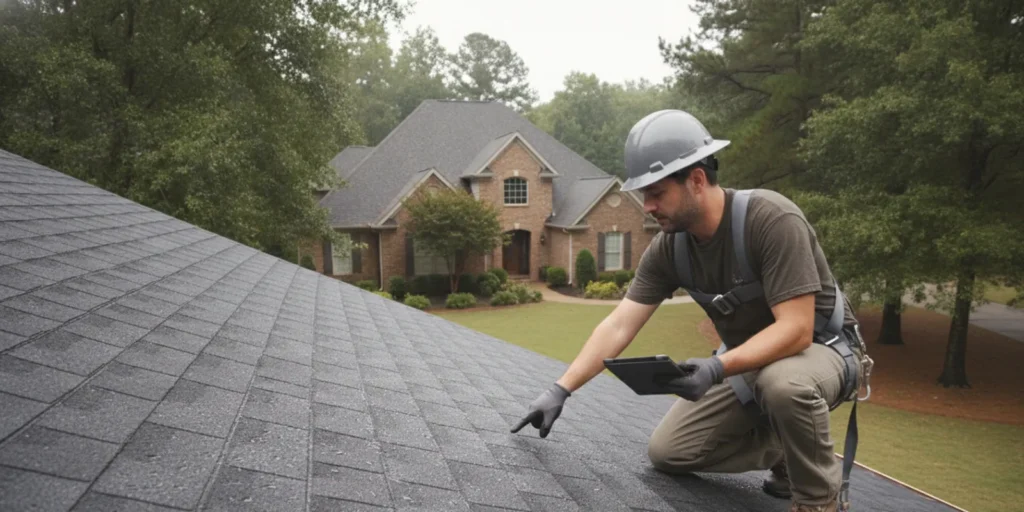
Do not climb a ladder or walk on a wet, steep, damaged, or debris-covered roof. Roof surfaces can be slippery, and storm damage may make them unstable. Do not pull off attached branches or move roofing pieces overhead. A professional can determine whether temporary protection or a permanent repair is appropriate after assessing access and conditions.
How can you limit damage without making the situation worse?
Interior steps can buy time, but they do not repair the opening in the roof. Keep the response simple and safe. Put a container under a drip only if the ceiling is not sagging and the floor is safe. If water is entering around a light fixture, do not handle the fixture or the switch. Leave that area and seek qualified assistance.
When a ceiling has a growing bulge, avoid standing underneath it or attempting to release the water. A sudden collapse could cause injury. If the affected area is near a breaker panel, wiring, or other electrical equipment, do not enter it. If there is a strong odor, smoke, or a suspected electrical problem, leave the area and contact emergency services or a licensed electrical professional as appropriate.
For a commercial property, take similar precautions but also control access to the affected room or walkway. Let building occupants know which area is closed, protect inventory where it is safe to do so, and document any operational interruption. Do not send an employee onto the roof to investigate. A commercial roof may have hidden penetrations, fragile surfaces, or access hazards that are not obvious from inside the building.
Municipal winter-emergency guidance from Fremont, New Hampshire tells residents to hire a contractor for roof leaks and to address branches that could fall on a structure. The location and weather context differ from Woodstock, but the practical point is relevant: keep away from roof hazards and arrange qualified help rather than taking on dangerous work yourself. Read the municipal preparedness instructions.
What information should you give the roofing contractor?
A clear description helps the contractor understand the urgency and plan the assessment. You do not need to diagnose the roof. Share observations, not guesses about what failed.
- When you first noticed water and whether it is still entering.
- The room or building area where water appears, plus any visible stains or damp materials.
- Whether the leak began during or after heavy rain, wind, hail, or a nearby tree impact.
- Whether the ceiling is bulging, material has fallen, or water is near electrical equipment.
- What you can safely see from the ground, such as a fallen limb or missing roofing material.
- Whether the property is a home, a multi-unit building, or a commercial facility, and whether access is restricted.
Photographs of the interior can be useful when taken from a safe position. If you have exterior images taken before the event, preserve them. Do not climb to obtain new roof photos. A contractor may need to inspect the roof, attic, flashing, penetrations, or drainage details to identify the entry point. The visible ceiling stain alone may not show where water entered because water can travel along framing or roof layers.
For a broader overview of the company’s roof repair service, see the repair page. If there was hail, wind, or another severe-weather event, the storm damage roofing information may also help you understand what details to record.
What happens during an emergency roof evaluation?
An evaluation should begin with the reported symptoms and safe access. The contractor can ask where the leak appears, when it occurs, and whether there has been recent storm activity. Depending on conditions, the assessment may include an exterior roof review and an examination of accessible interior areas. The goal is to locate a likely water-entry path, identify visible damage, and explain what work may be needed.
Water marks can be misleading. A stain on one side of a room does not prove the roof opening is directly above it. The source could involve a roof seam, flashing, a penetration, a valley, or another transition. On a low-slope commercial roof, the relevant details may be different from those on a pitched residential roof. The contractor should explain what was observed and separate confirmed conditions from items that need further investigation.
Ask for a written scope that says what will be repaired, what materials or areas are included, and whether temporary measures are separate from permanent work. If the roof cannot be safely evaluated because of weather or access conditions, ask what can be determined now and what requires a follow-up visit. Avoid approving a broad replacement based only on a ceiling stain or a brief phone description.
All In One Exteriors works on residential and commercial roofing in Georgia. Homeowners can review its residential roofing information, while property managers can review the separate commercial roofing service page. The roof type and building use affect what questions to ask and what repair scope makes sense.
How do temporary protection and permanent repair differ?
Temporary protection is intended to reduce additional exposure until conditions allow a lasting repair. It may be considered when there is an opening or storm damage and immediate permanent work is not practical. The correct method depends on roof design, material, access, and weather. A temporary measure is not proof that the underlying issue has been permanently resolved.
A permanent repair addresses the source of water entry and restores the affected roofing assembly as appropriate. The scope may be limited or may require work across a larger area if the damage extends beyond the visible symptom. Ask the contractor to explain why the proposed repair area is necessary, how the work will address the suspected entry path, and what signs would warrant additional investigation.
| Work stage | Purpose | Questions to ask |
|---|---|---|
| Initial response | Assess reported urgency and discuss safe next steps. | Is water actively entering, and what should occupants avoid? |
| Temporary protection | Limit exposure when immediate permanent work is not feasible. | What does the temporary measure cover, and when should it be revisited? |
| Permanent repair | Address the identified roof condition with a defined scope. | Which area and materials are included, and what is excluded? |
| Follow-up | Review the repair or reassess if symptoms continue. | How should a recurring stain or leak be reported? |
The table is a planning aid, not a promise that every property needs each stage. A contractor should explain which steps apply to the roof in question and why. If a storm caused the damage, keep notes and photos of the observed conditions, but do not assume that a particular repair or insurance decision will follow.
What should Woodstock homeowners and property managers ask before authorizing work?
In an urgent situation, it is easy to focus only on stopping water. A short set of direct questions can still clarify the decision. Ask what was found, what is urgent, and whether the proposed work is temporary or permanent. Request the scope and cost in writing before authorizing work whenever circumstances allow.
- What visible condition appears to be allowing water in?
- Is the proposed work temporary protection, a permanent repair, or both?
- What areas and materials are included, and what is outside the scope?
- Are any additional conditions uncertain until material is opened or access improves?
- What should I monitor after the work, and whom should I contact if water returns?
- For a commercial building, what access, occupancy, or equipment restrictions should be coordinated?
Ask for any warranty terms in writing and confirm what they cover. Warranty coverage can depend on the product, installation, and stated terms, so do not rely on a general verbal description. The same care applies to financing: review current application terms and approvals directly, rather than assuming a particular payment or outcome. Neither a contractor nor a storm event can guarantee an insurance decision.
For a permanent replacement recommendation, ask why a localized repair is or is not suitable. Roof age, condition, prior repairs, and the extent of damage may all matter. You can review roof replacement information as a separate option, but an active leak does not automatically mean the entire roof must be replaced.
How should you handle storm damage and insurance documentation?
If the leak followed hail, wind, or a fallen limb, document what you can safely observe and keep copies of estimates, invoices, and communications. Note the date you noticed the damage and take photos of interior conditions from a safe location. Do not discard damaged materials or authorize a major scope solely because you think insurance will pay for it.
Coverage, deductibles, deadlines, and claim decisions depend on the policy and insurer. Read your policy and contact your insurer directly when you need to understand notice requirements or coverage. A roofing contractor can describe observed roof conditions and proposed work, but should not promise claim approval, a particular payment, or a coverage result. All In One Exteriors has a page about storm-damage roof claims in Georgia for readers who want to review the general process.
When is a leak a repair issue, and when might replacement be discussed?
A leak is a symptom, not a diagnosis. A limited repair may be appropriate when the cause is localized and the surrounding roof remains serviceable. Broader work may be discussed if an evaluation finds widespread deterioration, repeated failures, extensive storm damage, or a roof system that cannot be repaired reliably in the affected area. These are possibilities to assess, not conclusions to draw from the indoor stain alone.
Ask the contractor to show or describe the evidence supporting the recommendation. If a repair is proposed, understand what it is intended to fix and what conditions remain outside its scope. If replacement is proposed, ask how the documented condition affects the roof as a whole, what alternatives exist, and what each option includes. Comparing a written repair scope with a written replacement scope can help you make a more informed decision.
For homes, the material and roof design influence repair choices. For commercial properties, membrane type, seams, drainage, rooftop equipment, and access can shape the evaluation. A TPO roofing system and an EPDM roof, for example, are distinct low-slope systems and should not be treated as interchangeable in a repair discussion. Ask for recommendations specific to the system installed on your building.
What should you monitor after a repair?
Keep an eye on the area that showed water, particularly during the next periods of rain. A dry ceiling immediately after a repair does not always tell the full story if the roof has not yet experienced similar weather. Note any new discoloration, dampness, odor, or renewed dripping, and report it promptly to the contractor. Photos taken from the same safe indoor position can make changes easier to describe.
Ask whether the completed work addresses only the identified leak or includes any related areas, and keep the written scope and payment records with your property documents. If water reappears, explain when it happened and whether it seems to match the original location. Do not assume that a recurring stain proves the same defect or that it is covered under a particular warranty; ask the contractor to review the condition and check the written terms.
For property managers, record who reported the problem, when the affected area was restricted, what work was completed, and whether building operations were affected. Share relevant roof-access rules and equipment locations with the contractor before a follow-up visit. Organized notes can help the next assessment focus on changes since the initial response rather than repeating uncertain assumptions.
Frequently asked questions
Should I put a tarp on a leaking roof myself?
No. Do not climb onto a wet, steep, storm-damaged, or unstable roof to install a tarp. Falls and hidden roof damage can make the work dangerous. Contact a qualified contractor and ask whether temporary protection can be arranged safely.
Can I tell where the roof is leaking by looking at the ceiling stain?
Not reliably. Water can travel along framing or other roof and ceiling layers before it becomes visible indoors. The stain identifies an affected area, but the source may be some distance away and needs assessment.
What if the leak stops when the rain stops?
A pause in dripping does not confirm that the roof is sound. Record where water appeared and when, then arrange an evaluation, especially if the stain is new or the leak followed storm damage. Keep monitoring the area during later rainfall.
Does storm damage mean my insurer will pay for a roof repair?
No specific coverage outcome can be assumed. Your policy, the facts of the damage, and your insurer’s review determine the claim decision. Contact the insurer about policy requirements and keep clear records of observed conditions and repair proposals.
Do commercial roofs need a different emergency response?
The safety priorities are similar, but access, rooftop equipment, roof membranes, and building operations can add considerations. Restrict access to affected interior areas, protect people and property where it is safe, and arrange an evaluation suited to the roof system and facility.
Arrange a roofing consultation
Next steps for an active roof leak
For an active leak in Woodstock, focus first on safety and preventing avoidable interior damage. Document what you can see without climbing, explain the urgency clearly, and ask for a written explanation of any recommended temporary or permanent work. A careful evaluation can help you understand the condition and choose a practical next step for your home or commercial property.