
After strong winds move through Milton, a roof can look normal from the driveway while shingles, flashing, or other details have shifted. If you are searching for wind damage roof repair in Milton, start with safety and a careful record of what you can observe; a qualified evaluation can help determine whether the roof needs a targeted repair or a broader plan.
Ready to address possible wind damage? Request a roof repair evaluation or call (404) 445-8136.
What wind damage can affect on a roof
Wind does not have to remove a whole section of roofing to create a concern. It may lift the edge of a shingle, loosen a ridge cap, disturb flashing near a wall or chimney, or push a branch against the roof. Wind-driven rain can then find a vulnerable opening. Sometimes the visible sign is indoors, such as a new ceiling stain, while the point of entry is somewhere else on the roof.
Asphalt shingles are installed in overlapping courses, with their edges and seals helping the roof shed water. An IIBEC historical overview of asphalt-shingle roof systems discusses weak tab seals among factors associated with wind damage. That context is a reason to have lifted or unsealed shingles evaluated rather than pressing them down or assuming they are secure.
Other roof systems have their own vulnerable details. On a low-slope roof, a technician may examine seams, membrane edges, penetrations, and perimeter attachment. On tile or metal roofs, displaced or damaged pieces, fasteners, and transitions may matter. The correct repair depends on the roof material, how it is assembled, and what the inspection finds.
Wind Damage Roof Repair in Milton: What should homeowners do first?
- Keep people away from hazards. Stay clear of downed power lines, hanging limbs, loose roofing, and areas where water is entering near electrical fixtures. Do not climb onto the roof or use a ladder in windy, wet, or otherwise unsafe conditions.
- Look from a safe place. From the ground or a window, note visible missing or lifted shingles, debris, damaged gutters, or a change in the roofline. Avoid walking under visibly unstable materials.
- Protect belongings indoors. If water is entering, move furniture and valuables if it is safe to do so. Use a container to catch drips and take reasonable steps to limit further interior damage. Do not touch wet electrical equipment.
- Record what you see. Take dated photos or video from a safe location. Photograph interior stains and damaged belongings too. Make a short note of when the wind occurred and when you first noticed a problem; retain receipts for emergency measures.
- Arrange an evaluation. Contact a roofing professional to assess the roof and explain what is damaged, what needs attention, and what can wait. If you suspect an insurance claim may be involved, contact your insurer directly about its process and deadlines.
Do not remove roofing materials, apply sealant, or attempt a temporary repair unless a qualified person has advised that it is safe and appropriate. A well-intended patch can conceal the source of water, create a new problem, or make later assessment harder. If the roof is actively exposed, ask a professional what immediate protective step is suitable for the conditions.
What can you safely check without climbing?
A ground-level look can help you report a concern, but it cannot confirm that a roof is sound. Use binoculars or a phone camera with zoom if available, and stay on stable ground. Check several sides of the home rather than focusing only on the area where you noticed a leak.
- Look for shingle pieces or other roofing material on the ground, in a yard, or in a downspout outlet.
- Notice irregular patches, exposed-looking areas, or roof edges that appear uneven. Perspective and shadows can be misleading, so treat these as observations, not a diagnosis.
- Look for branches resting on the roof or debris caught near valleys, but do not pull or climb to remove anything.
- Check ceilings and upper walls for new damp spots, peeling paint, or water marks. A stain can appear away from the roof opening.
- Make note of visible damage to siding, windows, or gutters that could help describe the storm’s effects. Keep roof repair as the priority if water is entering.
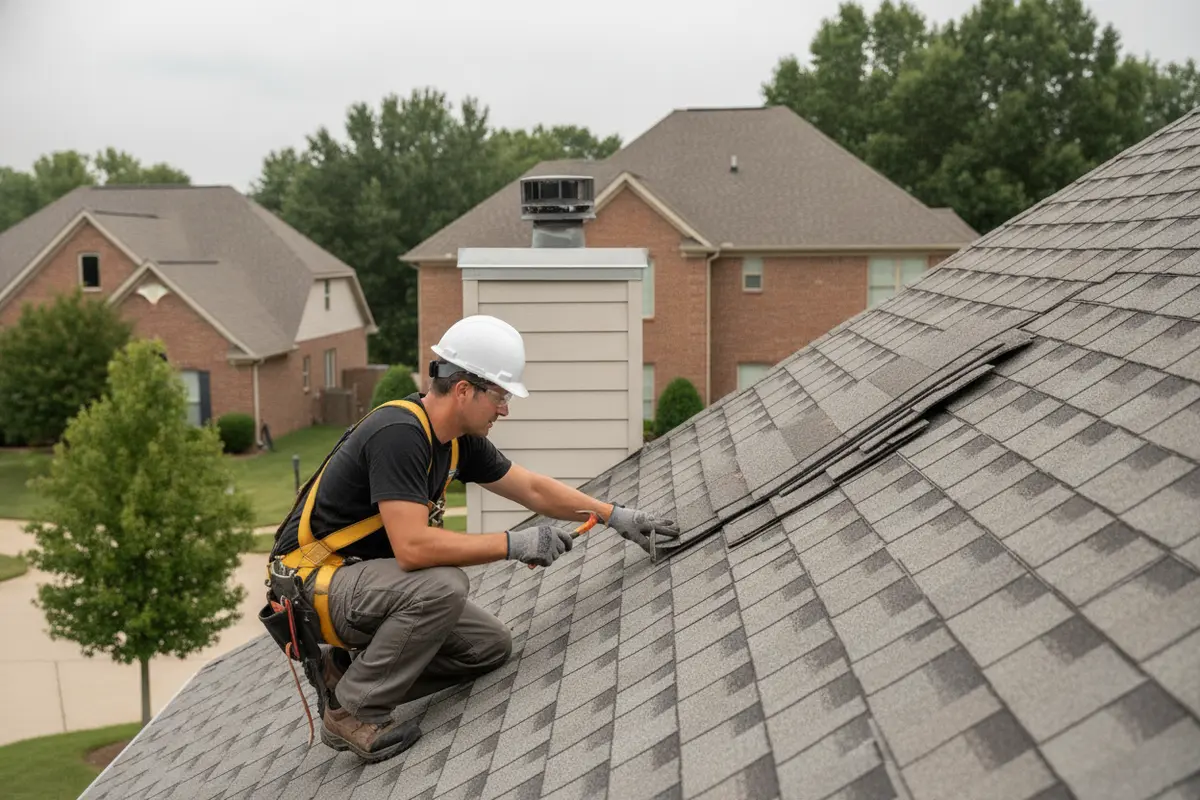
Make your notes specific enough that someone else can follow them. For example, record which room has a stain, whether it appeared during the storm or later, and whether it changes after rainfall. Photograph the whole room first, then the close-up, so the location is clear. If you see debris on the ground, take a picture before moving it, provided it is safe to do so. These details can help guide an evaluation, but they do not establish the cause or extent of roof damage.
A thorough evaluation is more than a quick look at the most obvious spot. The reviewer should consider the roof’s overall condition, transitions, penetrations, and the relationship between any visible damage and reported interior water. Ask what areas were checked and request an explanation of any limits, for example, if weather or access prevents a full inspection that day.
How does a roof damage evaluation work?
The process generally begins with your description of what happened: when the wind occurred, whether you saw debris or material move, and when a leak or other symptom appeared. Share your photos and point out affected rooms. Those details help guide the inspection, but the cause and repair scope should be based on the roof’s condition, not on assumptions about the storm.
A roofer may inspect accessible roof surfaces and details, document relevant findings, and look at interior signs you identify. The method depends on roof type, slope, condition, access, and safety. Ask whether the evaluation included the suspected entry area and nearby roof features, and whether there are any areas that could not be reached or assessed.
Water does not always show up directly below the roof opening. It can travel along a roof deck or framing before becoming visible inside, and a stain alone does not identify which component failed. The evaluator may need to consider nearby seams, valleys, penetrations, and transitions rather than focusing only on the room where the drip appeared. If the source is not clear during the first visit, ask what additional access or investigation could help narrow it down and whether any immediate protection is appropriate.
Afterward, request a clear written scope. It should identify the location and type of observed damage, the proposed work, any related materials or details to address, and whether more investigation is needed. If the roof is older or has pre-existing wear, ask the contractor to distinguish that condition from the specific damage being discussed. A repair recommendation should explain why its scope is appropriate, rather than simply treating every roof concern as a full replacement.
All In One Exteriors provides roofing services in Milton. Homeowners with a concern can also review its storm damage repair information and discuss what an evaluation can establish for their particular roof.
Have questions about a Milton roof concern? Call (404) 445-8136 or review Milton roofing services before arranging an evaluation.
When is a focused repair appropriate, and when is more work needed?
A localized repair may make sense when the damage is limited, the surrounding roof remains serviceable, and compatible materials and details can be installed correctly. A repair may involve replacing damaged shingles or addressing a specific roof detail, depending on the inspection. It is important to understand not only what is being replaced, but how the repair will tie into the existing roof.
Ask how the repair will be completed at the boundary between new and existing materials. The roof’s layers and adjacent components need to work together; changing only the most visible piece may not address a damaged flashing or connection nearby. If the original product or color is no longer available, ask what material will be used and what difference in appearance to expect. A reasonable proposal describes the repair method and its limits instead of implying that a small patch will solve conditions that have not been checked.
A wider repair or replacement discussion may be warranted when damage is spread across multiple areas, the roofing system has substantial wear, the underlying condition is uncertain, or a small patch would not address the actual problem. These are not automatic rules. The roof’s age, construction, material availability, visible condition, and the findings from an evaluation all matter.
| What the evaluation finds | Possible next step | Questions to ask |
|---|---|---|
| One isolated, accessible area of damage with sound surrounding roofing | Discuss a targeted repair and how it will connect to nearby materials | What exact area will be repaired? What related flashing or underlayment details are included? |
| Several affected areas or damaged roof details | Compare a broader repair scope with other practical options | Which findings require work now? Are there areas that can be monitored? |
| Widespread wear, uncertain underlying condition, or difficult-to-match materials | Ask whether repair remains practical or whether replacement should be considered | What evidence supports each option? What is not included in the proposed scope? |
| Active water entry or unsafe exposed roofing | Discuss an appropriate immediate protective measure, followed by a permanent plan | What can be done safely now? What further work or assessment will follow? |
The table is a discussion aid, not a diagnosis. Two roofs with similar-looking missing shingles can have different repair needs. Request photographs or a walk-through of the findings when possible, and take time to compare the written scope with the condition described.
Once the work is complete, ask what area was repaired and whether any follow-up observation is recommended. Keep the proposal, change approvals, and completion documentation together with your storm photos. If a stain reappears, note when it happens and contact the contractor to discuss the next step; do not assume that a new mark has the same source as the original one.
How should you handle a possible insurance claim?
A roofing evaluation and an insurance coverage decision are separate things. A contractor can describe observed roof conditions and proposed work; your insurance company determines how your policy applies. Do not assume that wind damage will be covered, that a claim will be approved, or that a particular repair cost will be paid.
If you are considering a claim, contact your insurer or agent and ask about the applicable reporting process, documentation, deductible, and deadlines. Keep your own dated photos and copies of communications. If an adjuster visit is scheduled, ask the insurer what information it needs and whether you should have a roofing professional present. The inspection findings should be communicated clearly, without asking anyone to guarantee a coverage outcome.
Before making a decision, keep a simple file with the date you first noticed the damage, photos, the evaluation or repair scope, receipts for reasonable emergency measures, and notes from calls with the insurer. Confirm important instructions in writing when possible. If the insurer requests a particular form or inspection, follow its process and ask who to contact with questions. Policy language, claim steps, and time limits can vary, so use your own insurer and policy documents rather than relying on a general rule.
For a more detailed overview of steps after roof storm damage, see the guide to a Georgia roof insurance claim after storm damage. If a specific deadline is a concern, verify it with your insurer and review the policy rather than relying on a general online timeline.
What should you compare in a repair proposal?
Before agreeing to work, make sure you understand the scope and the path from inspection to completion. A useful proposal should make clear what the contractor observed and what work is being recommended. It should also describe any assumptions or conditions that could change the scope once work begins.
- Location and scope: Which slope, edge, penetration, or other roof area is included? Is the work limited to the observed damage or does it include related components?
- Materials and installation: What material and repair method are proposed? How will the contractor address compatibility with the existing roof?
- Uncertain conditions: What happens if concealed damage is found? How will additional work be documented and approved?
- Schedule and site protection: What is the expected sequence, and how will access, debris, and protection of the property be handled?
- Closeout: What will be reviewed when the job is complete? Ask what documentation, photographs, or warranty information applies to the specific work.
When reviewing two proposals, compare the described work rather than only the bottom-line figure. One scope might include a related roof detail while another might address only a visible shingle; the difference matters when deciding whether they are comparable. Ask each contractor to identify exclusions, allowances, and what would trigger a change in scope. If concealed conditions are discovered, agree on how the contractor will explain them and get your approval before proceeding with additional work.
Also clarify practical details before the start date: how the crew will access the work area, whether you need to move vehicles or outdoor items, how materials and debris will be handled, and how weather could affect the schedule. These questions do not predict a particular timeline, but they help you understand what to expect and who to contact if plans change. Keep the final written scope and any approved changes in one place.
For a repair that becomes a larger project, compare the proposed scope with the roof’s condition and your plans for the property. All In One Exteriors outlines its roof replacement service separately from its repair work. Its roofing service overview can help you identify the right conversation, but an on-site evaluation is needed to determine what your roof requires.
What is different for commercial properties?
For a commercial property, a wind-related roof concern can affect tenants, inventory, equipment, and building operations. A property manager should document the location and time of reported water entry, notify the appropriate building contacts, and take reasonable steps to protect occupants and contents without entering unsafe areas. Coordinate access and any interior precautions with the responsible parties.
It helps to keep a location-based log for a larger building: note the unit or room, ceiling area, time reported, and whether water is still entering. Protect equipment or inventory only when it can be done safely, and make sure tenants know whom to notify if conditions change. If the building has multiple maintenance or insurance contacts, agree on who will communicate the evaluation findings and approve next steps. Clear coordination can prevent duplicate reports and make it easier to compare a proposed repair with the affected area.
Commercial low-slope systems also have different inspection details from many residential shingle roofs. The proposal should identify the membrane or system involved, affected seams or penetrations, and whether water may have traveled from another area. All In One Exteriors describes its commercial roofing services for property owners who need to discuss a commercial roof evaluation. Do not assume that the same repair approach applies to both a house and a commercial building.
Discuss a Milton roof concern with All In One Exteriors or call (404) 445-8136 to request an evaluation.
Frequently Asked Questions
Can wind damage a roof even if no shingles are on the ground?
Yes. A roof may have lifted or loosened materials without a piece falling into the yard. A safe ground-level view cannot confirm whether a shingle seal or another roof detail remains secure, so arrange an evaluation if you notice a leak or visible change.
Should I get on the roof to take pictures?
No. Do not climb onto a roof to investigate storm damage. Roof surfaces can be slippery or unstable, and hidden damage may create fall hazards. Take photographs from a safe location and let a qualified professional assess the roof.
Does every wind-related roof problem require replacement?
No. Some findings may be suitable for a targeted repair, while widespread damage or an aging roof may call for a broader discussion. The appropriate option depends on the inspection, roof condition, materials, and scope, rather than just the fact that wind occurred.
Will homeowners insurance pay for wind damage roof repair?
Coverage depends on your policy and the insurer’s review of the reported damage. Contact your insurer directly, follow its documentation and reporting instructions, and do not treat a roofing contractor’s assessment as a coverage decision.
Plan the next step after wind damage
If wind has left you concerned about your Milton roof, keep clear of hazards, document visible signs from a safe place, and arrange an evaluation that explains the findings and options. A clear scope can help you decide whether a focused repair, further assessment, or a larger roofing project is the sensible next step.