
If you are searching for roof leak repair alpharetta ga, start by protecting people and belongings, then record what you can see from a safe place. You do not need to identify the exact point where water entered before asking for an evaluation. A clear timeline, a few photos, and a description of what happens during rain can help a roofing professional understand the concern and explain what should be checked.
Call to discuss a roof leak evaluation
What should you do as soon as you notice a leak?
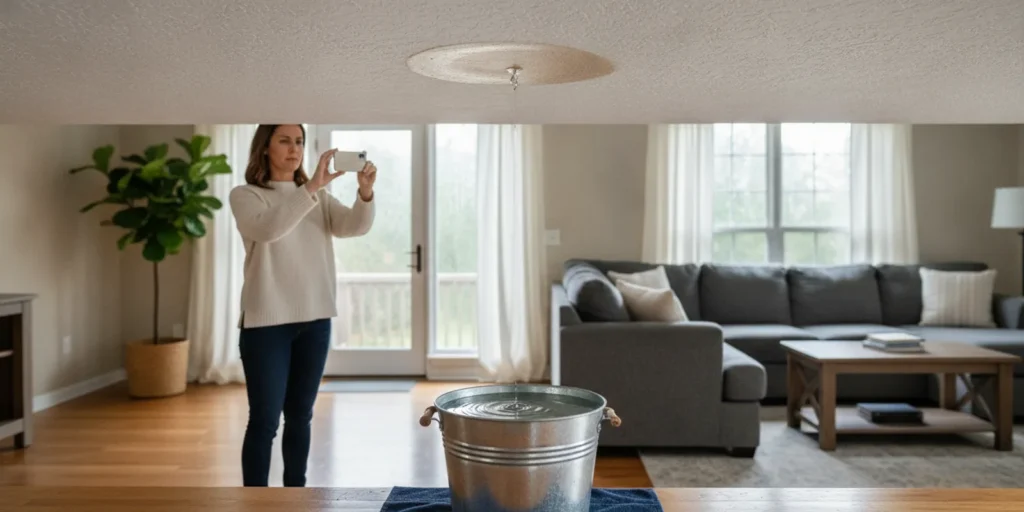
First, move people, pets, and valuables away from the affected area. If water is dripping onto furniture, electronics, or stored items, move them only when you can do so without standing beneath a sagging ceiling or crossing a wet, slippery floor. Use a container to catch a steady drip if the location is safe and the container can be placed without reaching under a bulge.
Water near a ceiling light, outlet, appliance, or exposed wiring creates a separate safety concern. Do not touch wet fixtures, cords, or switches, and do not step into standing water to reach them. Keep other people clear and contact a qualified electrician or emergency services when there is an immediate electrical hazard. If you smell burning or see sparks, leave the area and seek urgent help.
A ceiling that is visibly bulging, cracking, or holding water should be treated cautiously. Keep everyone out of the room. Do not puncture the ceiling, climb into the attic, or try to brace a wet ceiling yourself. The ceiling surface and materials above it may be weakened, and you cannot tell how much water is present from below. If the leak is spreading quickly, focus on personal safety and seek prompt professional assistance.
Do not climb a ladder or walk on a wet roof to look for the source. Rain, wind, roof pitch, hidden damage, and slick growth can make access dangerous. A ground-level view through a window or from the yard is enough for initial notes; close inspection can wait for someone equipped to assess the roof safely.
How can you record useful evidence without diagnosing the roof?
Take a small set of photos or short videos from a dry, stable position. Include one wider view showing where the stain is in the room and a closer view of the affected surface. If water is actively dripping, a brief video can show the pace and location. Do not use a chair or ladder to get a better angle, and do not touch or scrape wet paint or plaster.
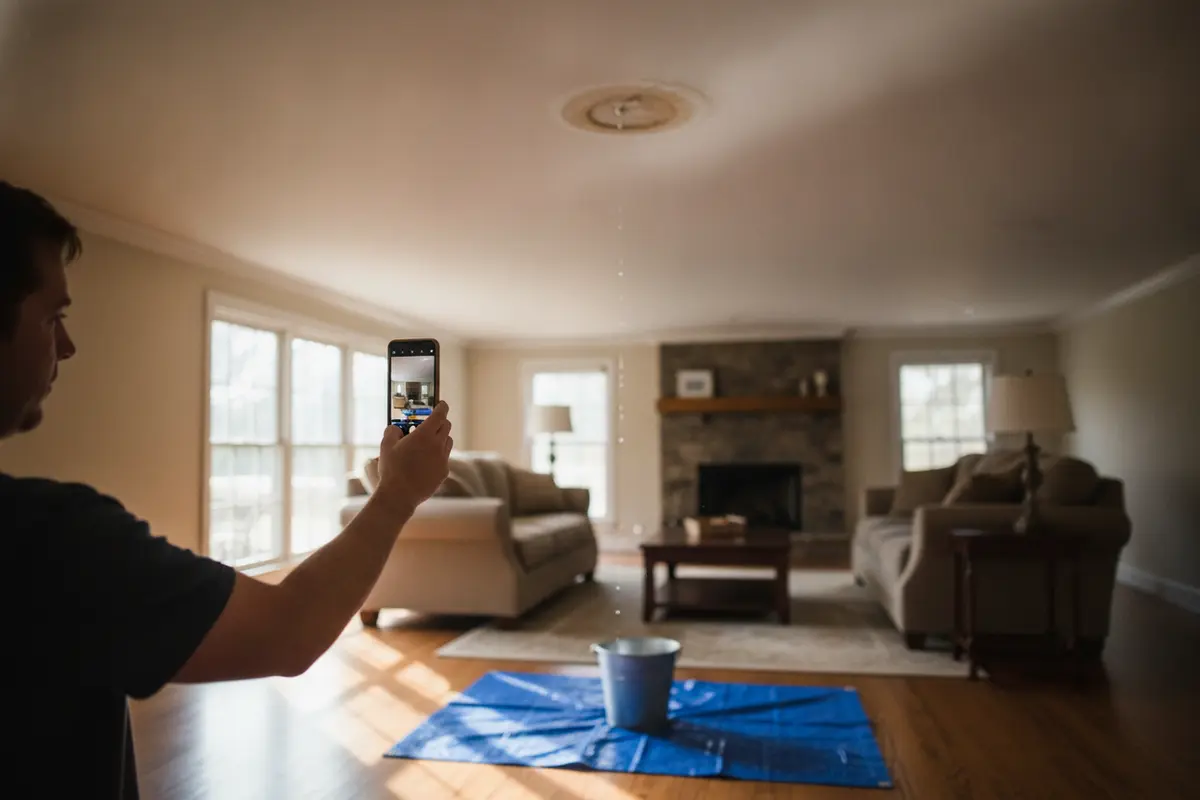
Make a note of the date and approximate time you first noticed the issue. Record whether it began during steady rain, after a brief heavy shower, after wind, or when no rain was falling. If the leak stops, note that too. A short sequence of observations is more useful than a guess about the roof component that may be involved.
Water can travel along framing or other surfaces before it becomes visible indoors. A ceiling stain below a roof slope does not, by itself, prove that water entered directly above that mark. It is reasonable to describe what you observe—such as a damp patch near a chimney, a ceiling stain beside an exterior wall, or dripping around a skylight—without assigning a cause.
- Photograph affected ceilings, walls, floors, and belongings from safe positions.
- Write down when the leak started and what the weather was like.
- Note whether the affected area changes or dries between rain events.
- List rooms involved and any smell, peeling paint, or damp materials you notice.
- Save records of prior roof work or repairs if they are readily available.
Keep the notes factual. For example: “A drip appeared at the hallway ceiling seam during heavy rain around 6 p.m.; it stopped about an hour later.” That is more useful than “the flashing failed” unless a qualified inspection has actually established that. For general federal information on indoor dampness and mold, see the U.S. Environmental Protection Agency’s resources. If building materials remain damp, ask an appropriate professional how to handle drying and cleanup; do not assume that painting over a mark resolves a moisture problem.
What can you check from the ground?
If conditions are safe, you may look at the roof from the yard or a window. Binoculars or a phone camera zoom can help you observe without approaching the roof. From that position, note visible debris, a displaced-looking shingle, a damaged gutter section, or an obvious opening. These are observations to share, not proof of the source. Do not use a ladder for a closer look, lift shingles, clear debris from the roof, or reach over an edge.
It can also help to note the room’s position in the home. Is it below a roof valley, near a chimney, around a skylight, beside a wall, or below an attic area? If you know the answer, include it as context; if you do not, there is no need to investigate. A short note such as “upstairs bedroom, on the side facing the driveway” may help orient the evaluation.
For background on roof work and the stages involved, read the overview of the roofing installation process. It is useful context, but an active leak still needs attention based on the roof’s actual condition rather than a general description of roofing systems.
What information should you have ready when you call?
A useful first conversation does not require a technical report. Be ready to explain where you see water, when you noticed it, whether it is still active, and whether rain or wind preceded it. Mention any immediate safety issue, such as water near electrical equipment or a ceiling that appears to be sagging. If the building has more than one affected area, list each one rather than describing the problem as a single stain.
Tell the roofing professional about repairs or roof work you know occurred, including an approximate date if you have it. If a storm may be relevant, note when it happened and what you observed afterward. You do not need to decide whether the event caused roof damage. Do not remove roofing materials or apply an improvised patch before the evaluation; changing the condition can make it harder to understand what is happening and may create additional risk.
Before arranging access, explain practical site details: whether there is a gate, a dog, a locked attic hatch, or a room that cannot be entered. If you have photos, say that you can share them. If you do not, a clear verbal description is still a useful starting point. Keep the conversation focused on the leak and the evaluation you are requesting.
All In One Exteriors provides roofing repair information for Georgia property owners; its roofing repairs page is a relevant place to review the service topic. For a leak concern that seems connected to a chimney, the guide to chimney flashing and roof leaks in North Georgia can help you prepare questions without treating a visible stain as a diagnosis.
What may happen during a roof leak evaluation?
An evaluation is intended to examine plausible entry points and the condition of related roof details, subject to safe access and the kind of roof involved. A roofing professional may look at the roof covering, nearby flashing, penetrations, valleys, edges, or drainage details. The evaluation may also consider the location of the indoor signs and whether the pattern fits what can be seen from outside. Not every roof area can necessarily be accessed or viewed during one visit.
The evaluator may ask you to show the interior stain or explain when it appears. If you have a safe ground-level photo of a visible concern, share it, but do not feel you need to provide roof access or climb to retrieve anything. A careful evaluation should distinguish between what was observed, what is suspected, and what remains uncertain. A ceiling mark can be evidence of water intrusion, but it does not establish a specific roof defect on its own.
Ask what areas were inspected and whether any areas could not be reached. If the proposed source is not directly visible, ask what observations support that conclusion and whether there are alternative explanations. This is not about directing the inspection; it is about understanding the basis for the recommendation and the limits of what could be confirmed.
If the concern is urgent or follows a storm, the emergency roofing information and storm-damage repair information provide related context. Emergency protection, a lasting repair, and a full roof replacement are different scopes; ask which one is being discussed and why. A prompt assessment does not mean you should accept a scope you do not understand.
How do you compare possible next steps?
The next step depends on the observed condition, the extent of the affected area, the roof’s broader condition, and what can be safely confirmed. Temporary protection is intended to reduce exposure while a longer-term plan is considered; it is not automatically the permanent repair. A targeted repair may be appropriate when a specific defect can be addressed. A broader project may be discussed if the evaluation finds multiple or recurring concerns, but that should be supported by roof-specific observations.
| What is known so far | Possible discussion | What to clarify |
|---|---|---|
| Water is actively entering indoors | Protect the room and ask about prompt assessment or temporary protection | What can safely reduce exposure now, and what is temporary versus lasting work? |
| One suspected localized concern | Ask whether a focused repair is feasible | What evidence points to the location, and which components are included? |
| More than one leak or recurring symptoms | Discuss the condition of the broader roof as well as the immediate issue | What was inspected, what remains uncertain, and why is a larger scope proposed? |
| Damage may have followed a storm | Document the observed condition and ask about appropriate next steps | Which findings are observed, and which decisions belong to the insurer? |
This comparison is a way to organize questions, not a diagnosis or a fixed sequence of work. The written proposal should make clear what work is being offered, what area and components it covers, and any exclusions or assumptions. If additional damage could change the scope, ask how that would be communicated before extra work proceeds.
If an evaluation points to a replacement discussion, keep that separate from the immediate leak response. The roof replacement overview can help you frame questions about a larger project, while the residential roofing information offers broader context for home roofing needs. Neither page can determine what your specific roof requires.
What should a written repair proposal explain?
Read the scope for the work itself, not only the total amount. Check whether it identifies the condition being addressed, the roof area involved, the components to be repaired or replaced, and the materials specified. Look for details about access, cleanup, and what is excluded. A proposal that says only “repair leak” may leave important questions unanswered.
- Which observed condition is the work intended to address?
- What roof areas and components are included, and what is outside the scope?
- Does the proposal describe materials, installation steps, and cleanup?
- What happens if hidden or additional conditions are found?
- Are timing, payment terms, and any warranty terms stated in writing?
Compare proposals only when they address comparable work. One proposal may include a different roof area, component, or precaution than another. Ask each provider to explain differences in plain language rather than assuming that shorter scope means equivalent work. Warranty coverage depends on the applicable product and work terms; request the documents that apply and read their conditions.
For a local perspective on choosing a provider, see the guide to questions to consider when comparing Alpharetta roofing companies. The goal is to understand the recommendation, not to make a decision based only on a phone description or an indoor stain.
What if the leak appeared after a storm?
Record the date of the weather event as best you can, photograph visible interior effects, and take reasonable steps to protect belongings. Contact your insurer for instructions if you are considering a claim, and keep copies of relevant communications. Coverage depends on the policy and the insurer’s review of the facts. A roofing contractor can describe observed roof conditions, but should not promise an insurance decision or claim outcome.
Keep observations and insurance conclusions separate. For example, write “water appeared in the upstairs hallway during the evening storm” rather than “the storm damaged the roof” unless that conclusion has been established. The guide to Georgia roof insurance claims after storm damage discusses related preparation, but your insurer controls policy-specific instructions and decisions.
How can you prepare the home for the visit?
Make the affected room accessible from the floor if it is safe to do so. Move fragile belongings away from the stain, but leave heavy furniture in place if moving it would risk injury or require working beneath a sagging ceiling. Keep children and pets away from the inspection area. If attic access is available and safe from the floor, tell the evaluator where it is; do not climb into the attic or move stored items to investigate before the visit.
Have your timeline and photos together on a phone or in a short written note. Mark which room each photo shows, especially when there are multiple leaks. If you have a prior invoice, warranty document, or repair record, locate it only if it is easy to reach. The evaluation should not depend on you retrieving paperwork from an unsafe or difficult place.
Before the visit ends, repeat back the next step as you understand it. Ask whether a written scope will follow, which conditions are confirmed, and whether any area was not inspected. If the recommendation is to monitor something rather than repair it immediately, ask what change should prompt a call. Clear notes reduce confusion later, especially if the visible signs change after the visit.
How can a short leak log make the evaluation clearer?
If the leak appears intermittently, use a simple log instead of relying on memory. Each time you notice a change, record the date, approximate time, weather, room, and whether water was actively dripping or only a damp mark was visible. Note when the sign stops changing, but do not assume the roof has dried just because the indoor drip ended. A basic timeline helps the evaluator compare your observations with the condition visible during the visit.
Keep each entry brief and separate observations from interpretations. For example, “Tuesday, 7 p.m.; rain with wind; two drops near the bedroom ceiling seam; no water by 9 p.m.” is clear. “Wind blew shingles loose” is a conclusion unless you directly observed that from a safe place. If you see a change in the size of a stain, take another photo from the same safe position and include a familiar nearby feature for scale. Do not mark a wet ceiling with tape or press on soft material.
Do not postpone help to collect a perfect record. The log is only a supplement to a prompt call when water is active, damage is spreading, or there is a safety risk. If more than one room is affected, label each room separately; similar-looking stains can have different causes, and a separate record avoids mixing their timelines. Bring the notes to the evaluation or read them aloud so the key details are not lost in the conversation.
Frequently asked questions
Can I inspect the roof myself before calling?
Do not climb a ladder or walk on a wet, damaged, or unfamiliar roof to investigate a leak. You can note what is visible from the ground or a window and leave close inspection to a qualified roofing professional.
Does the ceiling stain show where water entered?
Not necessarily. Water can travel along framing or other surfaces before it appears indoors. Treat the stain as useful evidence of where water showed up, not proof of the entry point.
Should I wait for another rainstorm to confirm the leak?
No. Record when it occurred and what you observed, then request an evaluation. Do not wait for another event if water is active, damage is spreading, or there is a safety concern.
Will insurance cover a storm-related roof leak?
Coverage depends on the policy and the insurer’s assessment of the circumstances. Contact your insurer for policy-specific guidance; a contractor cannot guarantee coverage or a claim result.
Request a roof repair evaluation
For a roof leak in Alpharetta, keep people clear of hazards, document only what you can safely observe, and ask for a written explanation of the recommended scope before deciding how to proceed.