
If you are asking how long after hail to file roof claim georgia, the safest answer is to review your policy and notify your insurer as soon as possible. Hail can leave a roof looking normal while damage develops beneath the surface or becomes harder to document, so a storm that has already passed is not a reason to wait.
Request a Georgia storm-damage roof evaluation from All In One Exteriors.
There is no single Georgia deadline for every hail claim. Your policy may set a specific notice period, so review it and contact your insurer as soon as possible.
The Georgia Office of the Commissioner of Insurance and Safety Fire advises policyholders to file as soon as possible and notes that a policy might require notice within a specific time frame. Keep dates, correspondence, and expense records. A safe roof evaluation can identify visible or less obvious storm damage. Do this before permanent repairs when possible. For the broader process, see our Georgia storm-damage insurance claim guide. First, let us look at policy language and timing.
How Long After Hail to File Roof Claim Georgia If Damage Appears Later?
There is no single Georgia deadline for every hail claim. The answer depends on your policy’s notice requirements, the loss circumstances, and your insurer’s instructions. Georgia DOI advises policyholders to report a loss as soon as possible. A policy may require notice within a specific period.
Review the policy sections about hail, wind, roof damage, notice of loss, and proof of loss. Check whom to contact and what information to provide. Ask your agent or carrier to explain unclear language. Do not assume an online deadline applies to your policy.
What to do after discovering possible hail damage
Notify the insurer promptly, even while arranging an inspection. Explain that you observed possible storm damage. Ask what steps are required to open or document a claim. Keep copies of emails, estimates, photographs, and claim records. Also record contact dates, names, and expenses.
A roof may show no obvious problem from the ground. A delayed discovery does not prove that no claim is possible. Arrange a safe assessment and preserve evidence. If a leak or exposed area exists, use reasonable temporary protection. Ask the insurer about next steps before making permanent repairs.
For broader guidance, review our Georgia storm-damage insurance claim guide. The key timing rule is simple. Check your policy and contact the insurer as soon as you discover or reasonably suspect hail damage.
Why Hail Claims Can Become Harder to Prove Over Time
Hail damage is not always obvious from the ground or immediately after a storm. Small impacts can affect shingles, flashing, vents, or other roof parts without causing an indoor leak that day. As weather continues, damaged areas may weaken or allow moisture to spread. A later leak may relate to the original storm. However, the condition can be harder to connect to one event.
Weather can change the evidence. Wind, rain, heat, and later storms may alter an exposed area. Debris may move. Temporary measures may cover the original condition. Normal aging can also make hail impact harder to separate from unrelated wear. This uncertainty does not automatically eliminate a potential claim. It makes timely documentation more important.
Review your policy and contact the insurer as soon as possible when you suspect a covered loss. Georgia DOI advises prompt reporting because a policy may require notice within a specific period. The applicable deadline is not universal. The policy, loss circumstances, and insurer instructions control.
Start with safe, date-stamped photos. Keep correspondence, claim contacts, inspection records, and expenses. Do not climb onto a roof or make permanent repairs solely to create evidence. If a roof is leaking or exposed, temporary protection may help. Permanent repairs before an inspection can create complications. All In One Exteriors provides a Georgia hail roof damage evaluation without promising coverage or claim approval.
How to Document Hail Damage Right After the Storm
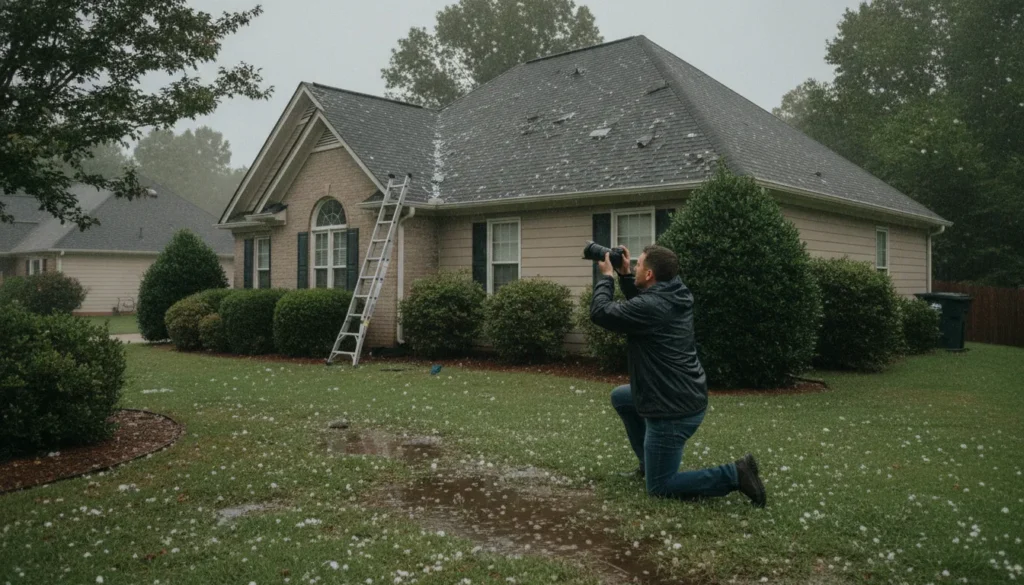
Good documentation helps preserve a clear record of what happened, even when damage is not obvious from the ground. Do not climb onto a wet or damaged roof. Instead, use the following checklist while conditions are safe:
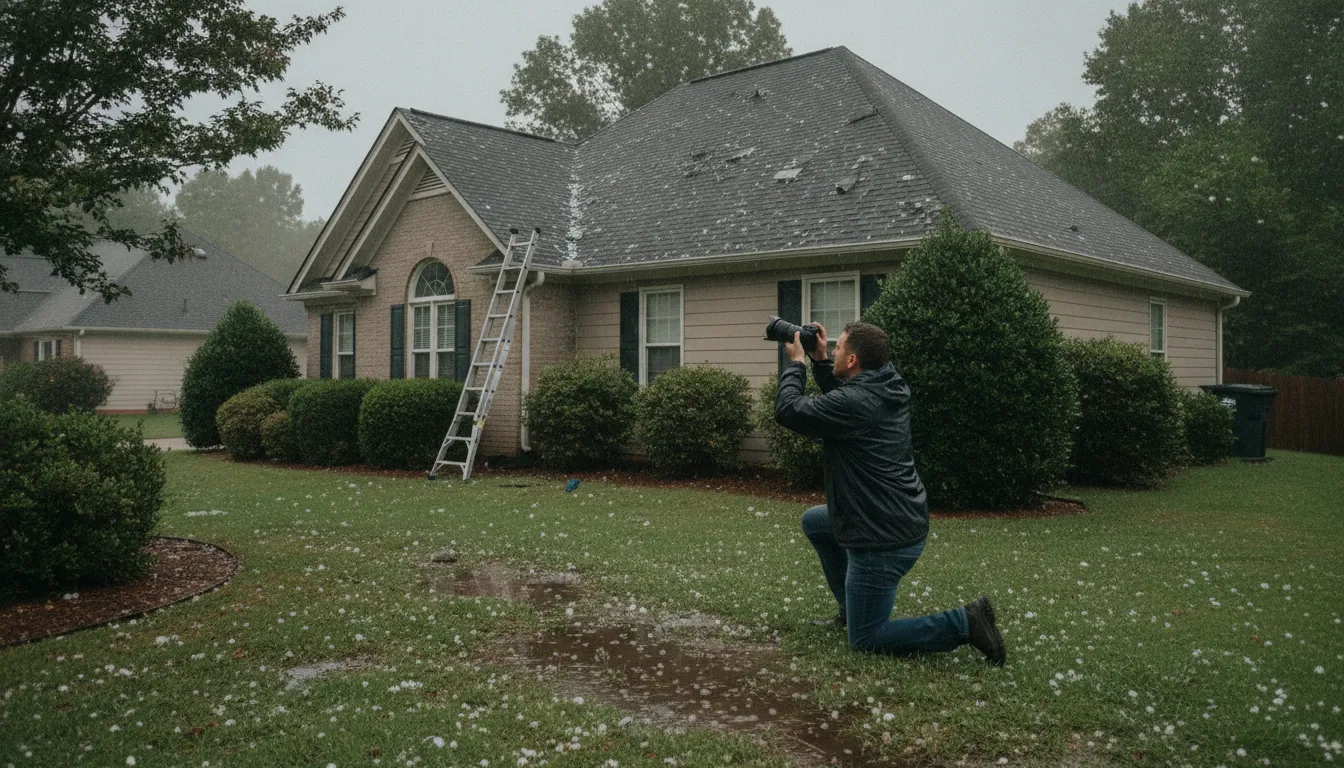
- Photograph the roof and property from the ground. Take wide photos showing each roof slope, gutters, siding, windows, outdoor equipment, and nearby areas. Then capture safe close-ups of visible dents, cracked or missing shingles, exposed materials, fallen branches, and debris. Hail damage may not be immediately obvious, so do not treat a lack of visible damage as proof that the roof is sound. Arrange a professional assessment when appropriate. You can request a professional roof damage inspection without putting yourself at risk.
- Record the date, location, and storm details. Write down when you noticed the damage and which parts of the property appear affected. If you know the storm date or were away when it occurred, note that uncertainty rather than guessing. This record can help you explain the loss timeline to your insurer and compare later observations with the original condition.
- Photograph interior leaks and related damage. Capture ceiling stains, active drips, wet insulation if safely visible, damaged drywall, and affected belongings. Use wide and close-up views. If water is near electrical equipment, leave the area and contact a qualified professional instead of investigating further.
- Preserve receipts and communication records. Keep receipts for reasonable emergency expenses, temporary materials, and services. Also save emails, messages, claim references, inspection reports, and notes showing the dates, names, and substance of conversations. Georgia’s Department of Insurance recommends keeping copies of claim correspondence and expense records.
- Protect the property temporarily, but avoid permanent repairs before inspection when possible. If an opening is allowing water inside, take reasonable steps to limit additional damage. Professional temporary roof protection after hail may include tarping or temporary repairs. Do not remove damaged materials or complete permanent repairs before the insurer or inspector has had a reasonable opportunity to document the condition, except when immediate safety or property protection requires action.
- Notify the insurer promptly and check the policy. Georgia DOI guidance says to file as soon as possible because a policy may require notice within a specific time frame. There is no universal Georgia deadline that applies to every roof claim. Review your policy’s notice requirements and follow the insurer’s instructions, while keeping your own complete documentation.
What If You Missed the Reporting Window?
Do not assume that a delayed discovery means you should abandon the claim. If you are researching how long after hail to file roof claim Georgia homeowners should review the policy and contact the insurer as soon as possible. Georgia policies can set their own notice and proof requirements, and the applicable rule may depend on the loss and policy language. There is no single deadline that applies to every homeowner.
Start by reading the sections covering notice of loss, proof of loss, and storm or hail damage. Then notify the insurer or agent promptly, even if you are still gathering information. Explain when the storm occurred, when you first noticed possible damage, and why you did not report it earlier. Be accurate and specific. A late report may require additional explanation or documentation, but only the insurer and the policy terms can determine how it will be handled.
Preserve the evidence you still have
Take safe, current photos and videos of visible roof or interior damage. Gather older property photos, inspection reports, contractor records, invoices, and receipts for emergency work if they are available. Keep copies of emails, letters, claim forms, and notes showing the dates, names, and substance of conversations with the insurer. The Georgia Department of Insurance recommends retaining correspondence, contact records, and expenses related to a claim.
If the roof is leaking or exposed, arrange reasonable temporary protection to limit additional damage, and keep receipts. Avoid permanent repairs or replacing materials before the insurer has had a fair opportunity to inspect unless immediate safety or property-protection needs require action. Ask the insurer what documentation and inspection steps it needs next.
For a broader overview of the process, see this Georgia storm-damage insurance claim guide. A qualified roofing professional can help document observable conditions and distinguish storm-related concerns from other issues. If the insurer denies the claim or a deadline dispute remains, request the reason in writing and consider speaking with the Georgia Department of Insurance or an appropriately qualified insurance or legal professional. All In One Exteriors can provide a roof evaluation and documentation assistance, but cannot promise coverage or provide legal advice.
Who Should You Call First After Hail Damage?
After a hailstorm, different professionals handle different parts of the process. Calling the right person first can help you protect the property, preserve evidence, and understand what your policy requires without confusing roofing advice with insurance or legal decisions.
- Insurance company or agent: Explain policy notice requirements, claim procedures, exclusions, and documentation instructions. Call promptly after you suspect a covered loss, especially when the policy requires notice within a specific period.
- Qualified roofing professional: Inspect roof conditions, identify possible storm damage, document findings, and recommend appropriate repairs. Arrange an assessment as soon as it is safe, or sooner if the roof is leaking, exposed, or otherwise vulnerable.
- Attorney or other appropriate legal professional: Advise on a disputed legal issue, contract concern, or disagreement that requires legal guidance. Consider this option when the issue goes beyond a roof inspection or ordinary policy-process question.
Your insurer or agent is the source for policy-specific notice instructions. Georgia guidance also recommends keeping copies of correspondence and records of claim contacts, dates, names, and expenses. A roofing contractor can provide a separate physical assessment, but should not be presented as your insurer, adjuster, or lawyer.
For roof conditions, arrange a professional roof damage inspection and avoid unsafe roof access. If a leak or exposed area needs immediate attention, temporary protection may help limit additional property damage. Permanent repairs before the insurer’s inspection could create claim complications, so ask what documentation and timing steps apply first.
All In One Exteriors provides storm-damage assessment and documentation assistance for Georgia property owners. That assistance does not guarantee coverage or claim approval, and it does not replace advice from your insurer or a qualified legal professional.
Frequently Asked Questions
Is there one Georgia deadline for filing a hail damage roof claim?
No. The reporting deadline depends on your policy, the loss circumstances, and your insurer’s instructions. Georgia’s insurance guidance recommends filing as soon as possible because a policy may require notice within a specific time frame. Review the notice and proof requirements in your policy and contact your insurer promptly. Georgia Department of Insurance claim tips provide additional guidance.
What should I do if the hailstorm happened months ago?
Notify your insurer as soon as you can, even if you are concerned that reporting is late. Explain when you noticed the damage, what delayed the report, and what evidence you have. Avoid guessing about the cause or extent of damage. A qualified roof inspection can help document current conditions, but it cannot guarantee coverage or claim approval.
Can I make permanent roof repairs before the insurance inspection?
Usually, temporary protection may be needed to prevent additional damage, especially if the roof is leaking or exposed. Document the condition first when it is safe, keep receipts, and save photos of temporary work. Permanent repairs before the insurer or adjuster has an opportunity to inspect may create claim problems. Follow your policy and insurer’s instructions.
What records should I keep after filing a hail claim?
Keep your claim number, policy information, photos, inspection reports, repair estimates, receipts, and copies of every message or letter. Record the dates, names, and substance of calls with your insurer and contractors. These records create a clear timeline and help you answer questions about the storm, the observed damage, and steps taken to protect the property.
Schedule a Storm-Damage Roof Evaluation
A professional evaluation can help you document visible and potential hail damage while the details are easier to review. To request a storm-damage roof evaluation from All In One Exteriors, call All In One Exteriors at (404) 445-8136.