
Gutter repair in Atlanta can involve more than patching a visible leak. A loose section, separated joint, or poor drainage path may let water run against fascia, siding, or the foundation, and the source is not always obvious from the ground. This guide explains what property owners can look for safely, what a contractor may evaluate, and how to compare repair options without assuming every gutter problem requires a full replacement.
Call to discuss an exterior evaluation
What gutter problems should Atlanta property owners look for?
Gutters collect roof runoff and carry it toward downspouts, where it can be directed away from the building. A gutter system has several connected parts: horizontal troughs, end caps, seams or joints, hangers, fascia attachment points, corners, and downspouts. A fault in one section can affect how another part performs.
From a safe position on the ground, look for visible clues such as:
- Water spilling over an edge during rain. This can result from a blockage, undersized or poorly positioned drainage path, a sagging section, or a downspout issue. The visible overflow does not prove which cause is responsible.
- A drip at a seam or end cap. A joint may have separated or a seal may have deteriorated. Water can also travel along the gutter before dripping, so the point where it falls may not be the original source.
- A section that looks uneven or detached. A bent or sagging run can hold water instead of directing it to a downspout. Missing or loose hangers may allow the trough to pull away from the fascia.
- Water marks below the roof edge. Staining on fascia, siding, or masonry can indicate repeated wetting. It can also have other causes, so treat it as a reason to investigate rather than a diagnosis.
- Pooling near a downspout outlet. The outlet may be obstructed, poorly directed, or discharging into an area that does not carry water away effectively.
- Debris or plant growth visible from the ground. Debris can obstruct flow, but reaching into a gutter or climbing to inspect it carries fall and injury risks.
These signs deserve attention when they recur, worsen, or appear alongside damp areas near the building. They do not, on their own, show whether a repair is limited to the gutter or whether roof-edge, fascia, or drainage work is also needed.
What can you safely check before calling a contractor?
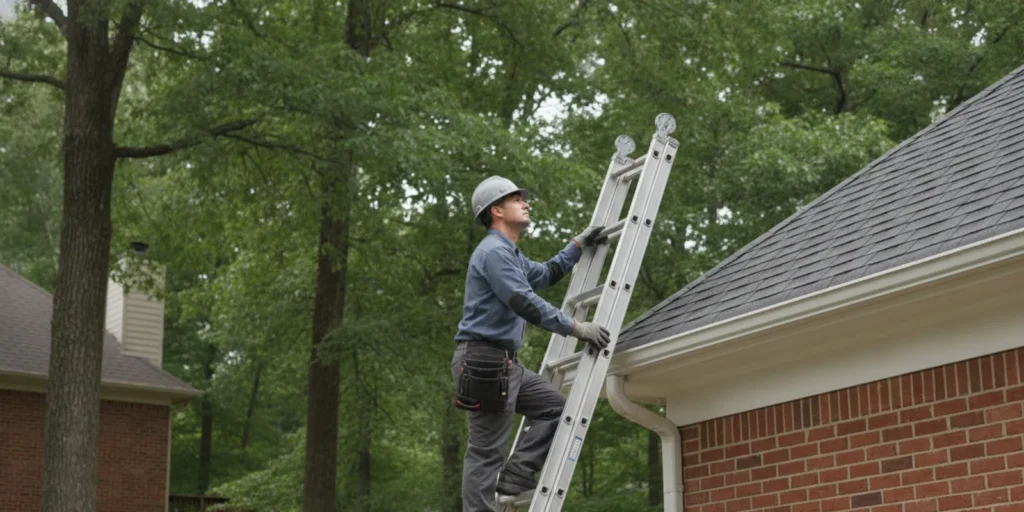
A ground-level review can help you describe the concern and its timing. It cannot replace a close inspection from a qualified professional. Do not climb onto a roof, lean a ladder against a gutter, or reach over an edge to test a loose part. Wet surfaces, uneven ground, power lines, and unstable ladders can make an inspection dangerous.
- Observe during or soon after rain from a sheltered place. Note whether water spills over the front, drips from a joint, or exits at a downspout. Avoid standing below a roof edge where water or debris could fall.
- Record where the problem appears. Identify the side of the building, the nearest corner or downspout, and whether the issue is limited to one section or several.
- Take ground-level photos. Photograph the gutter line, any visible separation, and water marks from a safe distance. Do not put yourself beneath a damaged section to get a closer image.
- Note the conditions. Record whether the issue appears during steady rain, after strong wind, or all the time. Include when it began and whether you have noticed it before.
- Check for related symptoms indoors and at ground level. If you notice a ceiling stain, damp wall, or pooling near the foundation, describe it to the contractor. These symptoms can have causes other than gutters and may need separate evaluation.
- Keep the area safe. If a gutter is hanging or a component could fall, keep people clear of the area and explain the hazard when you request help.
For a suspected roof leak, do not assume the gutter is the only possible source. Water can enter near roof penetrations, flashing, damaged shingles, or the roof edge and appear somewhere else indoors. A roofer may need to examine the roof-to-gutter transition as part of the assessment. For related roof concerns, see the guidance on roof repairs in Georgia.
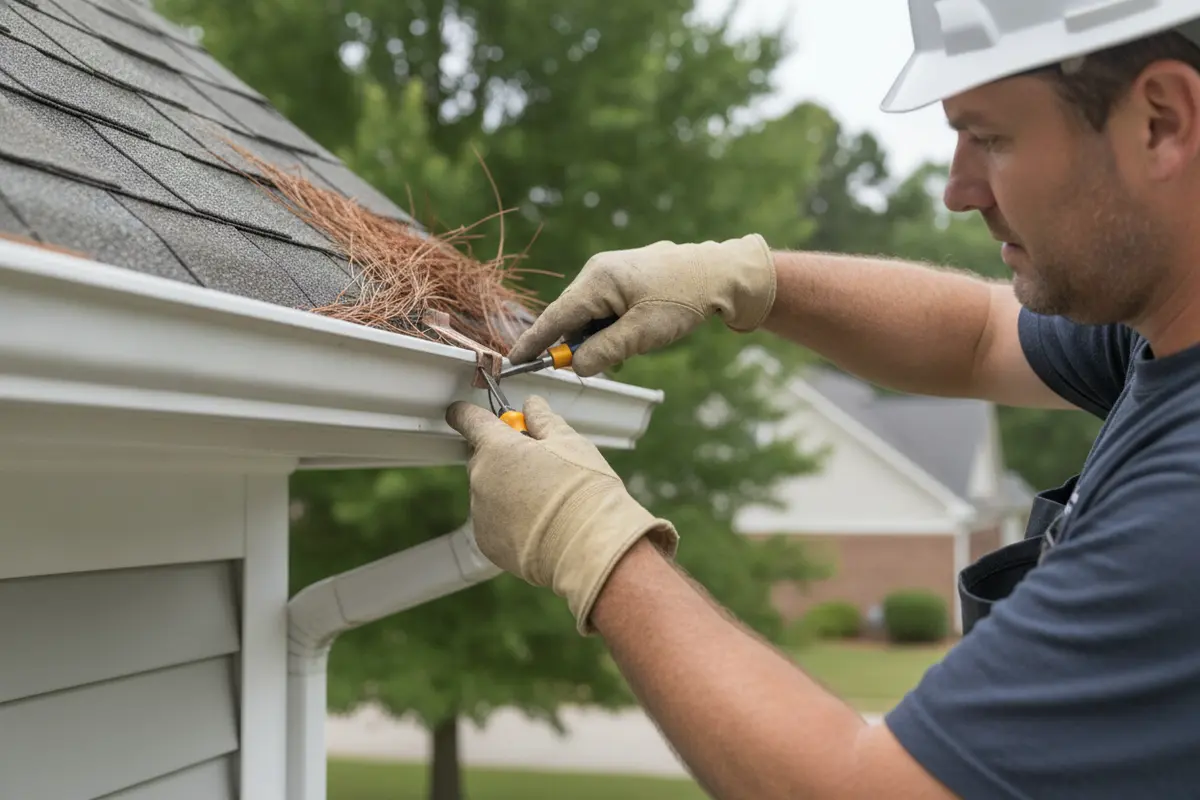
How does a contractor evaluate a gutter repair?
A useful evaluation starts by tracing the water path, not just looking at the spot where a drip appears. Depending on access and the reported symptoms, a contractor may look at the gutter alignment, attachment points, seams, corners, end caps, downspout connections, and how water exits the system. They may also check the fascia and roof edge for visible signs of moisture or damage.
The findings help distinguish a local defect from a broader drainage or roof-edge issue. For example, a leak at a seam might be limited to a joint, while a sagging run could involve multiple loose hangers or damaged material. Overflow can point to an obstruction, but it may also reflect poor slope or an outlet that cannot carry runoff as intended. A professional should explain what was observed and which part of the system is being proposed for repair.
Ask whether the evaluation includes the area above and behind the gutter if there are signs of roof or fascia damage. Gutters attach close to roof components, and repairing a gutter alone may not address a separate defect at the roof edge. Conversely, a roof concern should not be assumed just because water is visible below the eaves. If a storm appears to have affected the roof as well, a separate storm-damage evaluation may be appropriate.
Photographs can make the explanation easier to follow. If you receive them, ask the contractor to identify the location, describe the observed condition, and clarify whether the image shows the cause, a related symptom, or simply the surrounding area. Keep the proposal and photos together so you can compare the scope with the work completed.
When is a targeted repair appropriate, and when should you compare replacement?
A repair may be a practical option when the issue is limited to a local connection, a small section, or a component that can be corrected without leaving nearby parts unstable. The decision depends on the condition of the material, how the sections connect, the attachment surface, and whether the rest of the system can continue to direct water properly.
Ask the contractor to explain the basis for the recommendation. A patch or resealed joint may address a small leak, but it will not correct a run that has lost its alignment or attachment. Refastening may help a loose section if the supporting fascia is sound, but damaged wood may require separate work. A replaced segment may be suitable when the adjoining material can connect securely and consistently.
Broader replacement may be worth comparing when damage is spread across multiple sections, materials are deteriorated in several places, the system does not drain as intended, or earlier repairs have not resolved recurring symptoms. This is not a fixed rule: the contractor should describe the condition and scope rather than rely only on age or appearance. A full replacement proposal should explain what is included, what happens at corners and downspouts, and whether fascia or roof-edge work is excluded or separately proposed.
Use the table below as a conversation guide, not a diagnosis or a price list. Actual scope depends on what an on-site evaluation finds.
| Observed condition | Possible scope to discuss | Questions to ask |
|---|---|---|
| Leak at one accessible seam or end cap | Joint repair, resealing, or replacement of a small component if suitable | Was the leak source confirmed? What preparation and material will be used? |
| Short section loose or pulling away | Reattachment or replacement of hangers, subject to the condition of the fascia | Is the attachment surface sound? How will the section be supported? |
| One visibly bent or damaged section | Section replacement and reconnection to adjacent parts | Will the new section match the system and connect without leaving a weak joint? |
| Repeated overflow at one area | Assessment of obstruction, alignment, outlet, and drainage route | What is causing the overflow, and how will the proposed work address that cause? |
| Several damaged runs or recurring issues | Comparison of repairs with a larger replacement scope | Which components remain serviceable? What is included and excluded? |
| Water marks at the roof edge, fascia, or inside | Evaluation of the gutter and adjacent roof or building components | Could another source explain the moisture? Does the proposal separate each type of work? |
If a contractor recommends replacement, request a clear explanation of why individual repairs would not be suitable. If a contractor recommends a small repair, ask whether there are visible conditions nearby that could affect the result. Comparing written scopes can help you understand the differences. A broader roof project is a separate decision; learn about roof replacement planning only if the roof itself is being evaluated.
Which factors affect gutter repair scope?
There is no reliable one-size-fits-all repair scope based only on a short description or a photo from the ground. The contractor needs to understand the layout, access, material, extent of damage, and any related water concerns. These factors can change the work needed:
- Location and height. The accessibility of the problem area and the configuration of the home affect how it can be examined and reached safely.
- Gutter material and profile. The existing system’s material, dimensions, and connections influence whether a part can be repaired, matched, or replaced as a section.
- Extent of the defect. One loose bracket is different from multiple failing attachments or a long section that no longer holds its shape.
- Condition of the fascia and roof edge. A gutter cannot be securely attached if the supporting surface is compromised. Any related work should be identified separately in the proposed scope.
- Downspout and discharge path. A sound trough can still have drainage problems if its outlet or the route carrying water away from the building is not functioning well.
- Evidence of earlier work. Previous patches or repairs may affect access, compatibility, or the best way to reconnect sections. Share what you know about earlier work.
- Weather and scheduling conditions. Wet or windy conditions can affect when an exterior evaluation or repair can be performed safely.
Because the scope varies, ask for a written proposal that describes the location, repair steps, materials or components, cleanup, exclusions, and any work that requires separate authorization. If you are comparing options, ask each contractor to address the same symptoms and areas, rather than comparing a repair proposal with a replacement proposal as though they covered identical work.
How can Georgia weather affect gutters and roof drainage?
Atlanta-area properties experience rain, seasonal storms, wind, and falling leaves. Those conditions can test roof drainage and expose loose connections or poor water flow. A gutter that appears adequate in dry weather may show a problem only during rainfall. Wind may also move debris or stress components, while repeated wetting can make an existing defect more noticeable.
After a storm, observe from a safe place and make a record of any new change. Look for a section that has shifted, a new drip, or water entering indoors, but do not climb up to check shingles or gutters. If there is an interior leak, protect belongings from water where you can do so safely and contact a qualified professional. Do not assume that a gutter defect proves storm damage to the roof or that an insurer will cover a particular repair.
Insurance decisions depend on the policy, facts, and insurer’s review. If you are considering a claim, document what you can safely see and contact your insurer about its process. A contractor can describe observed exterior conditions, but should not promise coverage or a particular claim result. For more context, see this guide to Georgia roof insurance claims after storm damage.
Do not treat routine maintenance and urgent storm response as the same situation. A gutter that has pulled loose or is directing water toward a doorway deserves prompt attention, while suspected active roof or interior water intrusion may require a separate assessment. For an urgent roof concern, review emergency roofing considerations and explain what is happening when you contact a contractor.
How should you compare gutter repair proposals?
A proposal is easier to evaluate when it describes the observed problem and the work in specific terms. Before approving work, check whether it answers these questions:
- Which building side, corner, or gutter section is included?
- What condition was observed, and how does it relate to the reported leak or overflow?
- Will the work involve a repair, a replacement section, reattachment, or more than one of these?
- Are hangers, seams, corners, downspouts, and discharge areas included or excluded?
- Does the proposal include any fascia or roof-edge work, or is that outside the scope?
- What material or component will be used, and how will it connect with the existing system?
- How will the contractor protect the work area and handle debris from the repair?
- What conditions could change the scope, and how will additional work be discussed before it proceeds?
- What written warranty, if any, applies to the proposed work, and what limits or exclusions are stated?
Ask for clarification in writing if a proposal uses broad terms such as “repair gutter” without identifying the location or steps. Also verify that the proposed work matches the concern you reported. When comparing a contractor, consider the written scope and communication as well as the quoted amount. All In One Exteriors shares information about its work in its project showcases and customer reviews; these can provide background, but each property’s needs and project scope are different.
For information about gutter-related services, you can review All In One Exteriors’ gutter installation page. If you are also assessing a broader roof concern, the company’s residential roofing overview describes the separate roofing context. Ask directly which work applies to your property and request a written evaluation before deciding.
What does a BBB directory listing tell you?
A directory can be one source of background when you are comparing contractors, but accreditation or a listing alone does not establish that a particular repair is appropriate for your home. The Better Business Bureau’s Atlanta-area gutter directory lists businesses that meet its accreditation criteria. Use it as one reference, then independently confirm the contractor’s identity, ask for a written scope, and evaluate whether the proposed work addresses the condition you observed. A listing is not a substitute for a property-specific inspection or your own review of contract terms.
Frequently asked questions
Can I seal a leaking gutter joint myself?
Some small repairs may appear straightforward, but working at height can be hazardous and a leak may not originate where it drips. Avoid climbing a ladder or roof to apply sealant. A contractor can identify the source and explain whether a joint repair is suitable or whether another component is involved.
Does water spilling over the gutter always mean the gutter is damaged?
No. Overflow may be related to an obstruction, poor alignment, a downspout or outlet issue, or another drainage limitation. The visible symptom alone does not identify the cause. Describe when and where it happens so the full water path can be evaluated.
Should I repair or replace a gutter that has pulled away?
It depends on the length of the affected section, the condition of its material and hangers, and whether the fascia can support a secure attachment. A small loose area may have a different scope from a run that is bent or detached in several places. Ask the contractor to explain the condition of both the gutter and its attachment surface.
Can a gutter problem cause a roof leak?
A gutter issue can be associated with water at the roof edge, but an indoor leak can also come from roof materials, flashing, penetrations, or other building components. Do not assume the gutter is the source without an evaluation. If water is entering the home, report the location and timing and ask whether both the roof and gutter area should be assessed.
What should I do if a gutter is hanging after a storm?
Keep people away from the area if a section could fall. Do not try to push it back into place or climb to inspect the roof. Photograph the condition from a safe location and contact a qualified contractor to discuss an evaluation. If there is also active water intrusion, mention that when you call.
Call All In One Exteriors to discuss an evaluation
What is the next step for a gutter concern?
Note the location, timing, and visible symptoms, and keep clear of any loose or unstable section. A careful evaluation can help distinguish a local gutter repair from a drainage issue or a separate concern at the roof edge, so ask for a clear written scope before choosing the next step.