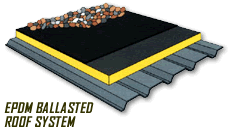
EPDM has gained industry-wide acceptance and respect by providing immediate and long-term roofing solutions. As environmentalists and code regulators place more emphasis on the sustainable performance of building materials, EPDM continues to be the roofing material that stands the test of time. Characteristics that contribute to EPDM’s overall system performance include:

The EPDM (ethylene propylene diene terpolymer) rubber roofing membrane has been an appealing choice of the low-slope commercial roofing industry for over 40 years, with more than 500,000 warranted roof installations on 20 billion-plus square feet. Annually, EPDM accounts for over 1 billion square feet of new roof coverings in the United States, and is the most frequently used roofing material in the marketplace. Building Design and Construction magazine and the National Roofing Contractors Association (NRCA) confirmed in their 2002-2003 market surveys that EPDM continues to be the number one roofing choice of architects, roof consultants and contractors for both new construction and replacement roofing projects.
The greatest test of any construction material is how it performs under actual field conditions. Forty years of empirical experience in field applications has shown EPDM to have the roofing industry’s longest average service life. Characteristics that contribute to this superior overall system performance include:
EPDM’s high resistance to wind damage has also proven to be an increasingly desirable attribute. These roof systems can be designed to meet a variety of wind uplift criteria from Factory Mutual, including 1-60, 1-90, and 1-120 ratings and greater, and the stringent code of Dade County, Florida.
Architects, roof consultants and contractors have come to depend on EPDM’s time tested, long-term performance.
For more information about the attributes of EPDM, please click here to view/download a PDF version of the EPDM Attributes Brochure.
Please note that EPDM is a commercial roofing product, designed to be used in non-residential roof systems.


James E. Carlisle
Lorem ipsum dolor sit
Lorem ipsum dolor sit amet, consectetur adipiscing elit. Ut elit tellus, luctus nec ullamcorper mattis, pulvinar dapibus leo.
 Timely and professional service.


James E. Carlisle




Lorem ipsum dolor sit amet, consectetur adipiscing elit. Ut elit tellus, luctus nec ullamcorper mattis, pulvinar dapibus leo.