
Commercial flat roof repair starts by finding where water enters, not by covering the stain inside. A useful visit names the roof system, records the visible damage, and says whether a small repair fits. That keeps the building protected and the decision tied to the roof in front of you.
Request a commercial roofing evaluation or call All In One Exteriors at (404) 445-8136.
What problems can a commercial flat roof repair address?
Flat and low-slope roofs still slope a little so water can reach drains or scuppers. The surface may be a single-ply membrane, a built-up roof, modified bitumen, or another covering. The repair has to match that assembly. The same patch is not right for every material.
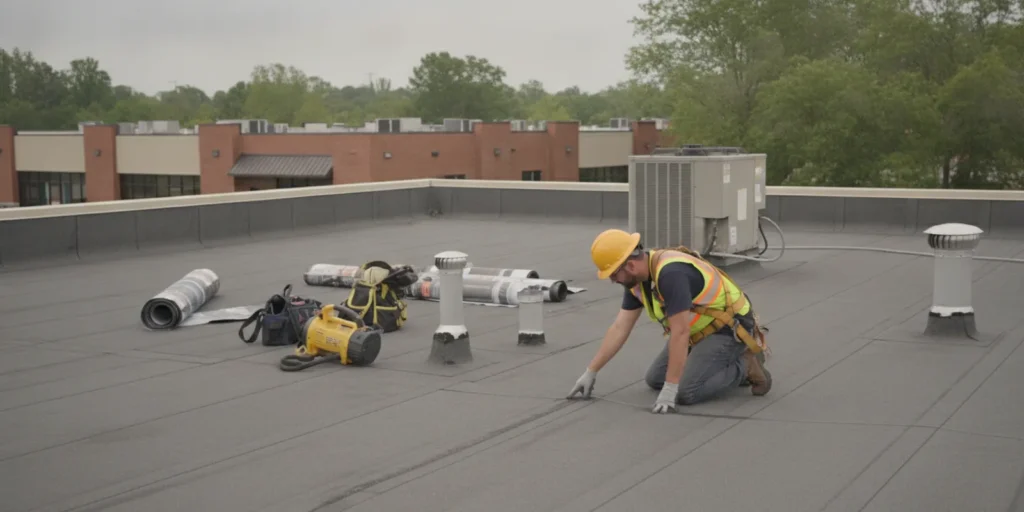
Typical calls involve an open seam, a puncture, a split, a loose edge, damaged flashing, or a leak at a penetration. A penetration can be a vent, pipe, curb, or rooftop unit. Water can travel between layers before it shows indoors. A ceiling stain is a clue, not proof of the entry point.
Some leaks start right after wind or heavy rain. Others are a damp spot that returns, a patch that failed, or wear found during upkeep. Note what changed, when you first saw it, and whether it returns in certain weather. Those details focus the visit without guessing the cause.
Repair and replacement are different jobs. A limited defect on a sound roof may suit a local repair. Widespread wear, repeated failures, or damage into the assembly needs a wider look. No single symptom means the whole roof must come off. Condition and extent decide that.
What should you do when a commercial roof starts leaking?
Move quickly, but do not send staff onto the roof. If water is coming in, protect people and equipment below. Move stock where you can. Use a container or other indoor protection only if it is safe. Mark the wet area and photograph the interior. Do not touch electrical gear or a sagging ceiling.
Write down the date and time, the weather, the rooms affected, and whether water is still coming in. If the leak spreads or creates a safety issue, treat it as urgent. Roof surfaces get slick. Edges, skylights, and rooftop equipment add fall risk. Leave roof access and temporary roof measures to people trained for that work.
When you call, share the address, how to reach the roof, the wet area, and any prior repairs or roof records. If a storm may be involved, photograph what you can see safely and keep the paperwork. Do not assume a policy will pay for the work. Coverage belongs to the policy and the insurer.
- Protect people and property from inside the building.
- Photograph the interior and note the time and weather.
- Call a qualified roofer with the address and access notes.
- Keep insurer questions with the insurer, not as a promise from the roofer.
How is the source of a flat-roof leak evaluated?
A sound visit starts with the assembly and the symptoms you reported. The evaluator may check the surface, seams, transitions, edges, flashings, drains, and penetrations. Those notes get compared with where water showed up inside. The goal is to see whether the likely entry is limited or whether more of the roof needs review.
Photos and written notes make the findings easier to follow. Ask the contractor to separate what was seen from what is only suspected. Also ask which areas could not be reached. That matters when water may have moved before it appeared indoors.
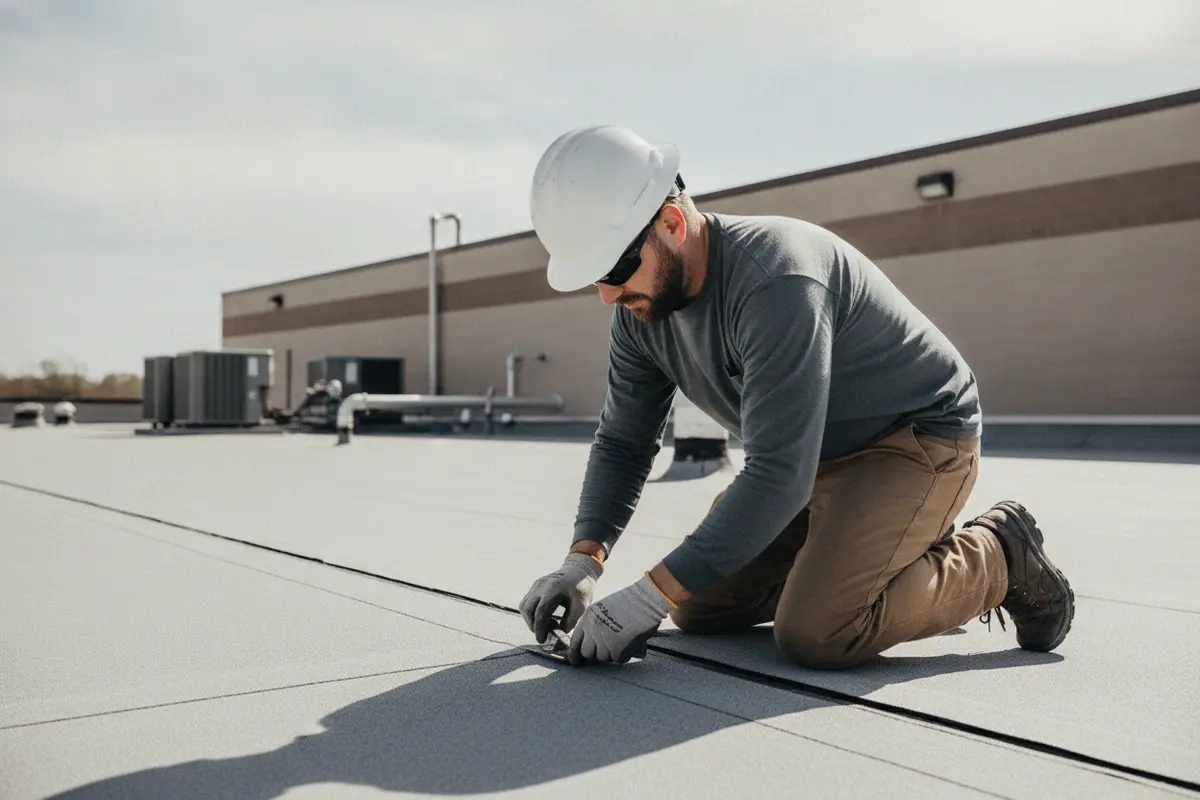
The repair method depends on the material and the defect. An EPDM roof and a TPO roof use different membrane details. The fix should be compatible with the system already there. All In One Exteriors covers commercial roofing in metro Atlanta, including notes on TPO roofing systems and EPDM roofing.
For general roofing practice, property owners can read the National Roofing Contractors Association roofing guidelines. Those pages are background, not a diagnosis. The building’s own assembly and conditions decide the repair.
Which repair approach fits the roof and the damage?
There is no single repair for every leak. The table is a way to talk through options with a roofer. It is not a diagnosis and not a price list. Scope depends on the material, access, how far the damage goes, and what the visit finds.
| Observed concern. | Possible repair direction. | What to clarify. |
|---|---|---|
| Small puncture or surface defect. | A compatible patch on sound membrane. | Ask how far damage extends around the spot. |
| Open seam or separated joint. | Repair that seam with a system-appropriate method. | Ask whether other seams show the same split. |
| Leak at a curb, pipe, or transition. | Repair the flashing or the penetration detail. | Ask whether the unit, flashing, or membrane is at fault. |
| Loose edge or exposed perimeter. | Secure or rebuild the affected edge detail. | Ask how much of the perimeter is involved. |
| Recurring leak or several damaged areas. | A wider review, then a defined repair plan. | Ask what evidence supports a small fix versus more work. |
Ask which material is proposed and why it matches the existing roof. If the quote is broad, ask which findings make that necessary. If the quote is small, ask what it covers and what stays outside the scope. Those answers show both the work and its limits.
How do TPO and EPDM repair considerations differ?
TPO and EPDM are both single-ply membranes, but they are not interchangeable. A repair should match the system in place and the defect in front of you. Seams, penetrations, flashing, surface condition, and the membrane around the damage all matter. The contractor should name the system before describing a method.
On TPO, ask how the work will address the seam or membrane condition and how the repair will be checked. On EPDM, ask how the repair material and surface prep suit that membrane. Do not assume a generic sealant or a homemade patch will last. Have the contractor explain the product, the method, and its limits.
Some buildings use modified bitumen or built-up roofing instead. If records are incomplete, the evaluator can say what the accessible roof shows and what is still uncertain. For a wider look at low-slope materials, see this guide to flat roof materials for Georgia property owners. That page compares systems. It does not replace a repair diagnosis.
What should a commercial roof repair proposal include?
A written proposal should be clear to the person who manages the building. It should name the property and the roof area, describe what was seen, and list the tasks and materials. A specific scope is easier to compare and easier to coordinate with tenants, staff, or other vendors.
- Findings: State the visible condition and where it sits. Keep observations separate from guesses.
- Work area: Name the roof section, penetrations, seams, or edges included.
- Method and materials: Name the approach and how it relates to the existing system.
- Exclusions: Note areas left out, hidden conditions, or access limits.
- Scheduling and access: Explain site access, coordination, and work-area precautions.
- Completion details: Say what will be reviewed when the work is done and what paperwork you receive.
- Price and payment: Read the written amount and the payment schedule before you authorize the job.
- Warranty terms: Ask for written terms that say what is covered, by whom, and what is excluded.
Do not compare only the total price. One quote may fix one defect. Another may cover more area or different materials. If the scopes differ, ask each contractor to explain the gap. Read the proposal and the warranty instead of relying on a verbal summary.
All In One Exteriors also describes its commercial roofing services and roofing warranty considerations. Ask which terms apply to this job. Coverage and conditions change by project and by manufacturer. Nothing here promises a specific warranty length.
When is repair no longer the only option to discuss?
A repair can be reasonable when the problem is limited, the roof around it is still serviceable, and the work addresses a known defect. A broader plan may belong in the conversation if leaks return in different places, several areas are worn, or earlier repairs did not hold. Ask the evaluator to show those areas and explain why the pattern changes the advice.
A repeat leak does not automatically mean replacement. Age alone does not decide it either. Weigh the condition, the building’s operating needs, the work proposed, and what continued repairs would mean next to a larger project. For help separating project types, see All In One Exteriors’ notes on roof replacement.
Commercial buildings are not houses. Work may need to fit occupants, inventory, equipment, tenant hours, and access rules. Share those limits before the job is scheduled. If someone other than the owner manages the property, confirm who can approve the visit and who should get the written findings.
What should Georgia property owners consider?
Georgia weather brings heavy rain, heat, humidity, and stretches of strong wind. An active leak deserves prompt attention. Weather alone still does not show what failed. The evaluator should tie the roof condition to the timing and symptoms you reported, not assume a cause.
After a storm, separate short-term protection from a lasting repair. Temporary measures, if needed, should be done safely by qualified people. Once conditions allow, document the damage and get a clear description of the recommended work. If you talk with an insurer, keep records and ask the insurer about the policy steps. A roofer can describe roof observations and proposed work. A roofer cannot decide coverage or promise a claim result. The separate guide to storm damage roof insurance claims in Georgia covers claim paperwork. This page stays on the repair itself.
If the roof is not leaking now, planned upkeep can catch visible issues before they become urgent. Maintenance is not a repair, and neither is the same as emergency response. All In One Exteriors has a separate page on commercial roof maintenance for owners planning routine visits. A contractor can help say which service matches the condition you reported.
What questions should you ask before authorizing repair?
- What roof system is installed, and what evidence supports that?
- Where do you think water is entering, and what did you see?
- Which parts of the roof are in this repair, and which are not?
- Why does this method fit this membrane or assembly?
- Are there access limits or hidden conditions that could change the work?
- How will the repair be documented and checked after it is done?
- What written warranty applies, if any, and what are its limits?
- If you recommend more work, which findings support the wider scope?
Answers should be specific to this building, not generic assurances. If something is unclear, ask for the proposal to be revised so the scope and exclusions are in writing. A clear agreement makes the decision easier and gives both sides the same picture of the work.
When should you request a commercial roof evaluation?
Request a visit when a leak appears, a prior repair is not holding, or visible damage needs a professional look. For active water or a safety concern, contact a qualified roofer promptly and protect occupants from inside if it is safe. If the issue is not urgent, get the evaluation before you authorize work so the scope matches the roof.
All In One Exteriors serves commercial property owners and managers across north metro Atlanta. An evaluation is a practical next step when you need findings, a compatible repair method, and a written scope before work starts.
Discuss a commercial roof repair evaluation or call (404) 445-8136.
Frequently asked questions
Can a commercial flat roof leak far from the ceiling stain?
Yes. Water can move through or along the assembly before it shows indoors. A stain marks where water became visible, not always where it entered. The visit should look at the indoor symptom and at roof details above and around that area.
Can one patch material fix any flat roof?
No. Materials and methods should suit the existing system and the defect. Ask the contractor to name the roof material and explain why the repair matches it. A generic patch may miss the cause or be wrong for that assembly.
Does a recurring leak mean the whole roof must be replaced?
Not by itself. A repeat leak is a reason to review the location, earlier work, and the roof around it. Ask for evidence before you widen the repair or consider replacement, and compare that evidence with the written scope.
Will insurance cover a commercial flat roof repair?
Coverage depends on the policy and the insurer’s review. A roofer can record visible conditions and describe proposed work. A roofer cannot promise that a loss is covered or that a claim will be approved. Ask the insurer for policy-specific guidance.
What should I send when I request an evaluation?
Share the building location, the affected area, when the problem started, and whether water is still entering. Include safe photos and anything you know about earlier repairs or the roof system. Mention access and scheduling needs so the visit can be planned.
Commercial flat roof repair works best when the findings, the method, and the limits are clear before work begins. For a Georgia commercial property, a focused evaluation is a practical way to address the leak and choose a scope that fits the roof.