
Commercial roof maintenance is the scheduled inspection, documentation, and small upkeep that keeps a low-slope roof working between larger repairs. Georgia property owners and commercial property managers should know what that program covers, which records a contractor should leave behind, and which questions separate a real maintenance visit from a sales call for a replacement. The membrane comparison, project cost, and replacement timeline belong on other pages. This guide is about hiring for the maintenance itself.
All In One Exteriors installs, repairs, and maintains commercial roofs for offices, retail, warehouses, and other properties across north metro Atlanta, including Alpharetta and Marietta. A useful first step is a property-specific look at the roof you already have, not a generic annual package. Start with the commercial roofing service page when you want that evaluation, then use the checklist below to judge the scope you receive.
What commercial roof maintenance should cover
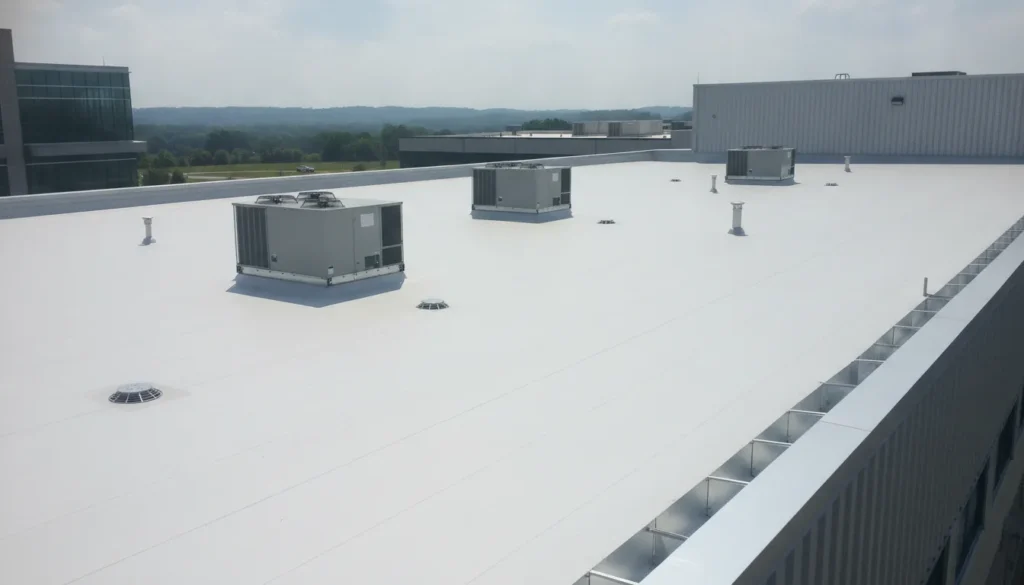
A maintenance visit is not a promise that the roof will never leak. It is a way to find conditions earlier, write them down, and handle small items before water reaches the insulation or the deck. On a Georgia low-slope roof, the visit should match the building, the roof assembly, the age of the system, rooftop traffic, and how the property is occupied.
Ask for a written list, not a one-line “annual inspection.” A practical visit usually includes the items below.
- A walk of the field, edges, and rooftop equipment, with photos of anything that changed since the last visit.
- Clearing debris from drains, scuppers, gutters, and overflow paths so water can leave the roof.
- A look at seams, flashings, edge metal, curbs, pipe boots, and sealant at penetrations.
- Notes on ponding, soft areas, open seams, displaced ballast or pavers, and damage from other trades.
- An interior check for ceiling stains, damp spots, and leaks that return in the same place.
- A short report that says what was done, what was only observed, and what needs a separate repair decision.
The U.S. Department of Energy’s Energy Saver guide to cool roofs says buyers should weigh the cost of keeping a cool roof clean and reflective. The same guide notes that cool products are common on low-slope commercial roofs in warm climates. That is a maintenance point, not a reason to pick a membrane from a brochure. Dirt, ponding, and failed seams can undo the surface a reflective roof depends on. Cleaning and drain work belong in the scope when the roof was sold on that performance.
If you still need to compare TPO, EPDM, modified bitumen, and metal panels, use the live Atlanta commercial roofing guide. It already covers system choice, weather exposure, and when repair, recover, or replacement is the larger project. Do not pay a maintenance contractor to re-teach that comparison on every visit.
Maintenance, repair, and replacement are different jobs
Property managers get into trouble when one visit is asked to do all three. Maintenance finds and documents conditions and handles small upkeep that was agreed in advance. Repair corrects a specific defect. Replacement, or a recover, changes the roof system. A contractor who folds all three into one unsigned number is not giving you a maintenance program.
| Decision | What it is for | What the paperwork should say |
|---|---|---|
| Maintenance. | Scheduled inspections, drain clearing, photos, and minor upkeep already listed in the scope. | Visit frequency, what is included, what is excluded, and how findings are reported. |
| Repair. | A known defect such as an open seam, failed flashing, or a puncture. | Location, photos, method, and whether the repair is temporary or intended to last. |
| Recover or replacement. | Widespread failure, wet insulation, repeated leaks, or a system near the end of its service. | A separate proposal after inspection, not a line buried in a maintenance invoice. |
A new roof still needs this split. Weather, debris, foot traffic, and later equipment work start on day one. The first maintenance visit should establish a baseline: what was installed, where the drains and penetrations are, and which details the next inspector should recheck. That baseline is also what you hand a later contractor so they are not guessing.
Replacement timing is its own planning problem. If the inspection says the system is no longer a maintenance candidate, read commercial roof replacement timelines for how a Georgia project is sequenced around tenants and weather. Keep that decision off the maintenance invoice.
What Georgia weather changes about the plan
North metro Atlanta roofs see strong sun, humid stretches, heavy rain, wind, and storms that drop debris. None of that picks a membrane for you. It does change what a maintenance contractor should look for and when you should call them back.
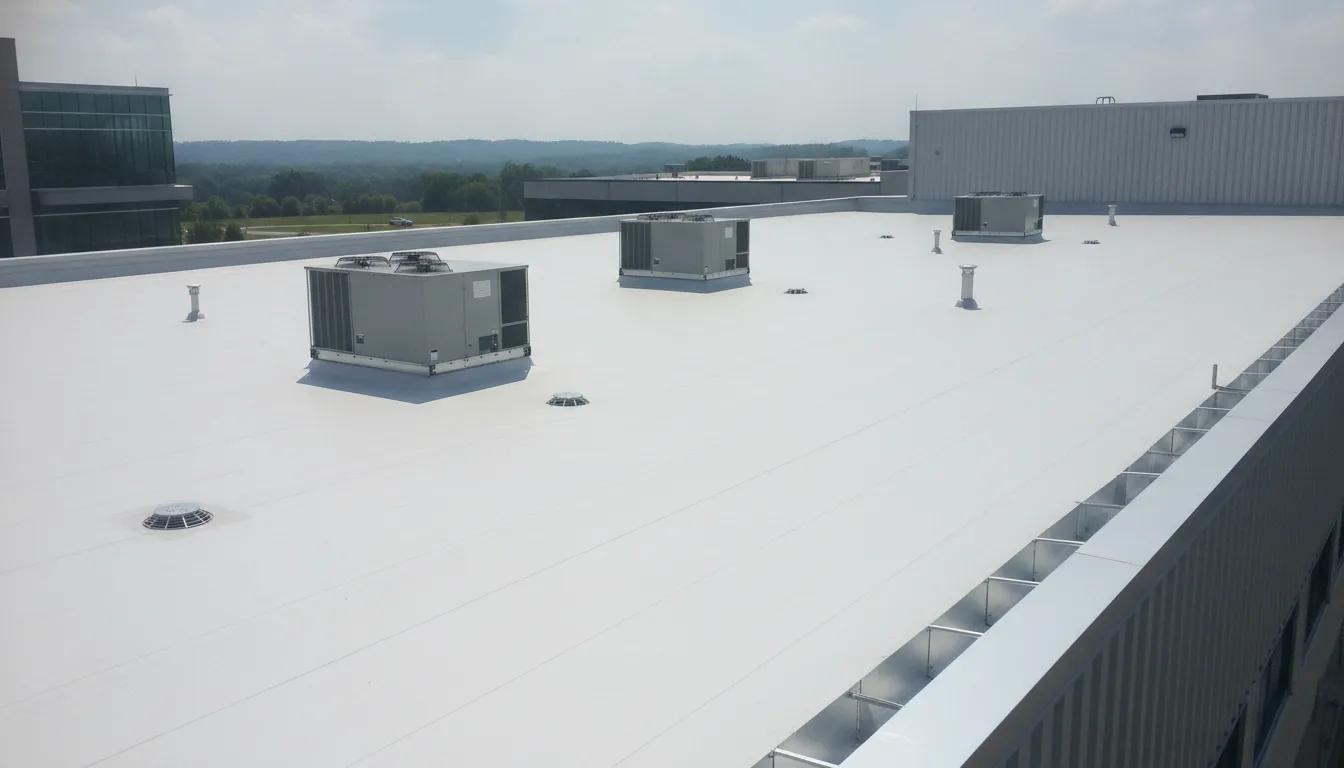
Sun and heat age exposed surfaces and make a dirty reflective roof less useful than the product sheet suggested. Humidity and slow drainage keep the surface wet after a storm, which matters at seams and around curbs. Heavy rain tests every drain, scupper, and penetration. Wind and falling limbs move edge metal and can puncture a membrane that looked fine the week before. After a severe storm, a scheduled fall visit is not a substitute for a timely look at the areas that took the hit.
Rooftop trades are the other Georgia constant. HVAC, solar, sign, and telecom crews use the same roof. Many leaks that get blamed on “age” start as a screw, a dragged unit, or a flashing someone opened and did not close. A maintenance scope should say whether the contractor will document other trades’ work, and whether your team has a roof-access rule. If anyone can walk the roof without a log, the maintenance report cannot explain what changed.
Storm damage that may involve an insurance claim is a different conversation from routine upkeep. The Georgia storm-damage roof claim guide covers documentation and the adjuster visit. Use maintenance records as background for that file. Do not treat a maintenance agreement as a promise that a carrier will pay.
What a written maintenance scope should include
Before you hire, ask for the scope in writing. A fair commercial roof maintenance proposal is specific enough that a second contractor could tell what was and was not included. These are the items worth requiring:
- The roof being covered. Address, roof sections, approximate area, and the system type if it is known. A campus with three buildings is not one roof.
- How often someone will be on the roof. Many managers use two planned visits a year plus an extra visit after severe weather. Match the number to rooftop traffic, tree cover, and leak history instead of buying a count you will not use.
- The checklist. Drains, seams, flashings, edges, penetrations, and interior evidence should be named. “Inspect and report” is not a checklist.
- What small work is included. Debris removal and clearing a drain may be included. Opening a seam, replacing flashing, or coating a ponding area usually is not. Say which is which.
- The report. Photos, the date, the conditions found, and a plain recommendation: monitor, repair, or evaluate for a larger project.
- Access and safety. Who unlocks the roof, how occupants are notified, and that the crew will not leave drains blocked or materials unsecured.
- Warranty boundaries. The contractor should say they will not promise manufacturer coverage. You confirm term length, transfer rules, and owner duties in your own warranty documents.
Warranty language is easy to oversell. All In One Exteriors can discuss manufacturer and workmanship warranties that apply to systems it installs, including TPO, EPDM, and modified bitumen. Those documents control. A maintenance visit does not extend a warranty by itself, and neglect or damage by another trade is often excluded. If you need the document checklist rather than the maintenance scope, use the roofing warranty guide and then read the warranty you actually hold.
Financing, if a later repair or replacement is larger than the operating budget, is a lender decision. Do not accept a maintenance pitch that quotes a rate or a monthly payment. Ask for the roof scope first.
Questions to ask before you hire
Use these questions on the call or in the proposal review. The useful answers are specific to your building.
- Who walks the roof, and will the same company write the report?
- Which roof sections and which systems are included this year?
- What is included in the visit price, and what becomes a separate repair ticket?
- How are drains, ponding, and other trades’ damage photographed and described?
- How soon after a severe storm can someone return, and is that visit included?
- Will the report distinguish monitor, repair, and replacement so you can budget them apart?
- Which manufacturer documents, if any, will the contractor need on site, and which owner duties do those documents list?
- How will the crew coordinate with tenants, store entries, and rooftop equipment that must stay running?
Listen for answers that name your drains, your equipment curbs, and your leak history. A contractor who jumps to a coating, a recover, or a price per square before describing the roof has skipped the maintenance question. Material pages such as the TPO roofing systems overview are there when you are choosing or replacing a system. They are the wrong place to start a maintenance hire.
Also separate this decision from residential metal care. A standing-seam house roof and a low-slope commercial membrane do not share a checklist. If the property is a metal roof on a commercial building, say so. Panel clips, oil canning, and fastener lines are not the same findings as a heat-welded seam.
When to request an evaluation
Call when the question is no longer what a normal visit includes. These are the usual triggers for Georgia property managers:
- Water inside the building, or stains that return after earlier patches.
- Ponding that is still there long after the rain stops, or drains that clog every storm.
- Open seams, loose edge metal, soft or saturated areas, or a membrane that has been punctured.
- A recent storm, fallen debris, or rooftop work by another trade.
- A buyer, lender, or new property manager who has no baseline report.
- Repeated repairs on the same section, which usually means the maintenance list is no longer the right tool.
Bring the last reports, photos, leak locations, and any warranty paperwork you have. A contractor can give a better scope when they can see what changed. If you do not have that file yet, the first paid visit can create it, as long as the proposal says that is the job.
All In One Exteriors can walk a commercial roof, separate maintenance items from repairs, and tell you when the honest next step is a larger project. That recommendation should be tied to what is on your roof. It should not be a copied annual plan, and it should not restate the TPO and EPDM buyer’s guide you can already read on the site.
Frequently asked questions
How often should a commercial roof get maintenance in Georgia?
Many property managers schedule two visits a year and add a visit after severe weather or after other trades work on the roof. Tree cover, rooftop equipment, and a history of slow drains can justify more. The right number is the one your scope explains, not a package size.
Does a new commercial roof need a maintenance plan?
Yes. Debris, drainage, foot traffic, and new penetrations affect a new roof immediately. The first visits should build a photo baseline and confirm that drains and flashings still match the closeout documents.
Will maintenance keep a manufacturer warranty in force?
Only the warranty you hold can say that. Many commercial warranties expect the owner to inspect, keep drainage clear, and repair damage that is not covered. Ask the contractor which owner duties are in your documents, then follow those documents. Do not rely on a verbal promise that maintenance “keeps the warranty.”
What should a maintenance report include?
The date, the roof sections walked, photos of defects, notes on drains and penetrations, and a clear split between items to monitor, items to repair, and items that need a replacement or recover discussion. A report with no photos is hard to compare next season.
Can the same contractor handle a later repair or replacement?
Often yes, but the paperwork should change. Maintenance stays on its scope. A repair or replacement gets its own proposal, price, and schedule. If that larger project is the real question, start from the commercial roofing service page and the replacement-timeline guide instead of stretching a maintenance visit.
Request a commercial roof evaluation
If you manage a property in Alpharetta, Marietta, or elsewhere in north metro Atlanta, ask All In One Exteriors to look at the roof first. Do that before you sign a maintenance plan you cannot audit. A short evaluation shows what the next visit should include and whether anything on the roof should be a repair instead.
Call (404) 445-8136 to schedule a commercial roof evaluation.
Have the building address, any leak history, and the latest roof report ready if you have them. If you do not, say so. The first visit can start the file.