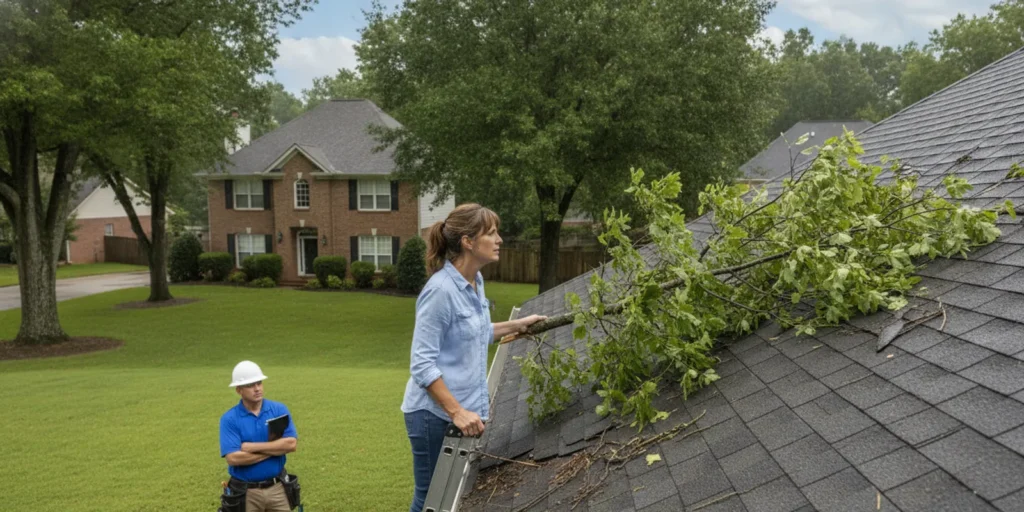

When a branch or tree strikes your home, the roof may show anything from a few displaced shingles to a puncture or structural damage. Responding to roof repair tree damage safely starts with keeping people away from hazards, documenting what you can see from the ground, and arranging a professional assessment. Do not climb onto a damaged roof or move a tree that is touching power lines.
Request a roof repair evaluation
What should you do first after a tree hits the roof?
Start with personal safety, not a close-up inspection. If a large limb is unstable, the roof is visibly sagging, or you hear structural movement, keep people out of the affected area and contact emergency services when there is immediate danger. Treat downed or nearby power lines as energized. Keep away and contact the utility company or emergency responders as appropriate.
If water is entering, move people and belongings away from the leak. Place a container under drips only if it is safe to do so. Avoid wet ceilings, light fixtures, outlets, and standing water around electrical equipment. Do not puncture a bulging ceiling; trapped water can release suddenly. If conditions are dangerous, leave the space and seek qualified help.
- Check from a safe place whether anyone is hurt or in immediate danger.
- Look for fire, electrical hazards, unstable limbs, or signs of a roof or wall shifting. Do not approach these hazards.
- Take photos from the ground if it is safe, including the tree, roof edge, interior water, and affected belongings.
- Protect the interior from further water only when you can do so without entering a hazardous area.
- Arrange a roofing assessment and contact your insurer to ask about its documentation and claim process.
For more detail on what to look for after severe weather, see this University of Minnesota Extension guide to storm-damaged trees. It discusses tree damage and safety; it is not a substitute for a roof inspection.
How can you tell whether tree impact damaged the roof?
Visible clues can help you explain the situation to a roofer, but they do not establish the full extent of damage. From the ground, look for a branch resting on the roof, missing or lifted shingles, a damaged ridge or eave, displaced flashing, debris in a gutter, or a new stain on an interior ceiling. Do not use a ladder to inspect a roof that may be damaged.
A branch can also damage areas that are hard to see from below. Impact may affect roof covering, flashing, roof decking, rafters, or interior finishes. A small exterior mark does not always show the full scope, while a fallen branch nearby may leave the roof untouched. Assessment should distinguish confirmed damage from items that need closer inspection.
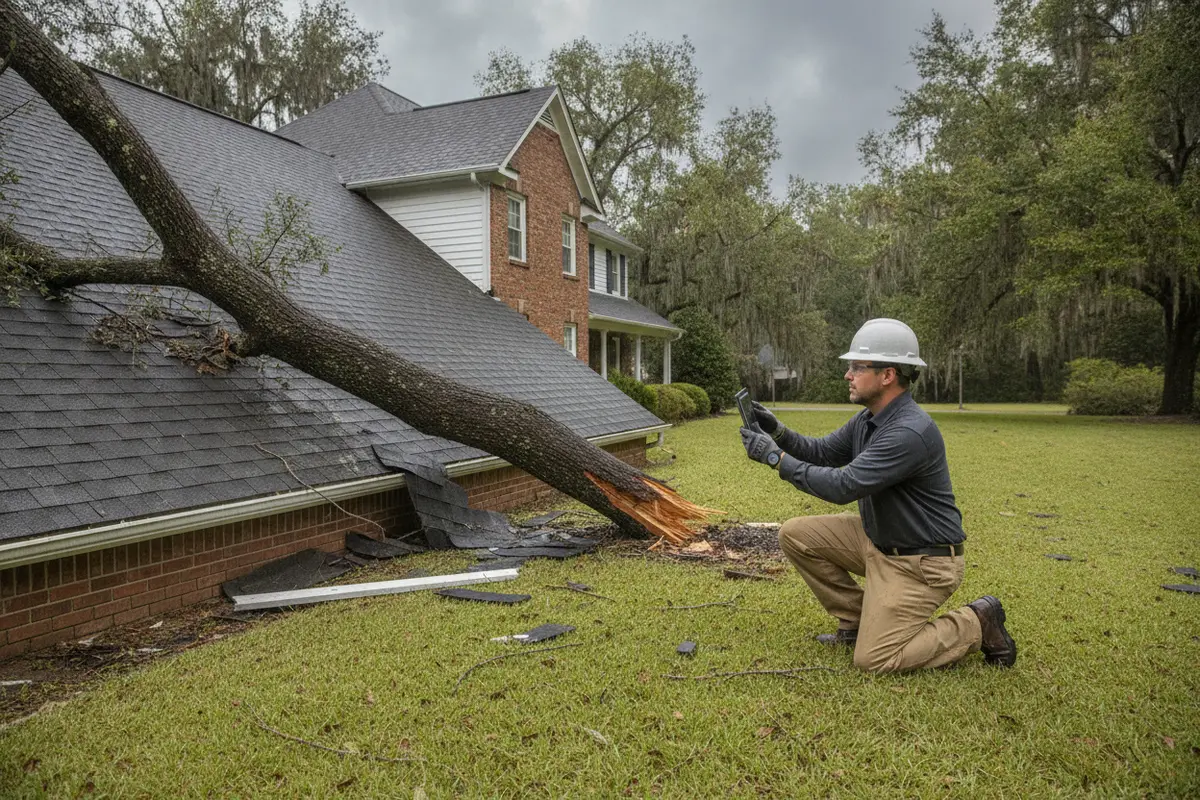
Which tree-related roof problems need urgent attention?
Some situations call for prompt help because they involve ongoing exposure or immediate hazards. Others can be scheduled for assessment without assuming that a full replacement is necessary.
| What you observe | Why it matters | Practical next step |
|---|---|---|
| Tree or limb touching a power line | Possible electrical danger | Stay clear and contact the utility or emergency responders; do not approach or move the limb. |
| Large limb hanging over the roof or an occupied area | It may shift or fall | Keep people away and arrange assessment by an appropriate tree professional and roofer. |
| Roof visibly sagging, a large opening, or active interior water | Potential structural or water exposure | Keep out of the affected area and request prompt professional help. |
| Shingles or flashing appear displaced, with no immediate hazard | Rain may enter through an opening | Photograph from the ground and schedule a roof evaluation. |
| Branch falls nearby, with no visible roof impact | Damage is not certain | Check from the ground and monitor for new leaks; seek an assessment if signs appear or uncertainty remains. |
What should you avoid doing?
- Do not climb onto a roof after impact, even if the surface looks stable. Wet or damaged roof materials can give way.
- Do not stand beneath a suspended limb or try to cut, pull, or lift a heavy branch yourself.
- Do not use a chainsaw near the roof, a ladder, or utility wires unless you are qualified and the conditions are safe.
- Do not cover damage with a tarp if reaching the roof requires unsafe access. Temporary protection should be handled by qualified people.
- Do not discard damaged materials before documenting them, unless removal is needed for safety or to prevent further damage. Ask your insurer about its process.
Tree hazards and roof repairs can require different expertise. A qualified tree professional can evaluate an unstable tree or limb; a roofing contractor can assess the roof assembly and explain repair needs. Keep clear responsibility for each concern rather than asking a roofer to undertake unsafe tree work.
How does a roof repair assessment work?
A roofer will consider the reported impact and inspect accessible areas of the roof and related components. The assessment may include roof covering, flashing, edges, penetrations, and signs of water entry. Where safe and appropriate, the professional can determine whether closer inspection is needed to evaluate the underlying structure. The scope depends on the conditions and access.
Ask for an explanation of observed damage, recommended work, and items that remain uncertain. A written proposal should make clear what is included, what materials or areas are involved, and whether additional damage discovered during work could change the scope. Do not assume every storm-related concern requires replacing the entire roof; the repair recommendation should reflect the documented condition.
All In One Exteriors provides roof repair and replacement services in Georgia. Property owners can learn more about roof repairs, explore the company’s storm damage repair service, or review its roofing services.
How should you document damage and handle insurance questions?
Photograph the scene from safe locations before cleanup when possible. Include wide views showing the tree and building, then closer views from the ground that show visible roof or interior damage. Record when the event occurred and note any changes, such as water stains that appear later. Keep receipts for reasonable temporary measures and belongings affected, and save communications related to the event.
Contact your insurer to ask how to report the loss, what documentation it needs, and whether it wants to inspect the property before repairs begin. Coverage, deductibles, deadlines, and claim decisions depend on the policy and insurer. A roofing contractor can describe observed roof conditions and proposed work, but cannot guarantee claim approval or payment. For a Georgia-specific overview of the topic, see the company’s guide to storm damage roof insurance claims.
How do tree-impact repairs differ from routine roof maintenance?
Tree impact is a discrete event that may create an opening or damage roof components. Routine maintenance is planned work to identify and address developing issues, such as debris accumulation or wear. A storm event should not be treated as routine maintenance when a limb has struck the roof, water is entering, or a hazard is present.
After urgent issues are addressed, property owners may ask whether overhanging branches or recurring debris warrant attention. Tree pruning is a separate decision, and large or hazardous limbs should be evaluated by an appropriate tree professional. Do not cut branches that are tangled with a roof or power line. For the roofing side, learn about roofing installation and system considerations.
What should Georgia property owners ask before work begins?
- What damage did you observe, and which areas still need further inspection?
- Does the proposed work address only visible roof covering, or does it include related flashing or underlying components?
- How will the work area be kept safe while a tree or branch remains nearby?
- What temporary measures are recommended if rain is expected before the repair?
- What does the proposal include, and how will any newly discovered damage be reviewed with me?
- What photos or records should I keep for my own files or insurer?
For a repair request, use the company’s roof repair contact path. Share the property location, when the impact occurred, whether water is entering, and any immediate safety concerns. Avoid sending someone onto the roof to gather details.
What happens between the first call and repair?
Knowing the sequence can make the next decisions easier. First, share the basic event details and any visible hazards. Explain whether a tree or limb remains on the roof, whether the home is occupied beneath the impact area, and whether water is entering. Photos taken from the ground can help communicate the situation, but they are not a substitute for an on-site assessment.
Next, the contractor can determine whether an initial visit is appropriate or whether another hazard needs to be addressed first. If the roof cannot be approached safely while a limb is unstable, coordinate with a qualified tree professional. Once access is safe, the roofer can document visible conditions, identify areas that may require closer evaluation, and discuss temporary protection if exposure remains.
Before authorizing work, review the proposal and ask what is included, how materials and affected areas are described, and what happens if concealed damage is found. Keep a copy of the proposal and any photos or notes. If you are also speaking with an insurer, ask the insurer about its process and timing rather than assuming that an inspection, estimate, or contractor recommendation establishes coverage.
How can you prepare for the assessment?
A few simple details can make the visit more useful without putting anyone at risk. Make a short timeline: when the impact happened, when you first noticed a leak, and whether the water or visible damage has changed. Note the rooms directly below the affected roof area and whether water reached wiring, fixtures, or stored belongings. Keep these notes outside the affected space if the ceiling appears unstable.
From a safe location, capture a wide image of the building and tree, then a few closer images of visible damage. Do not use a drone, ladder, or window ledge if doing so creates a fall or electrical hazard. Avoid moving debris simply to improve a photograph. If weather changes or the leak worsens, update the roofer and insurer with the new information.
Clear access to the property only when doing so is safe. Keep children and pets away from the work area, and tell the contractor about locked gates, access restrictions, or any known electrical issue. If a tree crew and roofing crew both need to visit, ask who will handle each part and whether one must complete work before the other can safely proceed.
Frequently asked questions
Can I inspect the roof myself after a branch falls?
Do not climb onto a roof that may have been struck. Inspect from the ground or through a window only if safe, take photos from a safe location, and arrange a professional evaluation if you see damage or are unsure.
Does a branch on the roof always mean the roof must be replaced?
No. The appropriate work depends on the extent and location of damage. An assessment should identify affected components and explain whether localized repair or broader work is appropriate.
Should I remove a tree limb before the roofer arrives?
Not if the limb is heavy, unstable, touching wires, or resting on a damaged roof. Keep people away and contact the appropriate utility, emergency responder, or tree professional. Removing a limb may also change the evidence, so document the scene first if it is safe.
Will homeowners insurance cover tree damage to my roof?
Coverage depends on the policy, circumstances, exclusions, and insurer’s claim decision. Contact the insurer directly, document the damage, and avoid relying on a contractor to promise an outcome.
Can a roofer assess damage while the tree remains in place?
A roofer may be able to review visible conditions from a safe location, but access and inspection depend on the hazard. A tree professional may need to address an unstable limb before closer roof access is safe.
Arrange a roof repair evaluation
After tree impact, prioritize safety, preserve useful documentation, and base repair decisions on a professional assessment of the roof’s actual condition.