
Roof decking replacement in Georgia may be needed when the wood panels or boards beneath a roof covering are damaged, weakened, or no longer provide a sound base for new materials. The decking is usually hidden once a roof is complete, so a stain indoors or a leak outdoors does not by itself prove that the deck must be replaced. A careful assessment helps identify the cause, the affected area, and the appropriate repair.
What is roof decking?
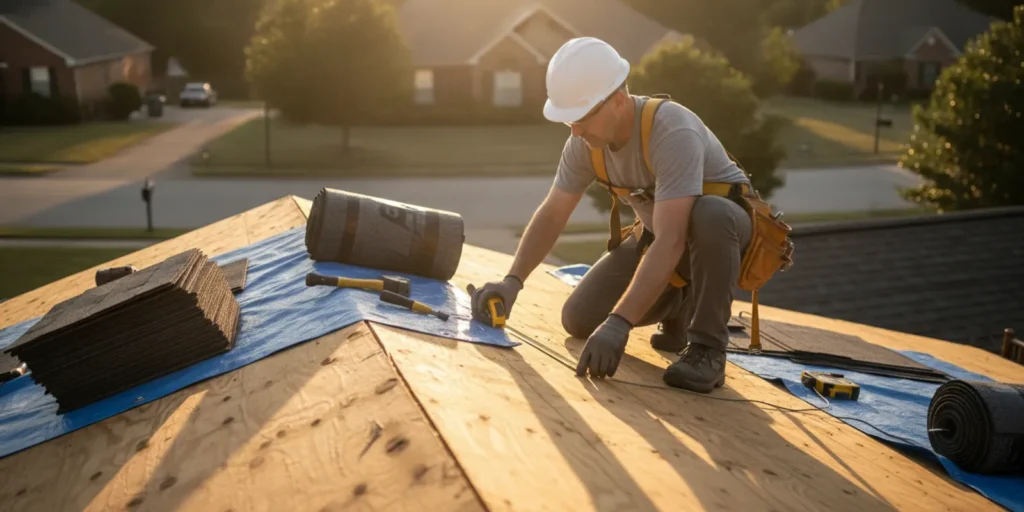
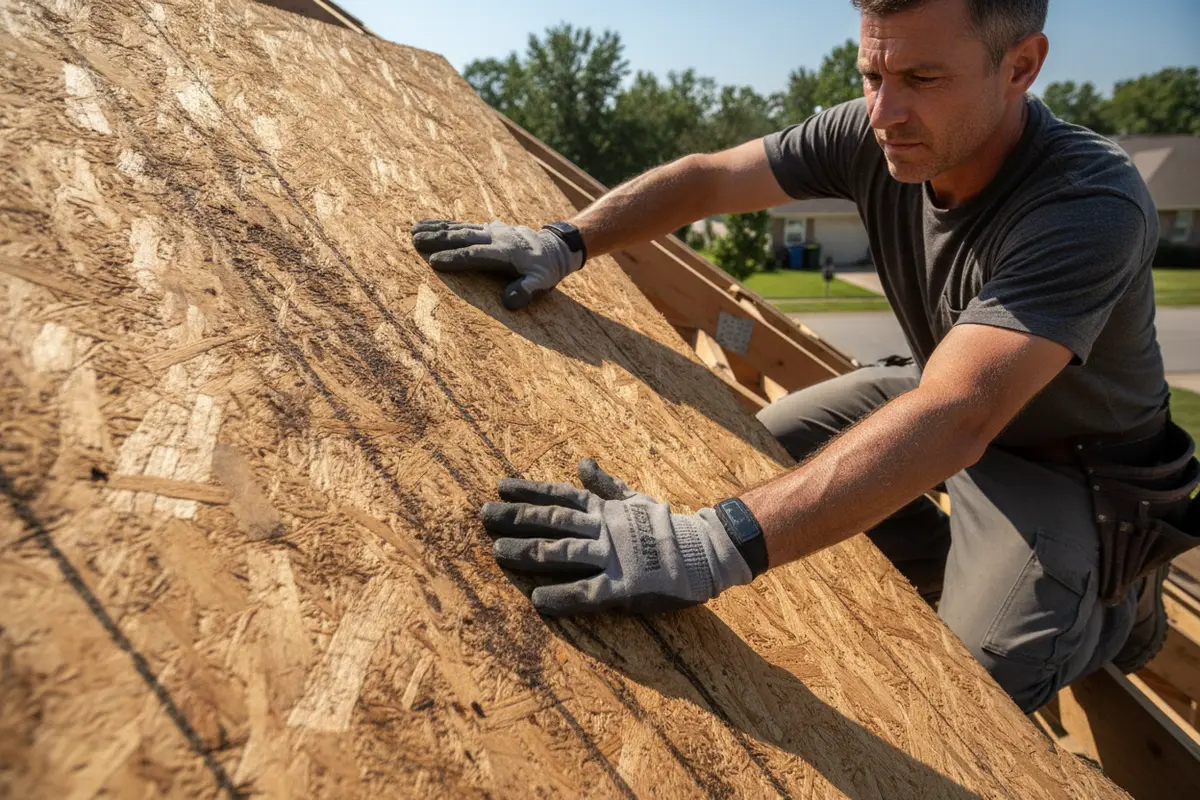
Roof decking, also called roof sheathing, is the layer attached to the roof framing. On many homes, it consists of wood panels; older or specially designed roofs may use other materials. The deck gives the roofing assembly a base for underlayment and the exterior roof covering. It also helps distribute loads to the framing. The exact assembly varies with the building and roof design.
Decking is not the same as rafters or trusses. Those are structural framing members beneath the deck. A roofing project may involve surface materials, underlayment, flashing, decking, framing, or more than one layer. Knowing which part is affected matters because a repair to the roof covering cannot correct a weak deck, while replacing sound decking adds work without addressing a need.
When planning a roof installation or replacement, ask how the contractor will inspect the deck once the existing roof covering is removed. That is often when concealed conditions become visible. The initial review can identify warning signs, but the full extent may not be clear until the roof is opened.
What signs may point to damaged roof decking?
Decking damage can follow a leak, long-term moisture exposure, or other conditions that affect the wood. Watch for signs, but treat them as reasons to investigate—not as proof that the whole deck needs replacement.
- A recurring roof leak: Water that returns after a repair may indicate an unresolved entry point or damage in the roofing assembly. The source can be away from the interior stain.
- Ceiling or attic staining: Discoloration, damp insulation, or a musty odor can suggest moisture. These symptoms can also have causes unrelated to the roof deck, so the source needs to be traced.
- Visible sagging or an uneven roof plane: A dip may involve decking, framing, or both. Do not climb onto a roof or press on a suspected weak area to test it.
- Soft, swollen, or deteriorated wood: If decking is exposed during a project, deterioration, delamination, or loss of firmness may be visible. A roofing professional can assess whether the affected piece still provides a reliable base.
- Repeated trouble around a roof penetration: Chimneys, vents, skylights, and roof-to-wall transitions require careful water management. A leak near one of these locations may involve flashing, the covering, or hidden substrate.
In Georgia, heavy rain, humidity, and changing weather make prompt attention to active moisture important. That does not mean every roof with a leak has damaged decking. A professional should look for the entry point and assess the condition of the materials before recommending a scope. If a storm may have caused damage, an inspection can document visible conditions; it cannot promise that an insurer will cover a repair.
It can help to separate a symptom from a likely cause. A ceiling mark that grows after rain suggests a water issue, but it does not identify whether the entry is at a flashing detail, damaged covering, or another location. A roof that appears wavy may deserve prompt attention, yet the cause could involve framing as well as sheathing. Write down what changes with weather and when you first noticed it. That simple record gives the evaluator useful context without requiring you to enter an unsafe space.
For a concern following hail or wind, review the steps for a storm-damage roof evaluation. If you suspect an active leak that needs urgent attention, see the information about emergency roofing service. Keep people away from sagging ceilings or visibly unstable areas, and avoid entering a space where there may be electrical or structural hazards.
How is decking damage assessed?
A sound assessment starts with the symptoms and moves toward the underlying cause. A roofer may review the roof from a safe vantage point, inspect accessible attic areas when appropriate, and examine the roof assembly during repair or replacement. An exterior inspection alone may not reveal every condition beneath shingles or another roof covering.
- Describe what you have noticed. Note when leaks occur, which rooms are affected, whether the issue follows rain or wind, and whether it has happened before. Photos taken from a safe location can help explain changes over time.
- Check accessible interior areas without disturbing them. If it is safe to do so, note visible staining or dampness from the floor or a normal access point. Do not step on ceiling drywall, move wet electrical components, or enter an unsafe attic.
- Identify possible water-entry routes. The visible mark inside may not sit directly below the roof opening. Roof edges, valleys, penetrations, and transitions are examples of places a professional may examine.
- Inspect the deck when it is exposed. During reroofing or a localized repair, removal of the covering can reveal the condition of the substrate. The contractor can distinguish areas that appear sound from areas that are damaged or unsuitable for the planned installation.
- Explain the proposed scope. Ask which areas need replacement, why, and whether any additional work is recommended. Request a written description of how concealed conditions will be documented and priced before work proceeds.
For a clearer evaluation, provide the contractor with the location of each interior sign, the date or weather conditions when it appeared, and any prior repair information you have. If the same spot has been patched more than once, note what was done and whether the leak stopped temporarily or continued. These details do not replace an inspection, but they can help focus attention on a recurring route instead of treating every stain as a separate problem.
One piece of damaged sheathing does not automatically mean the entire roof deck must be replaced. Conversely, a roof that looks acceptable from the yard does not confirm that all concealed wood is sound. The decision should follow the observed condition and the requirements of the planned roofing system. The National Roofing Contractors Association (NRCA) provides general roofing-industry information at its official website; a project-specific evaluation is still needed to determine the condition of a particular roof.
When is a section replaced, and when is more decking needed?
The size of the repair depends on what the inspection finds, the roof design, and the installation requirements for the new materials. If damage is confined to a limited area and the surrounding deck is sound, a localized replacement may be appropriate. If deterioration is widespread, a larger area may need attention. A contractor should explain the extent rather than assuming a full-deck replacement from one visible symptom.
The table below describes common situations in general terms. It is not a diagnosis or a fixed construction specification; roof conditions and project requirements differ.
| Observed condition | Possible scope to discuss | Question to ask |
|---|---|---|
| Small, localized area of unsound decking | Replace the affected section and inspect nearby material | How will you confirm the adjacent deck is sound? |
| Damage appears in several separated areas | Map affected sections and assess whether the pattern points to a broader moisture issue | What evidence supports the proposed limits of replacement? |
| Widespread deterioration or broad areas that cannot support installation | Consider a larger decking replacement scope, with any framing concerns evaluated separately | Does the proposal distinguish decking work from framing repairs? |
| Leak is present but exposed decking appears sound | Investigate the covering, flashing, underlayment, or other possible entry points | What is the likely source, and how will the repair address it? |
Ask the contractor to separate confirmed work from items that could only be evaluated after removal. If the estimate includes a unit price or allowance for concealed damage, make sure you understand how additional quantities will be documented and approved. This helps prevent confusion if the exposed deck differs from what could be seen before work began.
For example, suppose a roof has one interior stain near a vent, but the deck is not yet visible. A careful proposal can describe the expected repair and explain what would happen if removal reveals damaged material beyond that area. Once opened, the contractor can show the affected section, explain why it cannot support the planned installation, and clarify whether adjacent panels appear sound. The owner can then compare the newly documented scope with the agreed pricing process. This is more useful than an undefined instruction to replace whatever is found, because it clarifies how evidence, quantity, and approval fit together.
Consider the boundary between decking and framing when reviewing a recommendation. Sheathing panels are attached to structural members; if a rafter or truss also appears damaged, that concern calls for a distinct description and evaluation. Ask whether the proposal identifies the material involved, where it is located, and whether additional review is needed before the roofing assembly is closed. Clear boundaries help you understand what the project does and does not include.
What happens during roof decking replacement?
Exact steps vary by roof type and project, but a typical residential process includes the following stages:
- Set the scope and protect the property. The contractor reviews access, work areas, disposal, and protection for landscaping or nearby surfaces. Confirm who to contact with questions and how unexpected conditions will be handled.
- Remove roof materials where work is planned. The existing covering and layers above the deck are removed as needed. The team takes care to expose the area requiring assessment while managing debris and weather protection.
- Inspect exposed materials. The deck is checked for damage and suitability. Any suspected framing issue should be identified separately; sheathing replacement is not the same as repairing a rafter or truss.
- Replace agreed-upon decking. Damaged material is removed and replaced as specified for the roof assembly. The repair should fit the surrounding construction and provide an appropriate base for the roofing system.
- Restore the roof assembly. Underlayment, flashing, and the roof covering are installed or repaired in the planned sequence. Details depend on the selected system and the areas involved.
- Review the completed work. Ask what areas were replaced, whether the final scope changed, and what project records or warranty information apply. Keep the proposal and completion documents with your home records.
Weather affects scheduling because an exposed roof needs suitable protection. Ask how the work area will be protected if rain is expected and how the contractor will communicate schedule changes. If the project is a full replacement, the steps can overlap with the broader roof replacement timeline, but the timeline for any specific home depends on its scope and conditions.
Before work starts, move vehicles or outdoor items from the agreed work zone and secure items in the attic that could be affected by vibration or dust. Let the project team know about access constraints, pets, or areas that should remain clear. If you work from home or manage a property with occupants, discuss expected noise and access needs in advance. For a commercial building, tenant notifications and operating hours may be part of the logistics. These preparations do not change the technical repair, but they can reduce avoidable interruptions.
When the deck is exposed, documentation is useful because the condition will soon be covered again. Ask whether the team can identify the repaired area and retain photographs or a written change description for your project records. At closeout, confirm that the roofing layers have been restored over the repaired section and ask for copies of any revised scope, invoices, or applicable product and workmanship documents. The records can help you understand what was addressed if a roofing question comes up later.
What should Georgia property owners ask before work begins?
A few clear questions can make a repair or replacement proposal easier to evaluate:
- Which areas of decking are confirmed as damaged, and what evidence supports that conclusion?
- Will the deck be inspected after the existing roof materials are removed?
- How will you show me concealed damage, such as photos or an on-site review, before adding work?
- How are additional decking quantities and charges described in the proposal?
- Does the scope include only sheathing, or are framing repairs also being considered?
- How will the roof be protected if work is interrupted by weather?
- Which underlayment, flashing, and roof-covering details are included in the complete repair?
- What documentation will I receive when the work is complete?
Compare proposals by scope, not just by the headline amount. One estimate may include a different assumed amount of decking work or describe concealed-condition handling differently. If the cause of water entry is still unclear, ask how the proposed work will address it rather than focusing only on replacing wood.
It is also reasonable to ask how a localized repair will connect to the existing roof covering. The answer may depend on the type and condition of that covering, the position of the damaged area, and the assembly details. If the proposal recommends replacing a broader portion of the roof, ask which issues relate to decking and which relate to the age or condition of the covering. Keeping those reasons separate makes the decision easier to understand.
To understand the overall replacement options, review the company’s roofing service information and residential roofing overview. For a project involving a low-slope building, the assembly and evaluation differ from a typical sloped home roof; learn more about commercial roofing or specific TPO roofing systems.
How do residential and commercial decking decisions differ?
For a house, the inspection usually focuses on the roof assembly over the home, the location of reported leaks, and the visible condition of accessible areas. The owner may need to coordinate access, protect belongings below the work area, and understand how a repair fits with a larger replacement decision.
Commercial buildings can have different roof structures and covering systems, including low-slope systems. A property manager may also need to coordinate tenant access, business operations, drainage, and documentation across a larger roof area. A patch or decking repair should be considered as part of that building’s roofing assembly, not treated as interchangeable with a residential shingle repair. Ask the contractor to define the affected area and explain how the proposed work relates to the existing system.
On a commercial property, it can be useful to keep a simple location record for each concern: building section, interior room or tenant space, date observed, and whether water appeared during or after rain. If several reports arrive from different areas, group them by location rather than assuming they share one cause. A roofer can then discuss whether the pattern suggests isolated trouble or a larger area for assessment. Coordinate any access needs before a site visit so the relevant roof and interior areas can be reviewed safely.
Whether the building is residential or commercial, do not assume that one material or repair approach fits every roof. The design, substrate, condition, and selected covering all matter. If you manage a commercial property, identify any access or operating constraints before scheduling an evaluation.
Can insurance pay for roof decking replacement?
Coverage depends on the policy, the cause of the damage, the facts of the loss, and the insurer’s decision. An inspection or contractor’s findings do not guarantee claim approval, coverage, or a particular payment. If you plan to contact your insurer, keep a record of the damage you can safely observe and ask the insurer about its process and documentation requirements. A roofing contractor can explain observed roof conditions and proposed work, but the insurer determines coverage under the policy.
Do not delay urgent steps to prevent further damage while waiting for a coverage decision. If there is active water intrusion, protect the interior when it is safe, avoid entering hazardous areas, and arrange an appropriate roof evaluation. For more context on the process, see this guide to a Georgia storm-damage roof insurance claim.
Discuss a roof repair evaluation
Frequently asked questions
Does a roof leak always mean the decking needs replacement?
No. A leak can come from a roof covering, flashing, underlayment, or another part of the assembly, and the deck may remain sound. The source needs to be identified, and concealed materials may need to be examined if the roof is opened.
Can I check roof decking myself?
Do not climb onto a roof or step onto a visibly weak area. You can note interior stains from a safe location and share what you have observed with a roofing professional. Inspection of exposed decking should be done as part of safe, appropriate roof work.
Will a contractor know the full amount of decking to replace before removing the roof covering?
Not always. Some damage is concealed beneath the roof covering and becomes visible only during removal. Ask in advance how the contractor will document newly exposed conditions, explain changes, and get approval for added work.
Should I replace the whole roof if some decking is damaged?
Not necessarily. The extent of decking repair and the decision to replace a roof covering are related but separate questions. The age and condition of the covering, the locations and extent of deck damage, and the project scope all matter. Request an explanation of both decisions before choosing a plan.
How can you plan the next step?
Start by recording where you see a leak or stain, when it occurs, and whether the issue has returned after prior work. Avoid unsafe roof access and ask for an evaluation that distinguishes damage to the roof covering, decking, and framing. Before approving a scope, confirm how concealed conditions will be documented and how any additional work will be discussed. All In One Exteriors can evaluate roofing concerns for Georgia property owners and explain the proposed project scope.