
A hail roof inspection in Alpharetta can help you understand whether a storm left damage that needs attention or whether the roof is showing ordinary wear. The useful question is not simply whether hail fell nearby, but whether a qualified inspection finds roof impacts that affect the specific roofing system. A careful review documents observations, explains uncertainty, and gives you a sensible next step without assuming that every mark means a leak or an insurance-covered repair.
Request a roof repair evaluation
What can a hail roof inspection in Alpharetta tell you?
A roof inspection can assess visible conditions on the roof and related areas, such as flashing, vents, valleys, and exposed metal components. The inspector looks for patterns and characteristics that may be consistent with hail impact, while also considering the roof’s age, material, installation details, and existing wear. The inspection is an evaluation of physical conditions. It is not, by itself, a decision about insurance coverage or a guarantee that a roof needs replacement.
Hail reports can help explain why a homeowner is concerned, but a report for a nearby community does not establish that a particular roof was struck or damaged. The Georgia Emergency Management and Homeland Security Agency’s Georgia Hazard Identification and Risk Assessment describes hail as a hazard that can damage roofs and other property. The National Weather Service’s archived local storm reports for April 8, 2006 include historic hail and storm reports in the broader region; an old report is context, not proof of damage at a specific address today.
For a homeowner, the inspection should translate observations into clear answers: what was examined, what was found, which areas need attention, and whether monitoring or further evaluation makes sense. If there is an active leak or a safety concern, say so when arranging service. You can also review storm-damage roof repair options to understand the type of work that may be relevant after a storm.
When should you arrange an inspection?
Consider an inspection when you notice a new ceiling stain, a leak, shingle pieces in the yard, damaged vents or flashing, or other changes after a storm. You might also seek an evaluation when a local hail report raises concern, even if you do not see an obvious problem from the ground. Roof damage is not always visible from a driveway, and a roof can have pre-existing wear that needs to be distinguished from a recent impact.
Do not wait for water to appear indoors if you have a reason to suspect damage. At the same time, do not assume that a single storm report means the roof requires repair. A timely, documented assessment can help you decide what to do next. If water is entering the home, protect people and belongings, move items away from the leak, and contact a qualified roofing professional. Avoid climbing onto a wet, steep, or otherwise unsafe roof to investigate.
For urgent conditions such as active water entry or a risk from loose roofing materials, use a qualified professional to discuss appropriate immediate steps. Emergency response and routine roof maintenance are different needs. A temporary protective measure, if appropriate, does not replace a complete assessment and repair plan. See the company’s emergency roofing service information if the situation needs prompt attention.
What should an inspector check?
The inspection should be appropriate for the roofing material and conditions at the property. Asphalt shingles, metal panels, tile, and low-slope membrane systems have different surfaces and details. The inspector should explain what can be observed safely and whether any area could not be assessed. A useful inspection considers the roof as a system, rather than focusing on one mark in isolation.
- Roof covering: Look for impact marks, displaced or fractured material, granule loss, dents, punctures, or other changes that may warrant closer evaluation. The significance depends on the material and the pattern, not only on the presence of a mark.
- Edges, ridges, and transitions: Review ridges, hips, valleys, eaves, and roof-to-wall transitions, where construction details and water movement matter.
- Roof penetrations: Check visible conditions around vents, skylights, pipes, and other penetrations, including their flashing and surrounding materials.
- Exposed metal and related components: Dents on soft metal or damage to vents and flashing can be useful observations, but one dent alone does not prove that the roof covering has failed.
- Interior indicators: When appropriate, look for water stains, dampness, or other signs in accessible attic or interior areas. A stain may have more than one possible cause and should be traced rather than assumed to be hail damage.
- Existing condition: Note wear, previous repairs, aging, and maintenance issues that may affect the roof independently of the recent storm.
A strong report connects its observations to the locations inspected. Photos can make it easier to discuss a finding, but a close-up without location or context can be hard to interpret. Ask for images that identify the roof area and for an explanation of what each image does and does not show.
How does a thorough inspection usually proceed?
The process should begin with a short discussion of what prompted the visit. Tell the inspector when you noticed the concern, whether water has entered the building, and whether any repairs have already been made. If you have dated photographs or notes, share them, but distinguish what you observed from what you suspect. A clear history helps the inspector compare the current condition with the available evidence without treating a reported storm date as proof of cause.
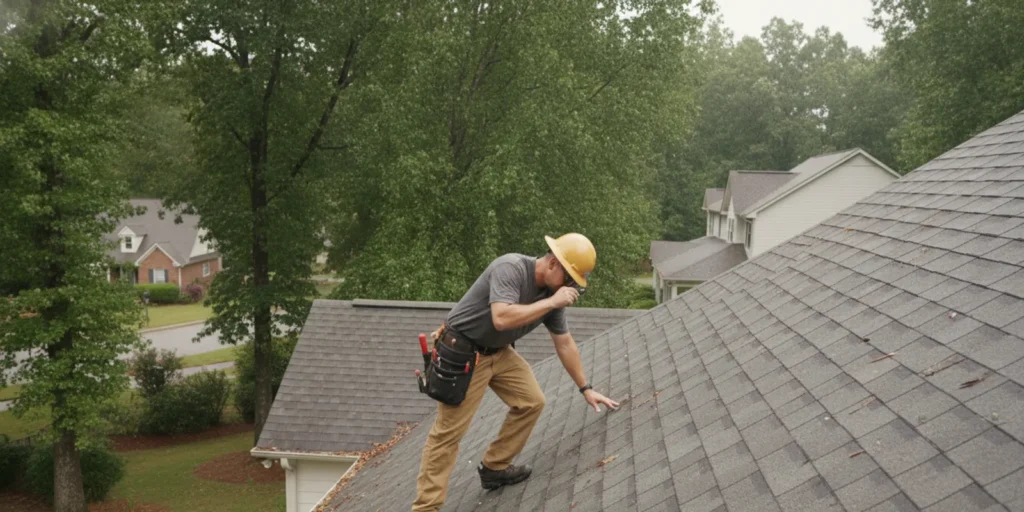
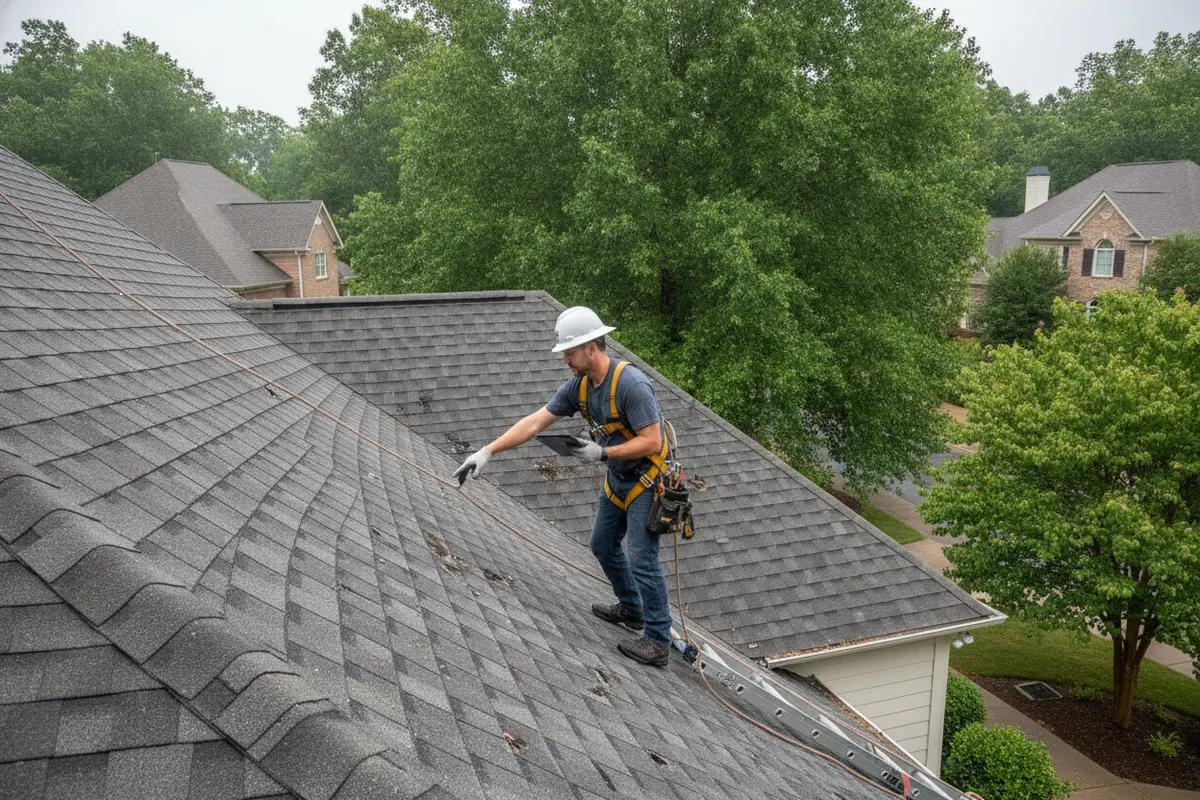
Next, the inspector identifies the roof areas and components that can be viewed safely. The method depends on the roof’s height, slope, material, access, and weather. Some areas may be visible from the ground or another safe vantage point; closer review may require suitable access equipment and safety precautions. Ask the inspector to tell you if a section was not accessible, rather than interpreting an incomplete view as a clean bill of health.
After examining the roof, the inspector should explain the findings in ordinary language and separate direct observations from conclusions. For example, a report might identify a damaged component in a specific area, describe its condition, and state whether the cause is clear or uncertain. It should also identify unrelated issues, such as a flashing concern or signs of age, instead of forcing every observation into a hail-damage explanation. The result should be a practical account of conditions and possible next steps, not just a collection of close-up photographs.
Before the visit ends, confirm how you will receive the notes or images and whether the assessment recommends monitoring, a repair, or additional evaluation. If the roof has several slopes or a commercial building has multiple sections, ask whether the report covers all of them or only the area initially raised. This simple check prevents confusion about the scope and makes a later comparison or follow-up easier.
What can you check safely from the ground?
You can make useful observations without getting on the roof. From the ground, look for visible debris, displaced shingles, dents in accessible metal items, or changes around the home’s exterior. From inside, note the location and timing of any ceiling marks or drips. These observations help you describe the concern, but they do not replace a professional roof assessment.
- Record the date and location of the storm concern. Note when you noticed the issue and whether it followed a particular storm. If you are unsure when a mark appeared, record that uncertainty instead of guessing.
- Photograph what is safely accessible. Take clear photos from the ground or indoors. Include a wider view and a closer view where possible, and do not climb a ladder or walk on a roof to get a better angle.
- Keep damaged or fallen material only if safe. A picture may be enough. Do not handle sharp debris or anything near power lines.
- Track interior symptoms. Write down where a stain or leak appears, when it occurs, and whether it changes during rain. This can help a roofer investigate the source.
- Keep relevant records together. Save inspection notes, contractor proposals, dated photos, and any communications about the property. If you contact your insurer, follow its instructions for submitting information.
Never treat a ground-level check as confirmation that a roof is sound. Roof slopes, height, weather, and material condition can create serious fall hazards. Leave roof access and close inspection to people equipped to perform the work safely.
How are inspection findings different from an insurance decision?
A roofer can describe observed roof conditions and explain possible repair or replacement work. Your insurance company determines how your policy applies to a claim. Those are separate roles. An inspection report cannot promise that a claim will be accepted, that a particular item is covered, or that a specific payment will be made.
If you are considering a claim, review your policy and contact your insurer for its reporting requirements and next steps. Share accurate information, keep copies of documents, and ask the insurer what it needs. If you request a contractor evaluation, ask for factual observations and a clear scope of proposed work. Avoid relying on anyone who guarantees a coverage outcome before the insurer reviews the matter.
All In One Exteriors can evaluate roofing concerns and discuss roofing-related work. Its background includes roofing and insurance-related experience, but the contractor does not control the insurer’s decision. For more context, read this separate guide to the Georgia storm-damage roof claim process.
How can you compare the next steps?
The right next step depends on what the inspection finds, how extensive the issue is, and whether there is an immediate leak or safety concern. The table below is a planning aid, not a diagnosis. It helps separate observations from decisions that require more information.
| Situation or finding | What to do next | What to clarify |
|---|---|---|
| No obvious damage from the ground, but a nearby hail report causes concern | Arrange a professional evaluation if you want the roof assessed; avoid assuming the roof was affected. | Which roof areas were inspected? Were access or visibility limitations noted? |
| Visible debris or a possible impact mark, with no active leak | Photograph it safely, record where and when it was noticed, and ask a roofer to assess the relevant areas. | Is the condition consistent with storm impact, ordinary wear, a prior repair, or another cause? |
| Ceiling stain or water entry after rain | Protect belongings, document the interior condition, and seek prompt professional advice about the source and any immediate protection needed. | What is the likely entry point? What temporary measure, if any, is appropriate, and what permanent work is proposed? |
| Inspection identifies localized damage or a repairable detail | Request a written description of the proposed repair and the affected area. | What materials and components are included? Are there related conditions that could change the scope? |
| Widespread concerns, significant wear, or uncertainty about repairability | Ask for a clear explanation of repair versus replacement considerations and any limits in the assessment. | What evidence supports the recommendation? What is excluded, and what should be monitored? |
For a repair recommendation, ask what part of the roof is affected and how the contractor plans to address the underlying condition, not just its visible symptom. For a replacement recommendation, ask why repair is not considered suitable, what materials and work are included, and how the proposal accounts for roof details. A written scope gives you something concrete to review and compare.
When evaluating proposals, make sure you are comparing the same kind of work. One proposal may address a limited section while another describes broader work, so a lower total is not necessarily a like-for-like comparison. Check whether each document identifies the roof area, the materials or components, necessary flashing or related details, cleanup, and any exclusions. If either contractor has made assumptions because an area was not visible, ask for those assumptions to be stated plainly.
Timing can matter for practical reasons even when there is no emergency. If you are waiting for a follow-up visit, keep an eye on interior conditions during rain and report any change promptly. Do not use a temporary covering or patch as evidence that the underlying issue has been permanently resolved. Ask what further assessment is needed and what the proposed work is meant to correct. This keeps a short-term response distinct from a lasting repair decision.
What should you ask a roofing contractor?
Before proceeding, make sure you understand the evaluation and proposed work. Questions can uncover whether an inspection is thorough and whether the recommendation is tied to findings at your property.
- Which areas of the roof and related components did you inspect?
- Can you show me the locations in your photos and explain the condition you observed?
- What findings may be storm-related, and what may reflect age, maintenance, or an earlier repair?
- Were any areas inaccessible or not visible? Does that limit the conclusions?
- Do you recommend monitoring, a repair, or replacement? What specific observations support that recommendation?
- What materials, labor, flashing, cleanup, and other work are included in the written proposal?
- What warranty terms apply to the proposed materials and workmanship, and where can I review them?
- What should I do if I notice a leak or a change before scheduled work begins?
Compare proposals by scope and assumptions, not just by a bottom-line number. A proposal should identify the work, the materials, and any important exclusions or conditions. If you are evaluating a complete replacement rather than a repair, the company’s roof replacement service information and roofing services overview can help you identify questions to discuss.
What should Alpharetta property owners keep in mind?
Homes and commercial buildings around Alpharetta can have different roof designs, materials, and access conditions. Trees, additions, skylights, and complex rooflines can affect what an inspector can see and how water moves. A commercial property manager may also need to coordinate access, tenant communication, and documentation for multiple roof sections. Ask the inspector to identify the areas reviewed and any areas that need a separate or follow-up assessment.
For a low-slope commercial roof, the inspection should address the installed system and its visible seams, penetrations, drainage areas, and transitions. Do not apply assumptions about shingle damage to a membrane roof. All In One Exteriors describes its commercial roofing work separately; see its information about commercial roofing systems if you manage a business property.
Whether the property is a home or a commercial building, keep storm observations factual. A local weather record can help establish context, but it cannot establish roof condition or policy coverage at an individual property. A documented site evaluation is more useful for deciding whether the building needs repair, further investigation, or no immediate work.
Discuss storm-related roofing concerns
Frequently Asked Questions
Can hail damage a roof even when I do not see a leak?
Yes, a roof concern may be visible before water appears indoors, but no visible leak does not prove that damage exists. A qualified inspection can assess the roof covering and relevant details, then explain what was observed and whether follow-up is appropriate.
Should I get on the roof to take pictures?
No. Roof access can be dangerous, especially after a storm when surfaces may be wet or materials may be loose. Photograph what you can safely see from the ground or inside, and leave close roof inspection to a qualified professional.
Does a hail inspection mean my insurance will pay for a new roof?
No. An inspection documents physical conditions and may include a contractor’s repair recommendation. The insurer reviews the policy and makes its own coverage decision. Neither a storm report nor a contractor’s inspection guarantees a claim outcome or a replacement.
What if the inspection finds no clear hail damage?
Ask the inspector to explain what was checked, whether any areas were inaccessible, and whether ordinary wear or another issue needs attention. Keep the report and dated photos with your home records. If new symptoms appear later, such as a leak, arrange a follow-up evaluation and share the earlier documentation.
Request a roof evaluation in Alpharetta
A practical hail inspection should leave you with a clear account of the roof’s observed condition, useful documentation, and a reasonable next step. If a recent storm has raised questions about your home or business property, All In One Exteriors can discuss a roofing evaluation and the work that may be appropriate based on its findings.
Discuss storm-related roofing concerns
Make decisions from the conditions documented at your property, and ask for clarification whenever a recommendation or proposed scope is not clear.