
For Metro Atlanta homeowners, a damaged chimney cap or chase cover can become a small roof problem before it becomes an interior leak. Wind, heavy rain, corrosion, poor fit, and age can all affect how well the assembly sheds water. The right response starts with identifying the component, checking its condition, and separating repair needs from full replacement.
Request a Metro Atlanta roofing evaluation to clarify the condition and next steps.
There is no responsible one-size-fits-all answer to chimney cap replacement cost metro atlanta. A local evaluation should account for the cap or chase-cover design, metal choice, flue size, roof access, storm damage, flashing condition, and any related masonry or roofing work.
If a storm caused the concern, All In One Exteriors can help homeowners understand the broader Georgia storm-damage insurance guide and document what should be assessed. First, it helps to understand what a chimney cap does, how it differs from a chase cover, and why either one may need replacement.
What Is a Chimney Cap and Why Does It Need Replacing?
A chimney cap is a protective cover over the opening at the top of a chimney. It helps keep rain and debris from entering the flue, the metal or masonry tube inside the chimney. A cap usually rests on the masonry crown, sometimes called the crown cap, so the condition of both components matters. A screen may be built into the cap to catch sparks before they reach leaves, roofing materials, or nearby areas of the yard. That protective design is one reason the cap should be inspected when its metal, screen, or fit appears compromised.
These parts have different jobs. The crown is the masonry surface around the flue, while the cap sits above it as a rain cover. The flue provides the passage for fireplace smoke and combustion gases. When a cap is bent, corroded, loose, or no longer fits correctly, water and debris can reach areas that should remain protected. That does not automatically mean a serious safety problem, but it does mean the chimney deserves a closer evaluation.
Why water protection matters
Water is one of the most important reasons to inspect a chimney. The Chimney Safety Institute of America reports that water causes more annual chimney damage than fires. Prolonged exposure can contribute to cracks or gaps in chimney materials. Water can also combine with soot and create acidic residue that damages the chimney over time. A sound cap helps reduce direct rain exposure, but it cannot correct damaged masonry, flashing, or a deteriorated crown by itself.
Openings and cracks deserve attention because they may allow creosote to collect. In some conditions, gaps can also allow noxious gases to escape into the home, creating a carbon-monoxide concern. This is why a replacement decision should consider the cap, screen, crown, flue, and surrounding roof area together rather than treating the cap as an isolated accessory. If you notice water entry or related roof damage, request a roof repair and damage assessment from a qualified professional, and avoid climbing onto the roof yourself.
Chimney Cap vs. Chimney Chase Cover: What Is the Difference?
The terms chimney cap and chimney chase cover are sometimes used interchangeably, but they describe different components. The right replacement depends first on the type of fireplace and chimney structure at your home.
Chimney caps fit masonry chimneys
A chimney cap covers the opening at the top of a chimney, helping keep rain and debris out. On a traditional masonry chimney, the cap rests on the masonry crown, sometimes called the crown cap. The flue is the metal or masonry tube inside the chimney. Many caps also include a screen that can help catch sparks.
That relationship matters because the cap must fit the crown and the number and position of the flues. A cap that is too small may leave gaps. One that does not sit properly may not shed rain away from the masonry as intended. The Chimney Safety Institute of America describes a chimney cap as a rain cover that helps protect the chimney from water. Read the CSIA moisture guidance.
Chase covers fit factory-built fireplaces
A factory-built fireplace is commonly enclosed in a framed chase rather than a full masonry chimney. Its top is covered by a chase cover, a component shaped to fit that chase and its flue arrangement. Instead of resting on a masonry crown, the cover works with the factory-built chimney enclosure to direct water away from the opening and surrounding structure.
The distinction affects inspection and replacement. A masonry cap is evaluated against the crown, masonry condition, flue layout, and screen. A chase cover is evaluated for its fit over the chase, its connection to the flue area, and signs that water is entering around the assembly. In either case, the cover should shed water rather than create a path toward the home. Do not assume that a replacement cap can substitute for a chase cover, or that a chase cover will fit a masonry crown. Identifying the chimney type and measuring the existing assembly are essential before discussing replacement options.
Signs Your Chimney Cap or Chase Cover Needs to Be Replaced
A damaged cap or chase cover can allow water into a chimney before a problem is obvious from the ground. Rust stains are a particularly important warning on factory-built fireplaces because they can indicate that water is reaching the chimney assembly. Corrosion, flaking metal, or fasteners that no longer hold securely can weaken the cover and its ability to shed rain.
Look for gaps, warping, and pooling water
Visible gaps around the cap, chase cover, or its edges deserve prompt attention. Flashing, the metal transition that helps seal the chimney where it meets the roof, should sit flush against the chimney structure. If it has warped, pulled away, or separated at a seam, rainwater can reach the roof and framing. Water pooling in or around a masonry or factory-built chimney is also a warning that water has found an access point into the home.
Inside, watch for ceiling or wall stains near the fireplace, damp masonry, peeling finishes, or a persistent musty odor. A fireplace odor that changes after rain can also justify an inspection, although odor alone does not identify the source. Prolonged moisture can contribute to cracks and gaps in chimney materials. Those openings may allow creosote to collect or, in some situations, let harmful gases enter the home, so suspected chimney leaks should not be ignored.
Check for animal entry and storm damage
A torn or missing screen, an open gap, or a displaced cover can let birds, squirrels, or other animals enter. Nesting material and debris can obstruct the flue and create additional moisture or safety concerns. Do not climb onto the roof to investigate these conditions yourself. A professional can evaluate the cap, chase cover, flashing, masonry, and connected roof areas from a safer position.
After high winds, hail, or other severe weather, request a post-storm inspection even when damage is not visible from the yard. All In One Exteriors provides roofing repair and storm-damage assessment across Metro Atlanta, including temporary protective measures when appropriate. You can review the storm damage roof inspection process and the Georgia storm-damage insurance guide. Insurance decisions depend on the policy and insurer, so an inspection and documentation do not guarantee coverage or claim approval.
Custom Chimney Cap Options for Georgia Homes
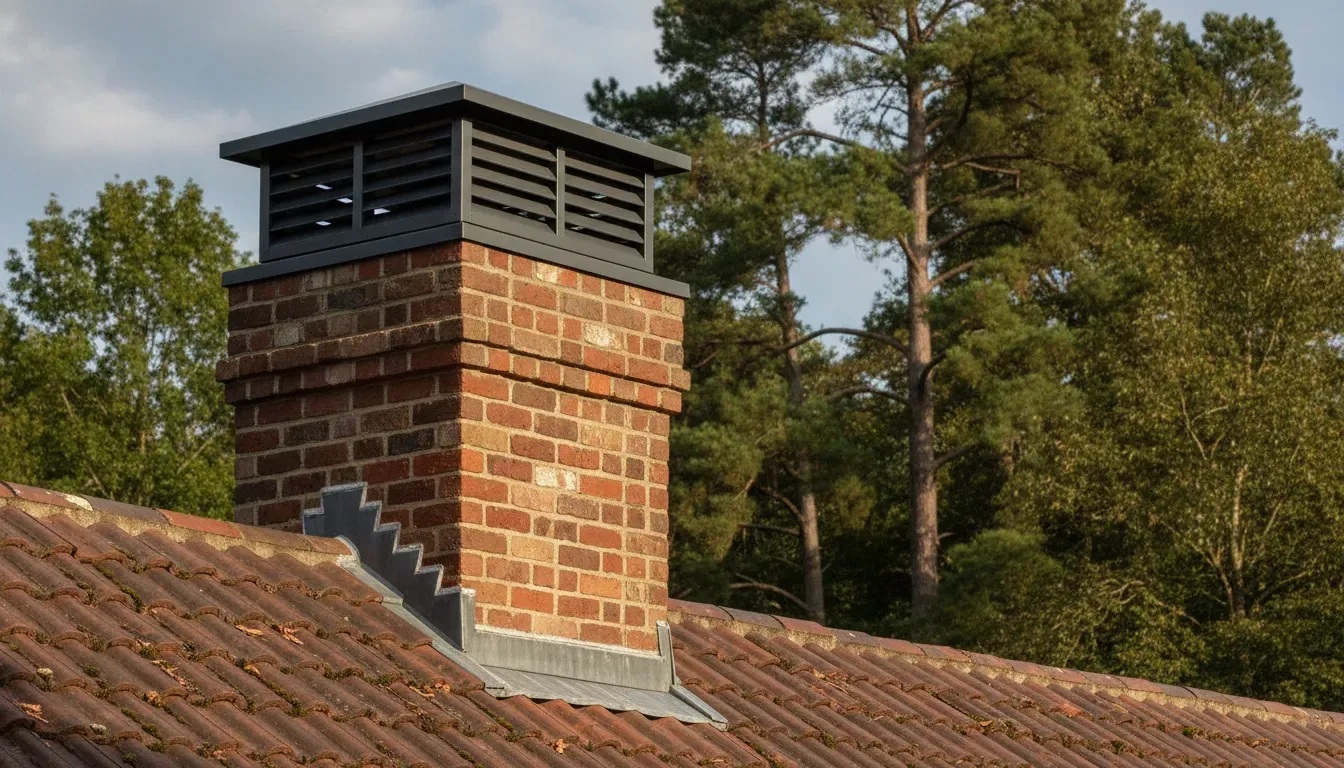
Choosing a chimney cap starts with the home, the flue layout, and the conditions the assembly must handle. Galvanized steel is a common practical option, while stainless steel is often selected when a homeowner wants a more corrosion-resistant metal. Copper offers a distinctive appearance that can complement brick, stone, or other architectural details. The right choice depends on the chimney’s exposure, design, and the long-term look you want, not simply on the material name.
Flue configuration is just as important. A single-flue cap is designed around one flue opening. A chimney with two or more flues may need a multi-flue cap that covers the full arrangement without obstructing proper venting. Measurements should account for the flue dimensions, crown, surrounding masonry, and any existing damage. A larger or more complicated flue layout generally requires more material and careful installation work.
Custom or prefabricated?
Prefabricated caps can be a practical fit when the chimney has common dimensions and a straightforward shape. Custom caps make more sense when the masonry is irregular, the flues are arranged unusually, or the finished appearance matters as much as basic coverage. Custom work may also help address a cap that must fit around unique masonry details. In either case, the cap should shed rain away from the chimney and avoid creating new gaps where water can enter.
Georgia homes also face intense rain, humidity, heat, and occasional storm damage. Those conditions make fit and installation quality important alongside metal selection. A professional working at roof height can evaluate the cap, crown, flashing, and nearby roofing together. If the surrounding roof also needs attention, review these roof replacement options as part of the broader repair decision. Request an evaluation before choosing a material or assuming a standard cap will fit.
What Does Chimney Cap Replacement Cost Metro Atlanta?
Understanding chimney cap replacement cost metro atlanta homeowners may encounter starts with recognizing that a responsible quote cannot be based on a generic figure. The final scope depends on the chimney’s measurements, the selected material, roof access, installation conditions, and whether connected masonry or flashing needs attention. A careful evaluation should identify the work required before anyone recommends a product or presents a quote.
Metal type is one important variable. Galvanized steel, stainless steel, and copper have different characteristics, appearance, and expected service considerations. The cap may also need to cover one flue or several. Larger flues generally require more material, while multiple flues can affect the cap’s overall dimensions and configuration. Shape matters too, especially when the chimney crown or surrounding roofline is irregular.
| Quote factor. | What it can change. | Useful question to ask. |
|---|---|---|
| Metal type | Material selection, appearance, fabrication, and long-term maintenance considerations | Which material suits the home’s exposure and design? |
| Flue size and number | Cap dimensions, coverage area, and whether a multi-flue design is needed | How will each flue be measured and ventilated? |
| Shape and custom fit | Fabrication requirements compared with a standard prefabricated option | Does the chimney require a custom-made cap? |
| Labor and roof access | Setup, time, fall protection, and the difficulty of reaching the work area | What access and height-safety conditions affect installation? |
| Masonry and flashing condition | Whether related sealing, masonry repair, or flashing work belongs in the scope | What signs of water entry should be addressed at the same time? |
| Season and scheduling | Availability, weather coordination, and scheduling flexibility | Could weather or seasonal demand affect the project timeline? |
Labor is not simply a line item for placing a cap. Working at height requires appropriate safety practices, and difficult roof access can affect the installation plan. Seasonality may also influence scheduling. Most importantly, a damaged crown, loose flashing, or deteriorated masonry can change the project from a straightforward component replacement into a broader water-management repair. All In One Exteriors can assess the surrounding roof system as part of its roof inspection and installation process. Ask for the findings, recommended scope, and assumptions behind any quote so you can compare solutions accurately.
What to Do After Storm Damage or a Roof Leak
Storms can affect several parts of a home at once. A missing shingle, damaged flashing, or an opening around the chimney may allow water to travel into places that are not immediately visible. Because the roof and chimney interact, document what you can safely observe, then have the findings assessed as a connected system. The Chimney Safety Institute of America notes that water can cause significant chimney damage, while warped or separated flashing can expose the structure to further intrusion.
- Document conditions from the ground. Take clear photos or video of fallen roofing materials, visible chimney damage, displaced metal, water pooling, ceiling stains, and areas where water appears to be entering. Do not climb onto the roof or chimney to get a closer image. Ground-level documentation is safer and gives an inspector useful context about when and where the problem appeared.
- Use temporary protection only when it is safe. If an opening is allowing water into the home, move belongings away from the affected area and use containers or interior protection as needed. Professional emergency roofing response may include temporary measures such as tarping. Avoid placing a tarp, sealant, or other material on a steep, wet, or unstable roof yourself.
- Request an inspection that includes the roof and chimney. Ask the evaluator to examine shingles, underlayment, flashing, the chimney cap or chase cover, masonry, and interior water paths. A chimney rain cover helps keep water from entering, but a storm may also damage surrounding flashing or roofing. You can request storm damage roof inspection as part of a broader assessment.
- Preserve insurer communication. Keep photos, dates, inspection notes, estimates, receipts, and messages together. Coverage depends on the policy and insurer, and documentation or claim coordination does not guarantee approval. For more context, review this Georgia storm-damage insurance guide.
- Separate roof and chimney findings. Ask for the report to identify which observations involve the roof, which involve the chimney cap or chase cover, and which involve masonry or flashing. This distinction helps prevent a roof repair from being mistaken for a chimney repair, and it clarifies what work may be urgent after the storm.
Prompt assessment can help limit continuing water exposure, but the appropriate repair depends on the observed damage, access, weather, and the condition of each component.
Why Fast Turnaround Matters for Metro Atlanta Homeowners
An exposed or damaged chimney opening is more than a cosmetic concern. Each rain event can give water another path into the chimney assembly, roof area, or surrounding masonry. The Chimney Safety Institute of America notes that water can cause substantial chimney damage, including cracks and gaps that may worsen over time. A missing or failed rain cover can also leave the home directly exposed to water intrusion. That does not mean every chimney issue requires an emergency replacement, but it does make prompt evaluation sensible.
Delays can also allow a small defect to become a broader repair question. Water may reach flashing, roof decking, framing, insulation, or interior finishes before a homeowner sees a ceiling stain. If the chimney is connected to a factory-built fireplace, rust or pooling around the structure deserves particular attention. Homeowners should avoid climbing onto a roof to investigate; height work and uncertain roof conditions create safety risks.
What determines the schedule?
A realistic installation timeline starts with an inspection. The contractor may need to confirm the chimney type, measure the flue or opening, assess the crown and flashing, check roof access, and identify related repairs. Material availability matters as well. A standard prefabricated component may have a different lead time than a custom-fitted replacement, and weather can affect safe roof work. If damaged flashing or adjacent roofing must be addressed first, those tasks may change the sequence.
All In One Exteriors is based in Alpharetta and serves Metro Atlanta and North Georgia. Its general roofing process describes an on-site inspection and quote within one to two business days, but that is a general estimate, not a chimney-specific promise. The project brief also positions many replacements as potentially achievable in three to four days, subject to scope, roof access, weather, materials, and related repairs. Homeowners can request a roof repair and damage assessment to determine the appropriate next step. Storm-damage experience may help with documentation and coordination, but insurance decisions remain policy- and insurer-dependent.
Frequently Asked Questions
How much should chimney cap replacement cost in Metro Atlanta?
There is no responsible one-size-fits-all price. A local quote should account for the metal selected, flue size, cap shape, labor, roof access, and the condition of the chimney or surrounding flashing. A site evaluation can also identify whether a chase cover or related repair is needed. So homeowners can compare like-for-like scopes instead of relying on a generic online figure.
What is the difference between a chimney cap and a chase cover?
A chimney cap commonly covers the top of a masonry chimney and may include a screened area. A chase cover is a fitted top for the framed enclosure around a factory-built fireplace. The correct replacement depends on the chimney system, its measurements, and how water needs to shed away from the structure.
What is the best chimney cap material for an Atlanta home?
Galvanized steel, stainless steel, and copper are common options. The best choice depends on the desired service life, appearance, budget, exposure, and the dimensions of the installation. Material selection should follow an inspection rather than a default recommendation, especially when corrosion or custom sizing is involved.
What are signs that a chimney cap is leaking?
Look for rust stains, water pooling around the chimney or fireplace, interior stains or odors, visible gaps, and flashing that is warped or separated. The Chimney Safety Institute of America notes that water exposure can create chimney cracks or gaps, so a suspected leak deserves prompt professional assessment. Read the CSIA guidance on chimney water protection.
Should I replace a chimney cap myself?
DIY replacement is usually unwise when it requires roof access, elevated work, custom measurements, or inspection of flashing and masonry. A professional can assess the cap, chase cover, flue, crown, and roof connection together. If storm damage is involved, document what you can safely see from the ground and arrange an inspection rather than climbing onto the roof.
Ready to Request a Metro Atlanta Evaluation?
If a chimney cap, chase cover, roof leak, or related exterior damage needs a closer look. An evaluation can help clarify the condition, likely repair scope, and factors that may affect timing. All In One Exteriors serves Metro Atlanta homeowners with roofing and exterior construction expertise. To get started, request a roofing repairs assessment through the verified roofing repairs page. The team can review the visible concern and discuss appropriate next steps without assuming a fixed price before the property is evaluated.