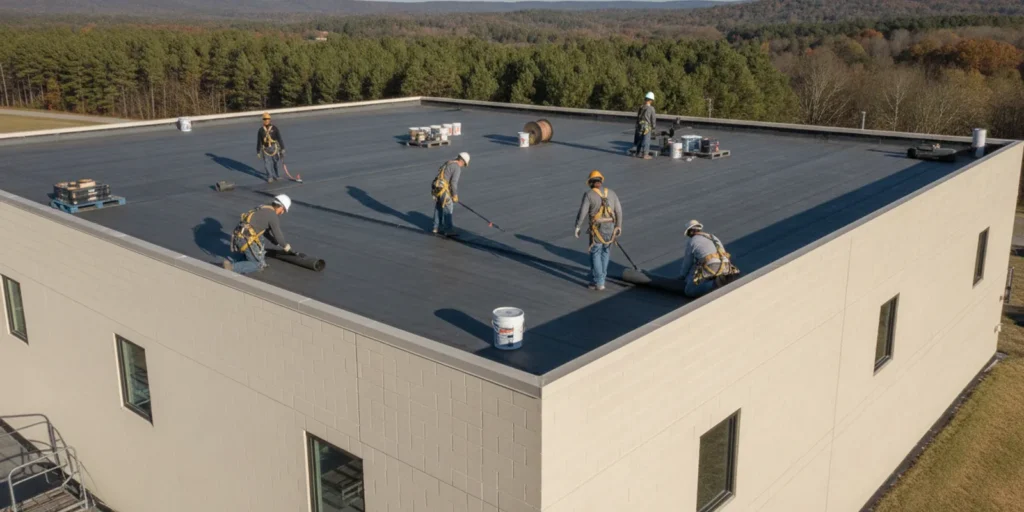

Commercial roof replacement timelines depend on more than the size of the roof. The roofing system, tear-off needs, weather, building access, and daily operations all affect how long work takes. For Georgia property owners planning a replacement, a realistic schedule starts with a roof evaluation and a clear scope—not a promise based on square footage alone.
Discuss your commercial roofing project
How long does a commercial roof replacement take?
There is no single timeline that fits every commercial roof. A small, accessible roof with a straightforward system and limited tear-off may take only several working days once installation begins. A larger facility, a complex roof with multiple penetrations, or a project that must be completed in sections may require several weeks of active work. The full process takes longer when you include evaluation, proposal review, material ordering, scheduling, and closeout.
These are planning ranges, not a project commitment. A contractor needs to assess the building and confirm the work scope before setting a schedule. The expected duration can change if crews uncover wet insulation, damaged decking, or other concealed conditions after removal begins. Storms and other unsafe weather can also interrupt roof work. A schedule should explain what is known, what remains uncertain, and how changes will be communicated.
It also helps to separate active installation time from total project lead time. A roof may take a limited number of days to install, but the work cannot start until the scope is approved, materials are available, and access and operating plans are in place. Ask for both timeframes rather than relying on a single number.
Which factors change a commercial roof schedule?
A contractor can give a more useful schedule after reviewing the roof assembly, condition, and building constraints. These are common factors to discuss during that evaluation:
- Roof area and layout: A larger roof usually requires more labor and material handling. Roofs with separate levels, tight parapets, many penetrations, rooftop equipment, or complicated transitions may take longer per area than an open, simple surface.
- Existing roof layers: The current system may be removed, left in place where the project design allows, or handled in sections. The number and condition of existing layers affect removal, disposal, and preparation work. Do not assume an overlay is suitable without an evaluation.
- Deck and insulation condition: The surface under the roof membrane is not always fully visible before tear-off. If the crew finds wet insulation or damaged decking, the project may need additional repair and approval. A written process for documenting concealed conditions can prevent confusion about added work and time.
- Roof system and details: TPO, EPDM, metal, and other systems have different installation requirements. The selected system, attachment method, flashing details, edge conditions, and manufacturer requirements all shape the sequence. Learn more about TPO roofing systems and EPDM roofing.
- Weather and season: Roofing work needs suitable conditions for safe access and proper installation. Rain, high winds, lightning, extreme heat, or a wet roof surface can pause work. Georgia weather can shift quickly, so the plan should account for forecast checks, temporary protection, and the possibility of lost workdays.
- Material availability: Material selection and delivery timing affect the start date. Custom colors, special-order products, or components that are not available locally may extend lead time. Confirm what must arrive before work begins and how staged deliveries will be protected.
- Building access and operations: Loading areas, parking, entrances, deliveries, tenants, customers, and sensitive equipment may affect where and when crews can work. A functioning business can often remain open during roofing, but the access and safety plan needs to be specific to the building.
- Permits and project approvals: Depending on the project and local requirements, approvals may be needed before construction. The owner or property manager should confirm who is responsible for checking requirements and submitting documents. Do not treat a permit or approval date as settled until it has been confirmed.
- Workforce and sequencing: Crew size, subcontracted trades, equipment needs, and coordination with other work influence the schedule. A roof replacement that includes related repairs or multiple buildings needs a clear sequence and assigned decision-maker.
What are the main phases of a commercial roof replacement?
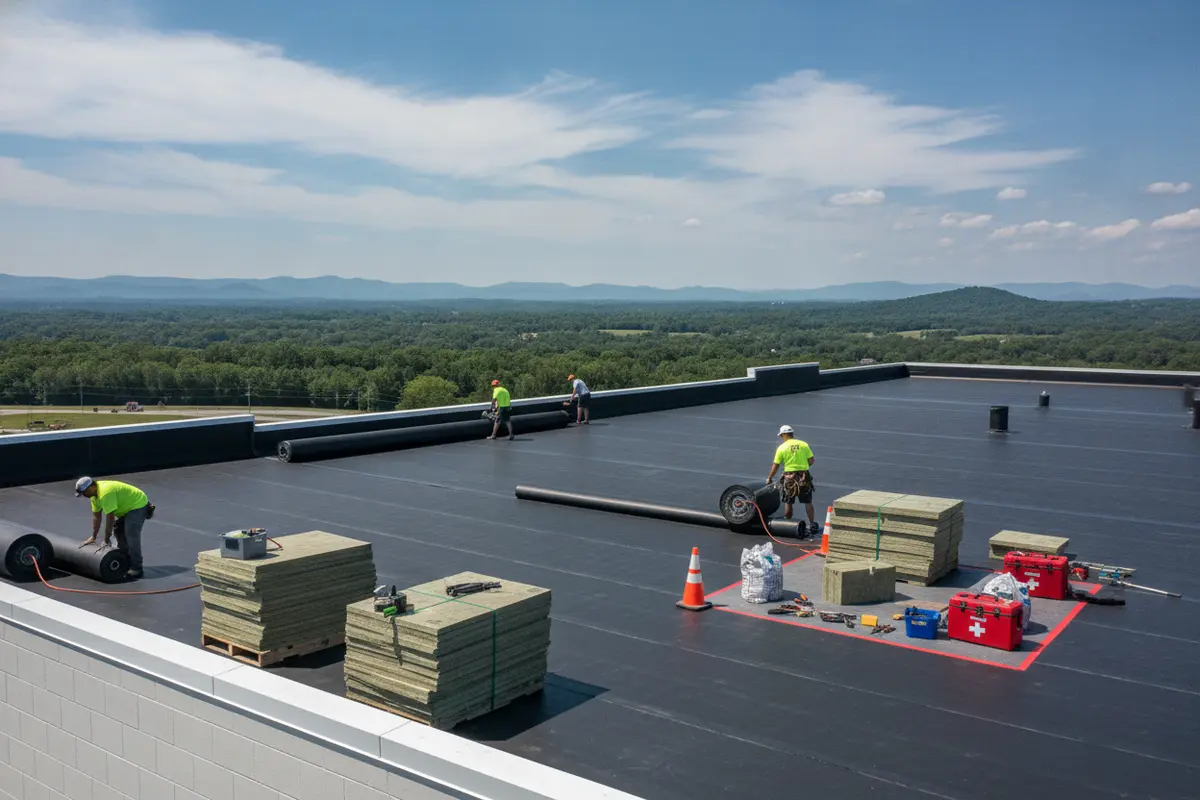
Breaking the job into phases makes it easier to plan operations and spot schedule gaps. The exact sequence varies by building and scope, but a typical project moves through these stages:
- Initial evaluation: The contractor reviews the roof, identifies visible concerns, discusses the building’s use, and determines what further investigation is needed. Ask how the evaluation will document the existing system and any areas that may require closer inspection.
- Scope and proposal: The proposal should describe the intended roof system, preparation or removal approach, included details, disposal, expected work sequence, and items that could change if concealed damage is found. Review exclusions and the process for approving additional work before signing.
- Approvals and preparation: The owner confirms internal approvals, any applicable permitting, insurance or site requirements, tenant communication, access rules, and work-hour limits. A named point of contact helps resolve questions without delaying the crew.
- Material ordering and scheduling: The contractor coordinates product availability, delivery, labor, equipment, and a start window. Ask whether the date is firm or weather-dependent and how the team will notify you of a change.
- Site setup and protection: The crew establishes safe access, staging, protection for property, and a plan for debris and deliveries. The building contact should know what areas may be temporarily restricted and how to report an urgent issue.
- Removal and installation: Work may proceed across the whole roof or in manageable sections. If the project involves tear-off, the crew must manage exposure carefully and protect the building if weather interrupts work. The project contact should know how concealed conditions will be documented and reviewed.
- Inspection and closeout: The team reviews completed work, addresses agreed corrections, removes project debris, and provides relevant closeout documents. Confirm who will inspect the finished work and what documentation the owner should retain.
Public bid documents illustrate why schedules are project-specific rather than universal. For example, a Missouri Western University roof-replacement request for proposals gives a preferred completion date for that facility’s work. That date is not a benchmark for a Georgia building; it is a reminder to tie schedule expectations to a defined project, scope, and owner requirement.
How should you plan around an occupied building?
Many commercial owners cannot simply close a property during roofing. The solution is not to assume there will be no disruption. It is to identify the likely effects in advance and agree on how the contractor and building team will coordinate.
- Map access: Identify entrances, loading zones, parking areas, fire lanes, and routes used by tenants or customers. Ask where equipment and materials will be staged and whether any areas need temporary closure.
- Protect sensitive areas: Point out equipment, inventory, interior spaces, or operations that need special attention. Discuss how noise, vibration, dust, odors, or water intrusion concerns will be handled for the proposed scope.
- Set communication rules: Choose one owner-side contact and one contractor-side contact. Agree on how schedule updates, daily access changes, and urgent issues will be shared. Notify tenants and staff before the work begins, then update them when plans change.
- Coordinate delivery and work windows: Confirm delivery timing, lifting or hoisting arrangements, permitted work hours, and any restrictions imposed by the property. If businesses have peak operating periods, raise them during planning rather than after the crew is on site.
- Plan for weather interruptions: Ask how open sections will be protected at the end of the day and what conditions would pause work. The building contact should know how to report a leak or other urgent concern during the project.
For a multi-tenant property or a facility with several roof sections, ask whether the contractor can provide a phased sequence. The plan should identify which area is addressed first, how access changes, and what must happen before the crew moves to the next section. A phased approach can make operations easier to coordinate, but it may add mobilizations or extend the overall calendar duration.
What should a schedule and proposal explain?
A useful schedule does more than list a start date. It gives the owner a way to understand the work, prepare the property, and make decisions if conditions change. Before approving a proposal, ask whether it explains:
- The anticipated project start window and estimated active work duration.
- Which activities happen before installation, including approvals and material delivery.
- The planned work sequence, including sections or separate buildings.
- Expected work hours, access needs, staging areas, and delivery arrangements.
- How weather delays will be handled and who communicates schedule changes.
- How concealed deck or insulation conditions will be documented, priced, and approved.
- What protection will be used if work is interrupted before the roof is complete.
- How the owner can raise concerns and who has authority to approve scope changes.
- What inspection, cleanup, and closeout steps are included.
Compare proposals on scope and assumptions as well as calendar estimates. A shorter estimate may leave out removal, repairs, access coordination, or closeout tasks that another contractor includes. Ask each bidder to clarify the same items so you can compare the plans fairly. For help understanding the commercial service path, review commercial roofing in Atlanta and the company’s commercial roofing services.
How can you build a workable planning calendar?
Use a calendar that separates preparation from field work. The following table is a framework for planning discussions, not a guaranteed duration. Your contractor should replace the broad ranges with estimates tied to the roof, scope, access, and material plan.
| Project stage | Planning allowance | What can affect the stage | Owner action |
|---|---|---|---|
| Evaluation and scope definition | Several days to a few weeks | Roof complexity, need for testing or additional inspection, decision process | Provide access, records, and one decision-maker |
| Proposal review and approvals | Several days to several weeks | Internal review, financing or budget approval, permit questions | Review exclusions and confirm approval responsibilities |
| Material ordering and crew scheduling | Days to multiple weeks | Product availability, custom components, delivery and labor coordination | Confirm selections and communicate required dates early |
| Active roof work | Several days to several weeks | Roof size, system, tear-off, repairs, weather, access, phased work | Prepare tenants and keep work areas accessible |
| Inspection and closeout | Several days, depending on scope | Inspection availability, punch-list items, document delivery | Schedule the review and collect closeout records |
For example, an owner planning a replacement before a busy season should work backward from the date the building needs the project completed. Leave room for evaluation, proposal review, material lead time, and weather interruptions. If a particular date is essential, tell the contractor at the outset and ask whether the scope and procurement plan can reasonably support it. Do not treat a preferred completion date as confirmed until the responsible parties have agreed on a schedule.
What can delay a roof replacement after work begins?
Some delays are foreseeable; others only become clear once the roof is opened. The most useful preparation is to agree on a process before work starts. Common schedule changes include:
- Rain or unsafe conditions: Crews may need to pause work to protect workers, materials, and the building. Ask how weather decisions are made and how the site is secured.
- Unexpected damage: Deteriorated decking or wet insulation can require additional work. Ask for photos or other documentation, a written description of the proposed change, and owner approval before extra work proceeds, except where immediate protective action is needed to prevent further damage.
- Material or delivery changes: A delayed shipment, damaged product, or revised selection can affect sequencing. Confirm delivery status and who will report a change in advance of the start date.
- Access conflicts: A blocked staging area, an unplanned event, or a restricted work window can reduce productive time. Keep the agreed access plan current and tell the contractor about conflicts promptly.
- Additional coordination: Roof work may need to be coordinated with mechanical, electrical, or other building work. Identify dependencies early so one trade does not hold up another.
Ask for regular, concise updates on completed work, next steps, open decisions, and schedule changes. A schedule is useful only when both sides understand who is responsible for each decision and how quickly questions need an answer.
What should Georgia property owners ask before signing?
Before approving a commercial roof replacement, use these questions to check that the plan fits the property:
- What roof conditions have been confirmed, and what remains uncertain until removal?
- Which roof system and installation approach are proposed, and why are they appropriate for this building?
- What work is included in the estimate, and what conditions could require a written change?
- What is the estimated active work duration, and what is the expected total lead time?
- How will the site, building occupants, deliveries, and sensitive equipment be protected?
- Who will confirm applicable permits, building rules, or owner approvals?
- How will the contractor respond to rain or an unexpected condition discovered during work?
- Who provides updates, approves changes, and reviews the completed work?
These questions help turn a general timeline into a project plan. For additional context on roof systems and installation planning, see roof installation services and the guide to roof replacement timelines in Georgia. If the project involves a particular membrane, you can also review EPDM roofing details.
Request a commercial roof evaluation
Frequently asked questions
Can a commercial building stay open during roof replacement?
It may be possible, but it depends on the building, work area, access requirements, and safety plan. Discuss entrances, deliveries, tenant needs, noise-sensitive operations, and protection measures before the start date. The contractor and owner should agree on how restrictions and updates will be communicated.
Does a larger roof always take longer to replace?
Size is an important factor, but it is not the only one. A large, open roof can have a simpler layout than a smaller roof with multiple levels, equipment, penetrations, or difficult access. Removal needs, system details, weather, and phased work also affect duration.
Will a roof replacement schedule include repair of hidden damage?
Not always. Some damage cannot be confirmed until existing roofing is removed. Ask how the contractor will document concealed conditions, explain the repair options, and obtain approval for changes that affect cost or schedule.
Should I schedule roof replacement during a particular season in Georgia?
There is no universally best date for every commercial property. Weather, material availability, building operations, contractor scheduling, and the roof’s condition all matter. Start planning early enough to evaluate the roof and coordinate a workable work window, and confirm how the plan accounts for weather interruptions.
How can you plan the next step?
Start with a professional evaluation, share the building’s operating constraints, and ask for a written scope with separate estimates for preparation, active work, and closeout. A clear plan will not remove every uncertainty, but it can help Georgia property owners make informed decisions and coordinate a commercial roof replacement with fewer surprises.