
Choosing a tile roof is about more than selecting a profile or color. In Georgia, the home’s existing structure, the roof assembly, local requirements, and the way the system is installed all belong in the decision. Homeowners comparing options can start with this Georgia residential roofing guide, then look closely at the considerations specific to tile.
For cement tile roofing Georgia homeowners should evaluate the full project, not just the tile. Consider the product, roof structure and deck, code-compliant installation, and work that affects the quote.
Those details help explain why two homes may need different plans even when their owners like the same look. First, it helps to understand what cement tile roofing refers to and why some Georgia homeowners consider it.
What Is Cement Tile Roofing and Why Do Georgia Homeowners Choose It?
“Cement tile” is commonly used to describe concrete roof tile: individual molded units made from concrete and installed in overlapping courses. The name can be confusing because cement is an ingredient in concrete, not a complete description of the finished roof covering. Concrete tiles come in varied colors and profiles, including curved, flat, and interlocking designs, giving homeowners options for the look of a roof without making every tile roof visually identical.
Appearance is one reason Georgia homeowners consider tile. A profile may suit a home’s architecture or a community’s design guidelines, while the material offers a distinct alternative to shingles or metal. Concrete tile also adds thermal mass, which may help regulate indoor temperatures in hot climates; that is not the same as a guaranteed energy reduction. Roof reflectance and emittance depend on the selected product and its ratings, not simply on whether the covering is tile. For a broader view of material choices and project planning, see this Georgia residential roofing guide.
It is important to think of tile as the visible covering, not the entire roof system. Underneath it, the roof still needs a suitable structure and deck, underlayment, fastening details, and carefully integrated flashing at roof edges, walls, and penetrations. Georgia’s roof-assembly code requires coverings to follow applicable code provisions and approved manufacturer instructions, and requires flashing to help prevent water entry at joints and penetrations (Georgia roof-assembly code). The right design and installation details depend on the specific tile, roof, and site.
That system-level planning is also where tradeoffs become clear. Concrete tile is heavier than asphalt roofing, so a roof structure and sheathing must be able to support the selected assembly. An existing home switching from a lighter covering may need a structural assessment before a tile project is approved (Building America Solution Center guidance on clay and concrete tile roofs). Tiles can also break under heavy impact, such as a falling branch, and repair access and replacement matching are worth discussing in advance. Tile may be a good fit when its appearance and system requirements suit the home, but it is not a universal upgrade. A project-specific evaluation can clarify whether the roof structure, design, and installation scope make sense for your Georgia home.
Cement Tile vs. Clay Tile: Key Differences for Georgia Homes
Both concrete (often called cement) tile and clay tile are formed roofing products, but they are made from different base materials. That distinction is a starting point, not a shortcut to deciding which roof is right for a Georgia home. The selected profile, finish, roof design, and installation system all matter, so compare specific products rather than relying on a broad material label.
| Consideration | Concrete (cement) tile | Clay tile |
|---|---|---|
| Base material | Made from a cement-based concrete mix that is formed into roofing units. | Made from shaped clay formed into roofing units. |
| Appearance and profile | Available in varied colors and profiles, including curved, flat, and interlocking styles. | Also available in varied colors and profiles, including curved, flat, and interlocking styles. |
| Project-specific planning | Confirm the exact tile dimensions, shape, thickness, exposure, and system requirements. | Confirm the exact tile dimensions, shape, thickness, exposure, and system requirements. |
Color and profile options overlap, so appearance alone may not identify the material or confirm that a product suits a particular roof. The Building America Solution Center describes a range of colors and profiles for both clay and concrete tile (clay or concrete tile roof guidance). Ask to review samples and product documentation for the specific tile under consideration.
Planning details cannot be inferred from the words “cement” or “clay.” The Tile Roofing Industry Alliance explains that tile dimensions, shape, thickness, and exposure affect installed weight. Those details feed into the roof-specific assessment and installation plan (tile installation guide). A quote should identify the chosen product and compatible components, rather than treating every tile as interchangeable.
There is no universal winner based on material alone. For a North Georgia home, discuss the roof’s design, the desired appearance, product documentation, and installation requirements with a contractor before choosing. That makes the comparison useful without assuming one type will always cost less, last longer, or perform better.
How Does Cement Tile Perform in Georgia Heat, Humidity, and Storms?
Georgia weather makes it important to evaluate more than the visible tile. The tile, underlayment, flashing, attachment method, roof deck, and ventilation work as a system. A product’s suitability depends on the roof and installation details, not the material name alone.
In hot conditions, concrete tile adds thermal mass, which can help regulate indoor temperatures. That does not mean every tile roof will lower cooling bills. The U.S. Department of Energy explains that cool-roof performance depends on a roof’s solar reflectance and thermal emittance, and those properties vary by product and finish. If heat performance matters to your project, compare the selected tile’s documented ratings and the full roof assembly rather than assuming a color or tile category delivers energy savings. DOE’s cool-roof guide describes these factors.
Humidity and heavy rain put attention on the water-management layers beneath and around the tile. Seams, roof penetrations, walls, valleys, and edges need correctly designed underlayment and flashing; the tile covering alone is not the entire rain barrier. Georgia’s 2024 building code requires roof coverings to be designed and installed in accordance with code and approved manufacturer instructions, and requires flashing to prevent water entry at joints and penetrations. Review the Georgia roof-assembly code provisions alongside the selected system’s installation guidance.
Storm performance also depends on project-specific selection and attachment. Wind and hail can damage tiles, and severe weather can expose the underlayment and flashing if tiles break or come loose. Ask how the proposed product and fastening plan address the roof’s design conditions, and how the underlying water-shedding layers will protect the home if a tile is damaged. No tile system should be described as storm-proof. The Building America Solution Center recommends selecting and installing tile for the applicable wind conditions and following manufacturer instructions (tile-roof guidance).
For a project-specific review, start with the roof’s structure, exposure, slopes, penetrations, and existing conditions. The broader Georgia residential roofing guide offers context on planning residential roofing work across the state.
What Should North Georgia Homeowners Check Before Choosing Cement Tile?
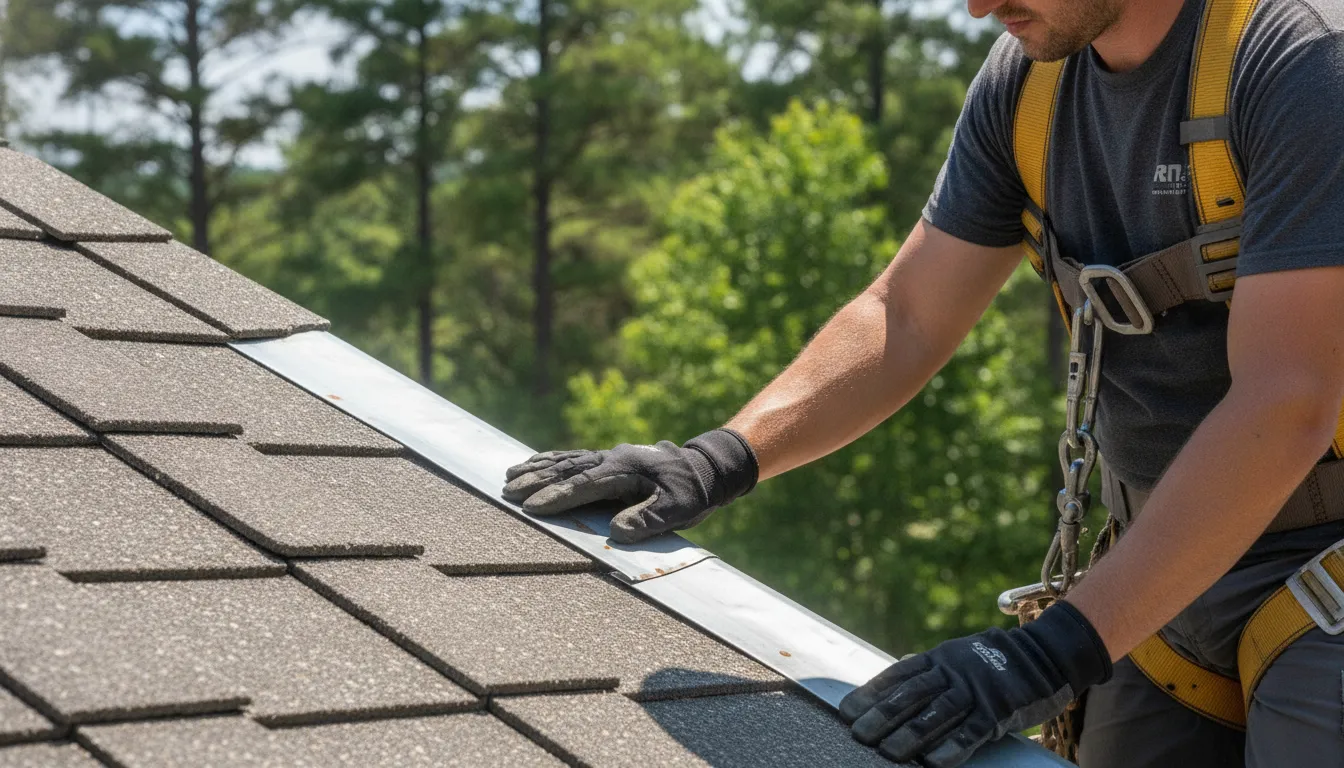
A cement tile roof should be evaluated as a complete roof system, not as a tile selection alone. Before committing to a product, ask for a project-specific review of the framing, roof deck, slope, underlayment, flashing, and the details where roof planes meet walls, valleys, chimneys, and vents. These conditions affect whether the selected tile and installation approach fit your home.
Start with the structure. If your home has not previously carried tile, have a qualified professional assess whether the existing roof framing and sheathing can support the proposed assembly. The Tile Roofing Industry Alliance advises accounting for the selected tile and the other components, including underlayment, fastening systems, accessories, and hip and ridge treatments. The specific tile matters, so the assessment should use the manufacturer’s information for the product under consideration rather than a generic weight assumption. If reinforcement is needed, identify that scope before comparing bids. The Tile Roofing Industry Alliance installation guide provides system-planning details.
Check the slope, deck, and water-management details. Roof pitch and the chosen tile system determine which approved installation details apply, including underlayment and fastening. Ask how the contractor will verify the deck and address any soft, worn, or damaged areas discovered during the work. Georgia’s roof code requires coverings to follow code and approved manufacturer instructions, and calls for flashing to prevent water entry at joints and penetrations. Have the proposal explain how flashing and edge details will be handled, rather than treating them as minor add-ons. Georgia roof-assembly code provisions describe these requirements.
Review the roof’s geometry and condition. Multiple roof planes, valleys, hips, ridges, dormers, and penetrations can make layout and detailing more involved. Ask the estimator to inspect these areas and include the planned work in the written scope. Also discuss access for material delivery, worker movement, and protecting landscaping or other property; the practical plan will depend on your site.
Finally, consider what maintenance and future repairs would involve. Ask how damaged tiles would be identified and replaced, and whether the proposed system allows safe access for inspection. If the existing roof has leaks or visible deck deterioration, make diagnosis and repair part of the planning rather than assuming new tile will correct an underlying problem. For an assessment and a clearly scoped installation plan, review professional roofing installation in Georgia.
How Do HOA Rules and Approvals Affect Tile Roofing in North Georgia?
A tile roof can change a home’s appearance more noticeably than a simple like-for-like replacement. In a North Georgia community with an architectural review process, confirm the requirements before choosing a profile, finish, or delivery date. A Powder Springs residential re-roof guide similarly advises homeowners to contact their HOA before changing roof-covering materials. That is local guidance, not a rule that applies to every private community.
-
Read the governing documents
Check your declaration, covenants, architectural guidelines, and any current application forms. Look for requirements covering roof material, color, profile, visible finish, samples, review deadlines, and who must submit the request. If the documents are unclear, ask the association or management company to identify the applicable process in writing.
-
Ask what the reviewers need
Before settling on a tile, confirm whether the committee wants physical samples, manufacturer color information, product literature, photographs, or drawings. Ask whether the proposed tile profile and finish must be approved, and whether changes to underlayment or other roof components need to appear in the application. Requirements vary by community, so do not assume that approval of one tile or color covers another.
-
Submit the product details
Provide the requested product name and specifications, profile, color or finish, sample, and any project drawings or contractor information required by the association. Keep a copy of the application and its attachments. If the proposed product becomes unavailable or changes after submission, check whether the association expects a revised application.
-
Wait for written approval before ordering
Get the decision in writing and confirm it identifies the product and finish you plan to use. Resolve any conditions or requested revisions before committing to the tile order or scheduling work. HOA approval is a separate step from confirming applicable building-code and permit requirements for the project.
For the local recommendation, see the Powder Springs residential re-roof guide. Use your own association’s documents and instructions to determine the rules for your property.
What Does Cement Tile Roof Installation Cost in Georgia?
There is no reliable universal installed price for a cement tile roof in Georgia. A quote depends on the home, the selected tile system, the condition of the existing roof, and the work needed to install the assembly correctly. A figure based only on the home’s square footage can miss important scope, so compare written, project-specific proposals rather than relying on a generic online estimate.
Roof size and shape are a starting point. A larger roof requires more material and labor, while intersecting roof planes, valleys, hips, ridges, dormers, and steep or difficult-to-reach areas can add layout and handling work. The number and placement of chimneys, skylights, vents, and other penetrations also affect detailing. Georgia code requires flashing to help prevent water entry at joints and roof penetrations, so proposals should describe how these details will be addressed, not leave them vague. Georgia roof-assembly code provisions explain the applicable requirements.
The existing roof changes the scope as well. Ask whether the estimate includes removal of the current covering, hauling and disposal, and inspection of the exposed deck. Damaged or deteriorated sheathing may need repair before installation; the extent may not be clear until tear-off. If the home has not carried the proposed tile assembly before, a structural review may also be needed to determine whether the framing and deck are suitable or require work. Confirm how that review and any resulting reinforcement are handled in the proposal.
Material selection is more than choosing a tile color. The specific tile, fastening approach, underlayment, edge details, and flashing all contribute to the installed system. Underlayment and attachment details should be selected for the tile and site, and installation should follow approved manufacturer instructions and applicable code. The Tile Roofing Industry Alliance installation manual covers system components and installation planning.
Finally, clarify labor, site access, material delivery, permit responsibilities, inspections, and cleanup. Local permit requirements can vary, so the proposal should state who will confirm and obtain required permits. For a useful comparison, ask each contractor to identify what is included, what is conditional on concealed conditions, and how changes will be approved. All In One Exteriors describes its installation process as including material selection, permit handling, cleanup, and inspections; homeowners can explore its professional roofing installation in Georgia information when planning a project.
How Can You Choose a Cement Tile Roofing Contractor in Metro Atlanta?
A tile roof is a complete assembly, not just a visible covering. When comparing contractors, ask for examples of completed concrete-tile projects and details about the tile system proposed for your home. Confirm the manufacturer and product line, then ask how the contractor will follow that system’s installation instructions. Tile Roofing Industry Alliance guidance covers matters such as underlayment, battens, loading and flashing, so a bid should explain the components that apply to your specific roof rather than rely on a generic tile description.
Request a written scope for the roof and structure assessment. It should explain what happens if damaged decking or other concealed conditions are found. Confirm which underlayment, attachment method, edge details and flashing are included. Georgia code requires coverings to follow code and approved manufacturer instructions. It also requires flashing at joints and penetrations to help prevent water entry. Ask who will confirm requirements for your address and who will obtain permits and coordinate inspections.
Compare bids line by line, not just by the final total. The written agreement should identify the tile and system, work included and excluded, expected start and completion windows, how schedule changes will be handled, and how the site will be protected and cleaned up. Ask what warranty terms apply to the materials and workmanship, who provides each warranty, and what conditions or maintenance obligations affect coverage. Get the actual documents and terms in writing; do not assume that every tile product or installation has the same coverage.
Ask for references from similar tile projects and, where possible, a chance to review completed work. A careful contractor should be able to explain choices in plain language and discuss how the plan fits your roof rather than promise a guaranteed result. For more context on professional roofing installation in Georgia and available residential roofing material options, review the company’s service information before requesting a project evaluation.
Frequently Asked Questions
How much does a cement tile roof cost in Georgia?
There is no reliable one-size price. An estimate depends on roof size and layout, tile selection, removal and disposal, deck or structural work, underlayment, and flashing. Request an itemized evaluation before comparing bids. All In One Exteriors provides project-specific quotes rather than a published cement-tile price.
What are the downsides of concrete roof tiles?
Tile is not the right fit for every roof or project. The existing structure and roof design need to be assessed, and the complete system must be installed to the applicable code and product instructions. Tiles can also crack or become dislodged; damage may expose the underlayment and other roof components to rain, so timely inspection and repair matter. See the Building America Solution Center tile-roof guidance.
How long will a cement tile roof last?
A dependable service-life estimate depends on the specific tile and roof assembly, installation, exposure, and upkeep. Avoid treating a general online lifespan figure as a promise for your home. Ask for the selected product’s documentation, written warranty terms, and a maintenance plan, and keep expected service life separate from the warranty period.
Is a cement tile roof suitable for my Georgia home?
It may be an option, but suitability depends on your home’s roof structure, slope and condition, the selected tile system, and any community approval requirements. Have a qualified roofing professional assess the roof before choosing materials, and check HOA requirements before ordering. Georgia code requires roof coverings to follow code and approved manufacturer instructions; confirm the project-specific requirements with your contractor and local building department (Georgia roof-assembly code).
Request a Cement Tile Roof Evaluation in Georgia
A project-specific evaluation can help you understand how the roof structure, tile selection, and installation requirements fit your home. To discuss your cement tile roofing plans, contact All In One Exteriors through the roofing installation page.