
A commercial roof inspection is a documented look at the roof that keeps a business open. We check the membrane or metal panels, the drains, the flashings, and the equipment sitting on top. Property owners in Alpharetta, Marietta, Milton, and the rest of north metro Atlanta use that evaluation to decide whether the next step is maintenance, a repair, or a replacement plan. All In One Exteriors inspects residential and commercial roofs from our Alpharetta office, including the TPO, EPDM, modified bitumen, built-up, and metal systems we install. The National Roofing Contractors Association recommends maintenance inspections at least twice a year, in spring and fall, plus another look after severe weather, according to NRCA guidance on roof system maintenance.
This guide explains what that visit actually covers. It is not a hiring checklist for a year-round maintenance contract, and it is not a leak-repair how-to. If you want the ongoing plan, start with our commercial roof maintenance guide. If water is already inside, go to commercial flat roof repair. To book the evaluation itself, request a commercial roof inspection.
What a commercial roof inspection examines
The visit starts with the building, not a generic checklist. A low-slope membrane over a retail or office building in Marietta does not fail the same way a standing-seam metal roof does. We note the system we can see, how people get on the roof, and why you called: a leak, a sale, a warranty question, or a routine spring check.
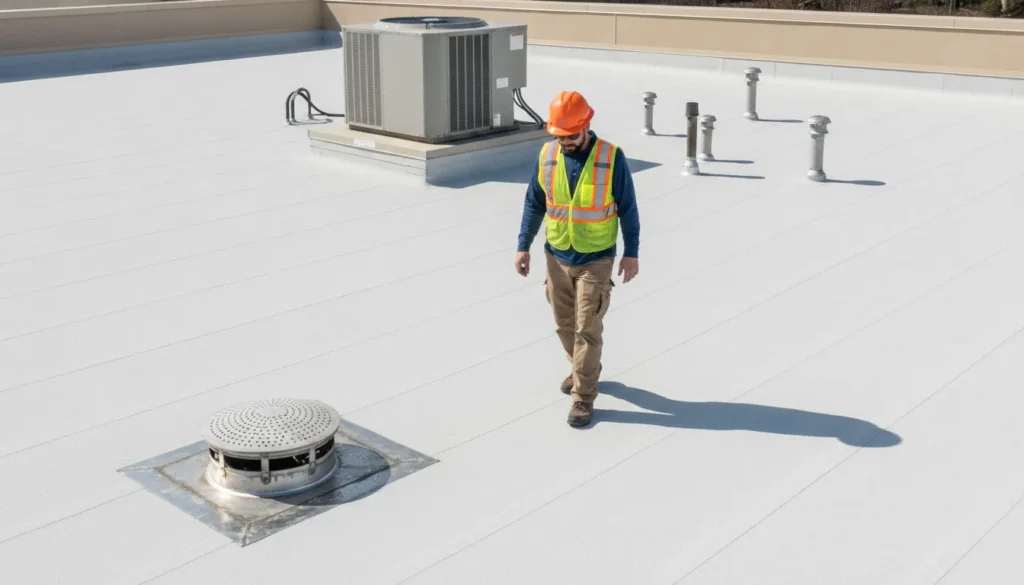
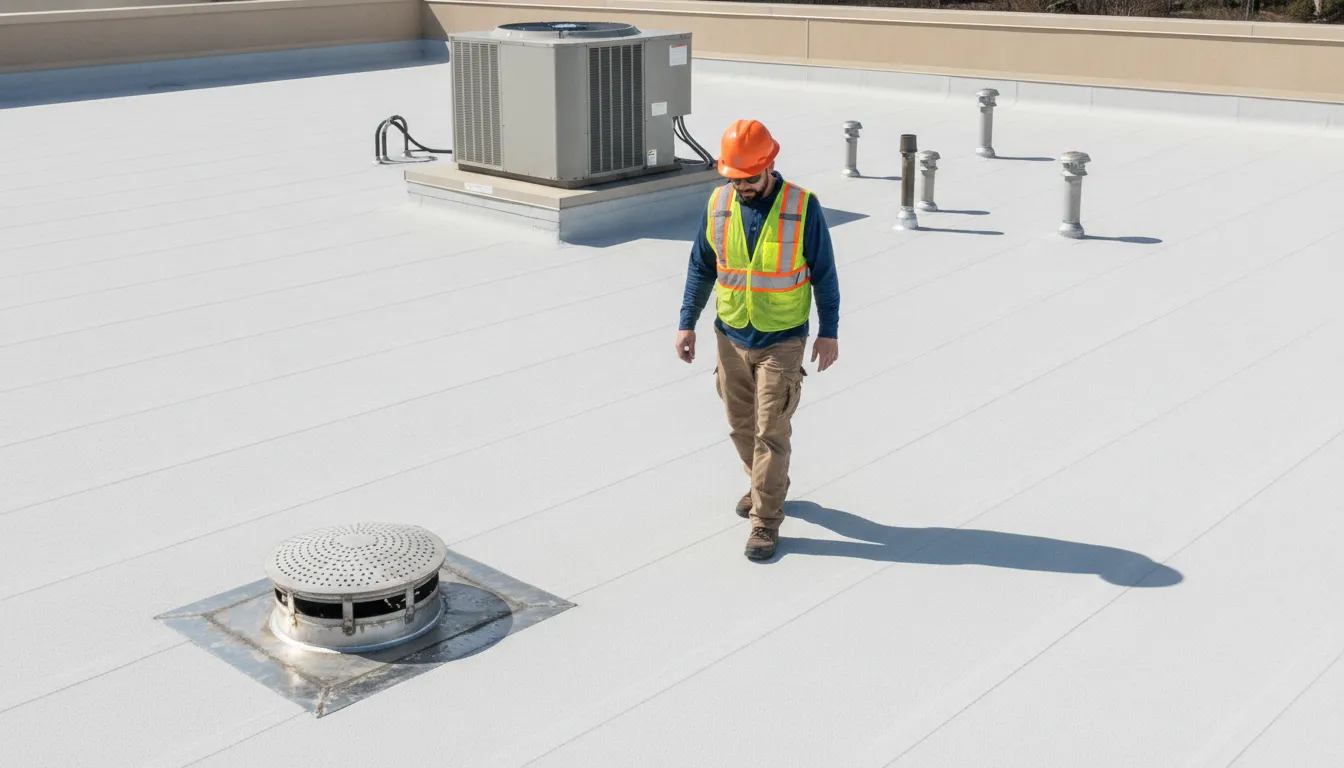
On the field of the roof we look for open seams, punctures, blistering, shrinkage, and worn coating. Around the edges we check parapet flashings, counterflashing, pitch pans, and pipe boots. At the drains and scuppers we look for debris, slow outlets, and ponding that stays after a dry day. HVAC curbs, skylights, and vents get the same attention, because most commercial leaks start at a penetration, not in the middle of a clean membrane.
We also look at the surfaces next to the roof. NRCA describes a preventive inspection as a visual review of the roof, adjacent walls, and mechanical equipment that can affect watertightness. Notes and photos stay on file so the next visit can be compared with the last one. Debris that does not belong on the roof should come off during that visit. Tree limbs hanging over the edge are an owner task. Repairs beyond simple owner upkeep belong with a roofing contractor, especially if a manufacturer or contractor warranty is still in force.
All In One Exteriors has installed and serviced commercial roofs across metro Atlanta since 2001, including TPO, EPDM, RUBEROID modified bitumen, built-up, and metal panel systems. The inspection names the system we can identify and stops there. We do not guess a warranty term from the color of a membrane. If you need the material comparison before you choose a replacement, read our TPO and EPDM guide for Atlanta commercial roofs.
What the findings mean for the next decision
An inspection is useful only if it sorts findings into a next step. Not every mark on a membrane is a replacement. Not every stain in a ceiling is a small patch.
| What we see. | What it usually means. | Typical next step. |
|---|---|---|
| Debris in drains, a loose boot, or a small open seam. | A maintenance item caught before it spreads. | Clear the drain and schedule a targeted repair. |
| Ponding that remains after dry weather, or wet insulation at one area. | Drainage or a localized failure, not always a full tear-off. | Trace the slope and the leak path before pricing a replacement. |
| Widespread seam failure, brittle membrane, or repeated leaks in many locations. | The system is near the end of reliable service. | Plan replacement access, timing, and tenant protection. |
| Storm bruises, lifted metal, or a sudden leak after wind or hail. | Documented damage that may belong in an insurance file. | Photograph it, limit interior damage, and call for an emergency dry-in if water is active. |
We write the condition in plain language and separate what we could see from what would need a cut or a moisture survey to confirm. A written proposal, when you want one, follows the inspection. It is not the same document as the field notes.
Flashing findings deserve their own note. A failed pipe boot or a separated curb is a repair. A wall detail that keeps leaking after patches is a flashing project, which we cover in roof flashing repair for Georgia properties. Drainage that never leaves the roof is a different project again. Our roof drainage installation guide explains gutters, outlets, and slope when the inspection shows water has nowhere to go.
Bring the last repair invoice and any warranty packet you still have. We will not tell you a coverage term from the rooftop. We can tell you whether a new patch would sit on top of work someone else should review first. If the building has more than one roof area, say so when you book. A front canopy and a main deck often fail on different schedules. Walking only the easy side misses the leak.
When to schedule the evaluation
Spring and fall are the two visits NRCA prefers, because they catch winter damage before summer storms and summer wear before another cold season. Add a visit after hail, high wind, or a tropical system, even if the ceiling looks dry. Commercial roofs often hide damage at seams and curbs for weeks.
Call sooner than the calendar if you see any of these:
- Water stains, dripping, or a musty smell under a low-slope area.
- Ponding that is still there a day after rain.
- A tenant complaint tied to one suite, one corner, or one rooftop unit.
- A sale, refinance, or new lease that needs a condition note.
- A warranty question before someone else walks the roof and makes a repair the warranty may not allow.
Hail on a house in Alpharetta is a different inspection. That visit looks for bruised shingles and soft metal, which we cover in the Alpharetta hail roof inspection guide. Do not use a residential hail checklist on a TPO or EPDM roof. The bruises do not look the same. The repair path is not a shingle replacement.
A useful commercial file is short. It names the date, the weather since the last walk, and the photos of seams, drains, and flashings. Facility managers who keep that file can show a buyer, a lender, or an adjuster what changed. They do not have to reconstruct the roof from memory after a storm. If you do not have last year’s notes, this visit becomes the baseline.
If water is coming in during the storm, the first job is to stop the leak, not to finish a full report. Our emergency roofing service covers tarping and the first dry-in. The commercial inspection can follow once the interior is stable. Active leaks on a flat roof can also move into flat roof repair without waiting for the next seasonal visit.
How the visit works on a Georgia commercial building
Access is part of the scope. We need to know ladder points, roof hatches, locked gates, and whether tenants must be told before anyone is overhead. A one-story retail building in Johns Creek is a different walk than a multi-tenant office with rooftop units over occupied suites.
- You tell us the address, the roof type if you know it, and the reason for the visit.
- We walk the membrane or panels, edges, drains, and penetrations, and we photograph what we find.
- We separate maintenance items from repairs and from conditions that point toward replacement.
- You get a plain-language explanation and, if you want pricing, a written proposal after the evaluation.
Keefe Hurwitz still runs field operations. The company is veteran-owned and based at 12850 Highway 9, Suite 600, Alpharetta. The same crew that inspects the roof can install TPO, EPDM, modified bitumen, or metal if the findings call for it. We do not treat the inspection as a sales tour of every exterior service. Siding, windows, and gutters come up only when the roof edge or wall is part of the leak.
Safety on a commercial roof is not optional. We need a clear path, a spotter when the edge is open, and notice if the deck feels soft. If a section is not safe to walk, we say so and document it from the nearest sound area. Guessing the far corner from the parking lot is not an inspection. Occupied suites under a soft spot should hear from you before anyone cuts a test opening or loads material on that area.
Timing matters for occupied buildings. A replacement, if the inspection leads there, has to work around tenants, deliveries, and weather. Our commercial roof replacement timeline guide covers that planning once you know the roof will not last another season. The inspection itself should not be delayed so a full replacement schedule can be written first.
Ask what the walk will not include. We do not core the deck, scan for moisture with a meter, or open a wall on a first visit unless you ask for that scope and the area is safe. A visual commercial roof inspection still catches the problems that cause most service calls: open seams, clogged drains, loose flashings, and storm damage you can photograph. If the notes say a core or a moisture survey would change the price, we say that plainly instead of guessing the layers we cannot see.
Financing, when a repair or replacement is larger than the maintenance budget, is a lender decision. All In One Exteriors can point you to financing options. We do not quote rates, promise approval, or set a deadline that is not on a written offer. Warranty length is the same kind of fact: it lives in your manufacturer and contractor documents, not in a guess made from the rooftop.
FAQ: commercial roof inspection
How often should a commercial roof be inspected?
NRCA recommends at least twice a year, preferably in spring and fall, and again after severe weather such as hail or high wind. A leak, a sale, or a warranty dispute is a reason to go sooner.
Can my maintenance staff do the walk?
NRCA says building staff with general knowledge of the roof can do a preventive look if they follow safety rules, remove debris, and keep written notes. Repairs beyond owner upkeep, and any work under a contractor or manufacturer warranty, should be done by a professional roofing contractor.
Does an inspection include a repair price?
The inspection documents condition. A price is a separate written proposal after we know whether the finding is maintenance, a repair, or a replacement. We do not publish a flat inspection fee or a per-square repair rate.
Will you inspect TPO, EPDM, and metal?
Yes. All In One Exteriors installs and evaluates commercial flat, metal, TPO, torch-down, built-up, and modified bitumen roofs for businesses across metro Atlanta. The walk changes with the system. A heat-welded seam is not judged like a metal clip.
What if the roof is already leaking?
Call for emergency dry-in if water is active, then use the inspection to find the source. A single open boot is a repair. Wet insulation across a large area, or seams failing in several places, is a planning conversation, not another coating over the same leak.
Book the inspection before the next storm season
Spring and fall fill up after the first hard rain. If your commercial roof has not been walked this season, or if a tenant just reported a stain, book the evaluation now. All In One Exteriors will look at the membrane, drainage, flashings, and visible damage, then tell you whether the building needs maintenance, a repair, or a replacement plan.
Call All In One Exteriors at (404) 445-8136 to schedule a commercial roof inspection in Alpharetta, Marietta, Milton, Johns Creek, and nearby north metro Atlanta.
You can also request the visit on our roof inspection page. If the findings point to a larger commercial project, our commercial roofing team can price the work from the same notes.