
A window that sticks, leaks, or leaves one room hotter can affect daily comfort long before it looks damaged from the street. Before comparing frame colors or glass packages, Georgia homeowners should look at how each room feels, how the existing window operates, and what the project needs to solve.
For window replacement georgia homeowners should compare comfort, efficiency, appearance, and project fit together. Check the room’s drafts, heat, light, noise, and moisture concerns, then compare labels, window styles, trim details, installation requirements, and the written quote. A climate-zone-specific ENERGY STAR label can help you evaluate efficiency, but it should not replace a room-by-room assessment.
Request a free window quote when you want those four points measured on your home, not guessed from a brochure.
That approach also helps separate a failed seal or trim issue from a window that truly needs replacement. Our evaluation can cover operation, frame concerns, water entry, and your priorities before we discuss product choices. Start with the room’s problems and the way you use it, then narrow the selections to match.
Start with the room, not the product list
Before comparing window styles, notice how each room feels and how its current window works. Is the room uncomfortable near the glass? Does the window open, close, lock, and stay in position as expected? These details help define what needs attention instead of turning the project into a search through every available product.
Look closely at the frame and trim as well. Swelling, soft spots, separated trim, or visible gaps may affect how the opening should be prepared. A failed seal can show up as fogging or moisture between panes. Water entry around the window deserves attention because the source and surrounding materials should be considered before installation begins.
Comfort is another useful evaluation point. Note rooms that feel drafty, unusually warm, or difficult to keep comfortable. Also consider how you use each space and what matters most there, such as easier operation, more natural light, a clearer view, or a better fit with the home’s exterior. Your priorities can guide the conversation more effectively than a catalog alone.
All In One Exteriors can look at current window operation, frame or trim concerns, failed seals, water entry, and room comfort during the evaluation. The company has 25 years of replacement window experience in Atlanta, Alpharetta, Gainesville, Marietta, Flowery Branch, Braselton, and surrounding North Georgia communities.
That review can then lead to a practical discussion of replacement window options and the work involved. Installation planning may include opening preparation, protection for nearby surfaces, removal and disposal, placement and sealing, trim, and a final operation check. The number and size of windows, access, product availability, and weather can affect scheduling.
Bring the room-level concerns to the evaluation, including what you see, what you feel, and what no longer works smoothly. A clear list helps keep the recommendation connected to the home’s needs rather than choosing a product first and finding a reason for it later.
A useful way to prepare is to walk the house once in the afternoon and once after dark. Afternoon sun shows which rooms overheat. Evening shows drafts you do not notice when the HVAC is running hard. Write the room name next to each complaint so the estimate can follow the house, not a generic window count.
Window replacement Georgia starts with four comparisons
Window replacement georgia is easier to judge when comfort, efficiency, appearance, and project fit stay in the same conversation. A low price on glass does not help if the opening is soft, the trim will not meet the siding, or the schedule ignores a hard-to-reach second story. The comparisons below are the ones we use before a written estimate.
Comfort is what you feel in the room. Efficiency is what the labels say the product is built to do. Appearance is how the window sits in the wall you already have. Project fit is whether the scope, access, and documents match the work. Skipping one of those usually shows up later as a change or a disappointment.
Match efficiency to a Georgia climate, not a national average
Window performance is easier to compare when you separate comfort from appearance. Two products can look similar while handling heat, sunlight, air movement, and indoor temperature differently. Start with the room that feels uncomfortable, then compare the window ratings and installation details that address that specific concern.
U-factor describes how readily heat moves through the window. A lower U-factor generally means less heat passes through the assembly. Solar heat gain coefficient, often called SHGC, describes how much solar heat enters through the glass. Neither rating should be judged alone, and there is no single number that fits every Georgia home or room.
Location matters because the EPA climate zone finder is specific to the home’s location. Use the ENERGY STAR climate zone finder before comparing products, rather than assigning a statewide rating by assumption.
ENERGY STAR explains that certified products are independently certified to EPA guidelines. It also reports that replacing single-pane windows with ENERGY STAR certified windows lowers household energy bills by an average of up to 13 percent nationwide. That is a national average, not a promise about a particular home’s results.
ENERGY STAR also cites research showing that a standard double-pane window allows approximately 75 percent of the sun’s heat into a home. This is why glass selection and solar heat gain deserve attention in sunny rooms. Look for the ENERGY STAR label beside the NFRC label, then use the NFRC information to compare products consistently.
| What to compare. | What to look at. |
|---|---|
| Comfort. | Drafts, room temperature, and failed seals. |
| Efficiency. | U-factor, solar heat gain, ENERGY STAR, and NFRC labels. |
| Appearance. | Operation, sightlines, glass, color, and trim. |
| Project fit. | Opening condition, access, weather, and installation scope. |
Comfort work may involve more than glass. If one upstairs room stays hot, the cause may be attic heat rather than only the window. Review related roof ventilation in Georgia before treating every temperature complaint as a window problem. You can also consider insulation and related comfort work as part of the evaluation.
For a replacement project, compare how the existing windows operate, whether seals have failed, and whether frames or trim need attention. A clear quote should identify the selected products, ratings, opening preparation, sealing, trim, and a final operation check. We do not treat a national savings average as the result you should expect on your bill.
Glass coatings and gas fills change how a room feels in July versus January. A west-facing family room in Marietta may need more control of solar heat than a shaded north bedroom in the same house. That is a room choice, not a brand choice. Bring the sunny rooms and the cold rooms to the same visit so the glass package can differ where it should.
Labels also do not describe the wall around the window. A certified unit installed into a rotten sill or an unsealed gap will not perform the way the sticker suggests. Part of project fit is whether the opening is sound enough for the product you want. If it is not, the estimate should say what preparation is included.
Appearance has to fit the opening you already have
A window can look right in a showroom and still feel wrong on a Georgia home. Size, operation, or trim may not suit the existing opening. During a consultation, we discuss how the window works, the opening dimensions, frame and glass choices, and the look you want from the street and inside the room.
Start with the way the window needs to function. A double-hung window may make sense where you want both sashes to move. A casement or awning window may better suit a different opening and ventilation goal. Fixed picture windows can emphasize a view, but they do not provide an operating path for fresh air.
Shape and proportion matter just as much. A replacement should respect the opening rather than make the wall look crowded or uneven. Trim also affects the result. The casing around the window should meet nearby surfaces cleanly, especially where window trim and siding installation come together.
Color and material choices should work with the home’s brick, siding, roof, and other exterior details. The CertainTeed line named on our windows page is a starting point for that talk, not a catalog to pick from alone. You can review replacement window options before we compare the fit for your home.
Some openings require more planning than a standard replacement. A bay window or a custom shape can change how installers reach the area and how surrounding trim is removed. Access, product availability, window size, weather, and the number of openings all affect timing. Those details belong in the project discussion before work begins.
Our team brings 25 years of replacement window experience to homes in Atlanta, Alpharetta, Gainesville, Marietta, Flowery Branch, Braselton, and nearby North Georgia communities. We compare the existing opening with your priorities, then explain what the proposed window and finished trim will look like before you request a quote.
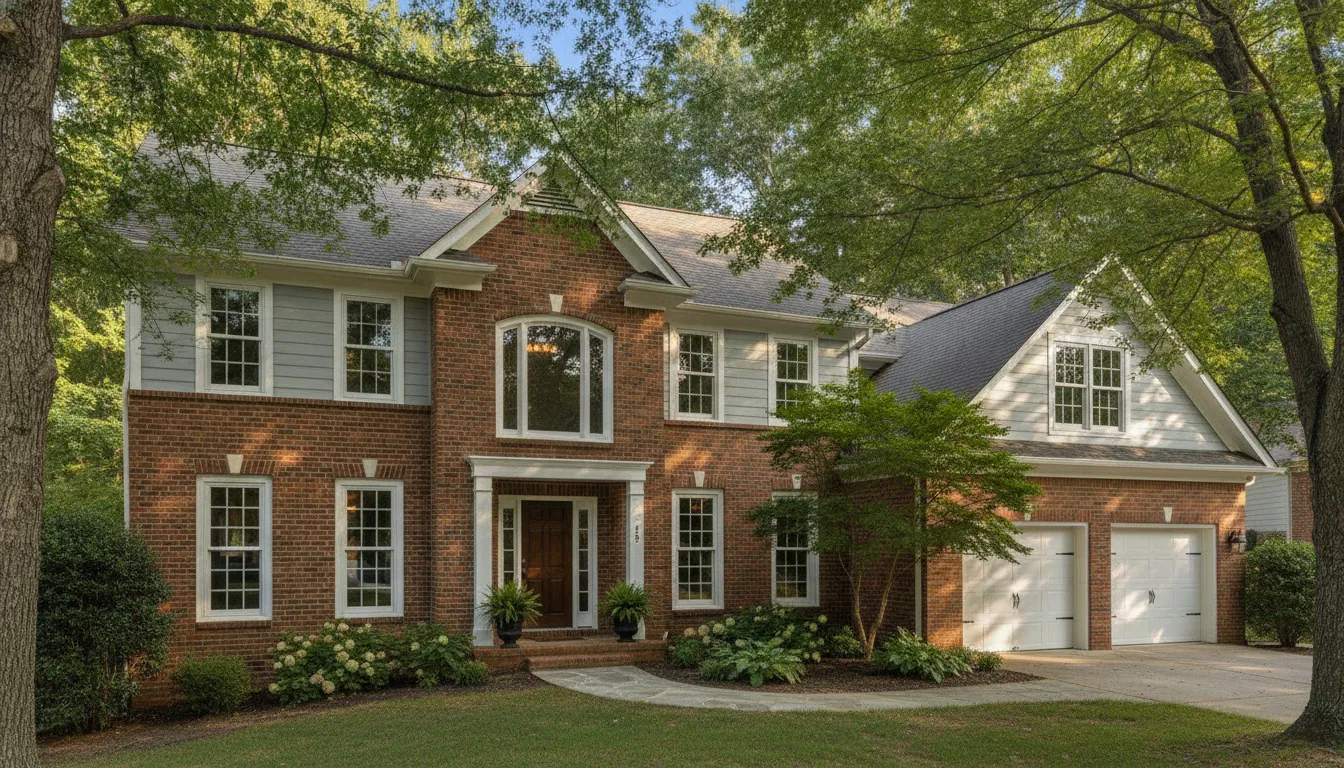
Brick homes and lap-siding homes do not finish the same way around a new unit. On brick, the concern is often the seal at the masonry opening and how the trim sits against the face. On siding, the concern is how the courses meet the casing so water sheds away from the head. A quote that skips that detail leaves the finished look to chance.
What a written window quote should include
A written estimate should make the project understandable before you sign. For window replacement in Georgia, look for enough detail to compare the product, installation work, timing, and documents that govern the finished project.
- Measured openings. The quote should identify the openings being replaced and the measurements used for the order. Confirm the room or location for each window, especially when several openings have different sizes or shapes.
- Product line and glass package. Ask which product line, operating style, frame, and glass package are included. The estimate should name the selected options rather than a broad label. Review replacement window options before the visit so the talk stays specific.
- Removal and disposal. Confirm what happens to the existing windows, frames, and related debris. The written scope should say whether removal and hauling away are included, so you are not left interpreting that part of the project later.
- Sealing and trim. Look for the planned opening preparation, placement, sealing, and interior or exterior trim work. Ask how the installer will address frame or trim concerns, failed seals, or signs of water entry found during the evaluation.
- Protection of nearby surfaces. The scope should explain how floors, walls, furnishings, and landscaping will be protected during removal and installation. It should also identify the final cleanup and operation check.
- Schedule factors. A reliable schedule depends on the number and size of windows, access to the openings, product availability, and weather. Treat the timing as a project estimate until the products arrive and site conditions are confirmed.
- Warranty documents. Read the manufacturer warranty and any installation terms before signing. We confirm availability, product terms, and manufacturer warranty details in the estimate and the product documents. The materials warranties page is broader context. Your project documents control the window terms.
If water shows up at the head of a window, the cause is not always the glass. A clogged gutter can send water behind the trim. When that is part of the story, gutter installation belongs in the same exterior plan so the new window is not asked to solve a drainage problem.
If financing is part of your planning, review the financing information and ask which options apply. Lender decisions and terms control, so review those terms directly before accepting an offer. We do not quote rates or promise approval.
For a complimentary consultation, call 404-445-8136 and bring your questions about the written scope, product documents, and installation plan. Homeowners in Atlanta, Alpharetta, Gainesville, Marietta, Flowery Branch, and Braselton can use that visit to confirm the openings before anything is ordered.
Ask for a free window quote or call 404-445-8136. A complimentary consultation ties the estimate to your openings instead of a generic package.
Frequently Asked Questions
What should Georgia homeowners compare before replacing windows?
Compare comfort goals, energy performance, appearance, operating style, and project fit. Consider which rooms feel uncomfortable, how much natural light you want, and which window designs suit your home’s exterior. A short list of rooms beats a single whole-house guess.
Does window replacement in Georgia need a different efficiency label than a northern state?
Start with the ENERGY STAR label and match it to your location’s climate zone. Check the climate-zone finder, then look for the ENERGY STAR label beside the NFRC label when comparing products. Do not copy a northern state’s glass package without checking the label for where you live.
How do I know if a room needs a new window or a repair?
Look at the problem and its cause. Persistent drafts, difficult operation, damaged frames, or failed seals may point toward replacement. A limited hardware or weatherstripping issue may be suitable for repair. A professional evaluation can help separate the two before you order a full set of units.
Will new windows fix a hot upstairs room by themselves?
Not always. Window condition matters, but room temperature can also reflect insulation, air sealing, shading, and attic ventilation. Treat the window evaluation as one part of understanding the room’s comfort problem. If the attic is the driver, glass alone will not finish the job.
What should a written window quote include?
Ask for the products and styles being considered, the rooms or openings included, installation scope, project exclusions, warranty information, and the next steps. A clear quote should make it easy to compare project fit rather than just a product name. Measurements and disposal should be written down, not assumed.
Request a window evaluation
If you are comparing comfort, efficiency, and appearance for a Georgia home, All In One Exteriors can measure the openings and talk through the project before you commit. The visit covers how the current windows operate, what each room needs, and which selections belong on a written estimate. We serve homeowners across north metro Atlanta from our Alpharetta office at 12850 GA-9 #600.
Call 404-445-8136 or use the quote path on our windows page. You will leave with a clearer picture of the openings, the glass conversation, and the work the estimate actually covers.