
Choosing among commercial metal roofing contractors takes more than comparing panel names or totals on proposals. Georgia property owners and commercial property managers should understand the existing roof, the building’s use, drainage, access, and what each contractor intends to include. A useful evaluation connects observed conditions to a written scope, so you can compare the work rather than a vague material label.
Call (404) 445-8136 to discuss a commercial roof evaluation
What should you establish before comparing contractors?
Begin with the reason you are considering work. A metal system may be part of new construction, a full replacement, or a targeted repair. Those scopes are not interchangeable. A leak near a seam or penetration deserves investigation, but the location of an interior stain does not automatically identify the roof entry point or establish that the entire roof needs replacement.
Before requesting proposals, collect what is available: approximate roof age, known repairs, recurring leak areas, previous roof plans, warranty paperwork, and reports from earlier inspections. Make a brief list of interior areas affected and note when leaks occur, such as during prolonged or wind-driven rain. These observations help frame the conversation, but an on-site inspection is needed to verify roof conditions.
Describe how the building operates. Is it occupied during the day? Are there delivery windows, restricted parking areas, sensitive equipment, or tenant notice requirements? A contractor who understands these constraints can discuss staging, work sequencing, and protection before the proposal is finalized. Share any areas where noise, access, or temporary closures could disrupt work.
All In One Exteriors provides commercial roofing that includes metal, TPO, and EPDM systems. Review the company’s commercial roofing services for context, then use an evaluation to discuss conditions at your property. This article focuses on how to compare contractors and plan a project, not on choosing a system by name alone.
Which metal roofing details matter on a commercial building?
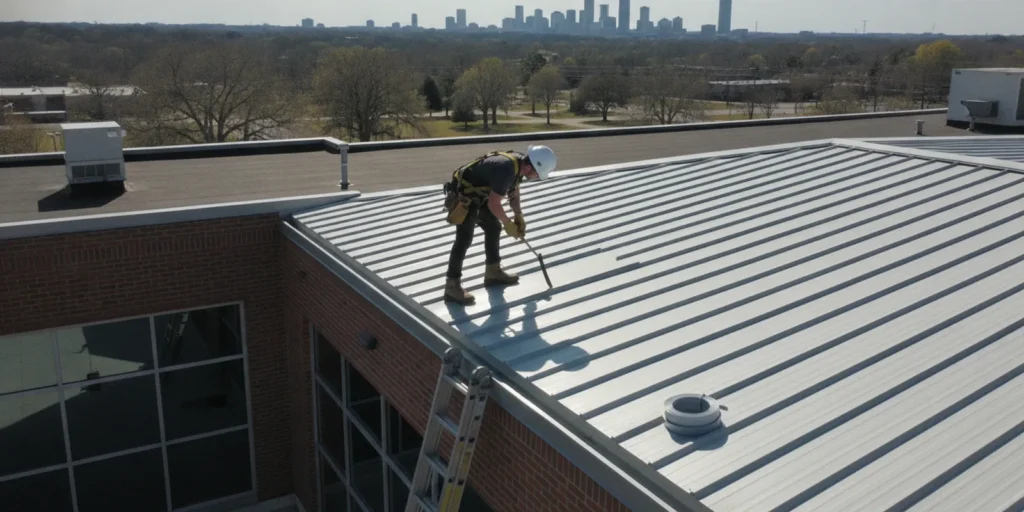
“Metal roof” can describe different panel profiles, assemblies, and installation details. Ask each bidder to identify the proposed system and explain how it fits the roof design, slope, structure, exposure, intended use, and water-management needs. A description should be specific enough to understand what components and details are being priced.
- Panel and seam design: Ask which profile is proposed, how panels connect, and how seams, edges, valleys, and transitions are handled. Standing-seam and exposed-fastener systems do not have identical details or maintenance considerations.
- Substrate and attachment: Clarify what the panels attach to and whether the existing deck or supporting structure needs preparation or repair. Ask how concealed conditions will be confirmed once work begins.
- Underlayment and separation layers: Ask what layers are specified beneath the panels and how they relate to the existing roof assembly. Request that assumptions about retained materials, removal, and compatibility appear in writing.
- Water management: Discuss eaves, valleys, gutters, and the path runoff takes away from the building. Roof surfaces and drainage details need to be considered together.
- Movement and penetrations: Metal changes dimension with temperature. Ask how the specified system accommodates movement and how vents, rooftop equipment, and other penetrations will be flashed.
- Edges and adjoining surfaces: Roof-to-wall intersections, skylights, parapets, and transitions between materials can be vulnerable points. Ask which are included and who coordinates adjacent work.
For a commercial property, the plan should account for what sits beneath the roof. Ask how crews will protect inventory, equipment, occupants, and business operations. If a section must be opened, clarify the temporary water-protection plan and how the crew will secure the site at the end of each work period. These are practical scope questions, not details to leave until installation day.
How do Georgia weather and site conditions affect planning?
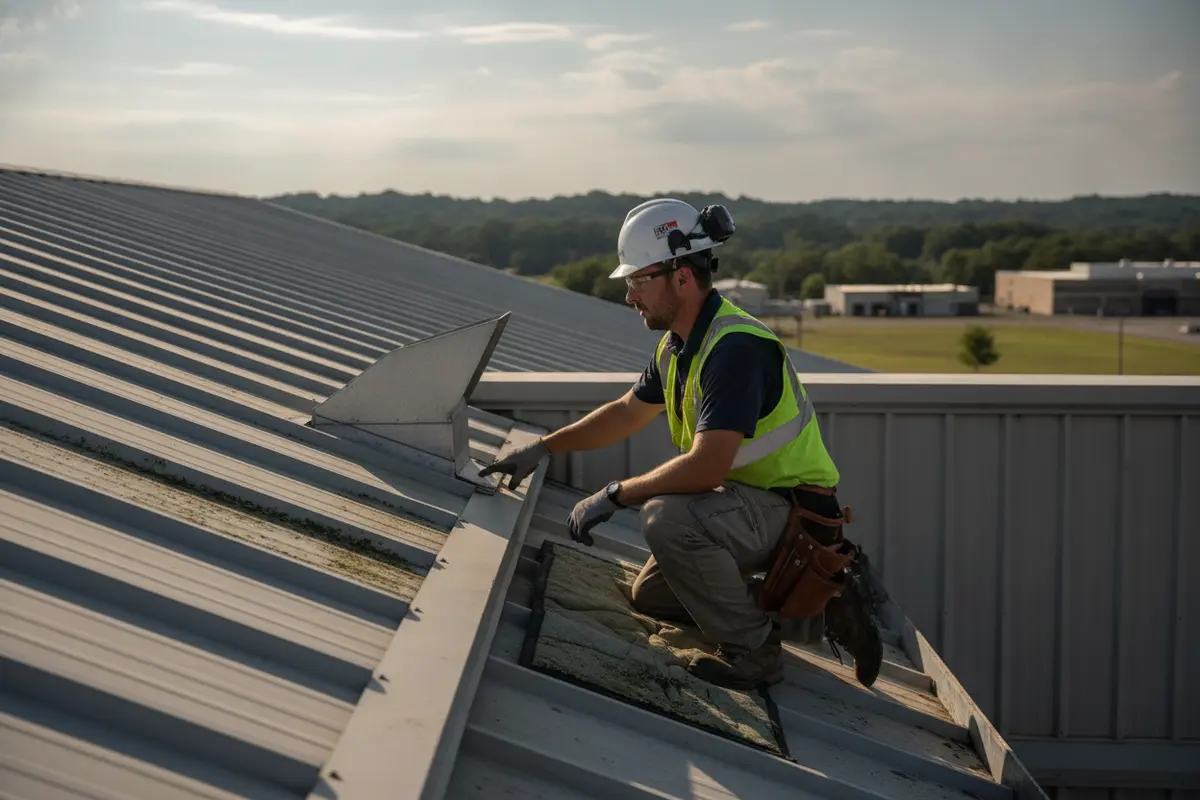
Georgia heat, humidity, and periods of heavy rain make drainage and water shedding important evaluation topics. Ask the contractor to inspect low points, outlets, gutters, and places where debris may interfere with drainage. Trees and roof geometry can affect where water and leaves collect. If an interior leak is visible, do not assume the water entered directly above it; water may travel along roof components before appearing inside.
Storms can bring wind, hail, and wind-driven rain. If damage is suspected, document visible conditions from a safe location and arrange an evaluation. Do not climb onto a wet or steep roof to take pictures. A contractor can describe observations and discuss repair or replacement options; no contractor can promise an insurer’s coverage or claim decision.
Scheduling should account for deliveries, access, staging, weather contingencies, and site security. For occupied buildings, discuss how work may affect entrances, parking, deliveries, and tenants. Ask the contractor to identify assumptions and weather-dependent milestones rather than treating uncertain dates as guaranteed.
Georgia permits and building requirements can depend on project scope and jurisdiction. Ask who will determine applicable requirements and whether permit responsibilities are included in the proposal. The company’s Georgia roof permit guide can provide background, but it does not replace confirmation with the local authority for your project.
What should you ask commercial metal roofing contractors?
Ask each contractor the same core questions, and request written answers when they affect scope, cost, risk, or operations. This makes it easier to compare proposals on a like-for-like basis.
- What did the site evaluation find, and what evidence supports repair, replacement, or another approach?
- Which assembly, panel profile, and components are proposed, and why are they suitable for this roof?
- Will the existing roof be removed, covered, or partly retained? What conditions could change that plan?
- How will the deck, insulation, underlayment, flashing, penetrations, edges, and drainage be addressed?
- What work is included or excluded, including disposal, site protection, cleanup, and repairs to adjacent components?
- Who will coordinate access and communications, and how may work affect occupants or business operations?
- What safety measures and temporary weather protection are planned while work is underway?
- Which written manufacturer and workmanship warranty documents, if any, apply to this system and installation?
- How will concealed conditions, added work, and price changes be documented and approved before proceeding?
Ask about experience with the proposed system and similar commercial building conditions. A useful answer describes relevant project types and explains planned details in plain language. Distinguish what the contractor observed from assumptions that will need confirmation after removal or opening.
For a wider review of commercial roofing scope, consult the commercial roofing overview for metro Atlanta. If the project includes a low-slope area or you are considering another roof type, compare the assembly with the guide to flat roof materials.
How can you compare proposals fairly?
Do not compare proposals by total alone if they describe different work. Put essential scope items side by side. If one contractor includes removal and deck review while another assumes the existing roof remains in place, the prices do not represent the same project. Ask for revisions or clarifications before making a decision.
| Proposal area | What to check | Question to ask |
|---|---|---|
| System and materials | Panel description, components, attachment, assumptions | Are bidders specifying comparable assemblies and details? |
| Existing roof and deck | Removal or retention plan and concealed-damage process | How will changed conditions be recorded and priced? |
| Flashing and drainage | Edges, transitions, penetrations, gutters, and outlets | Which water-management details are included? |
| Operations and protection | Access, staging, occupant coordination, temporary protection | What must the property team prepare before mobilization? |
| Schedule and closeout | Work sequence, cleanup, inspection, and documents | Which milestones depend on weather or site conditions? |
| Warranty and payment terms | Applicable documents, exclusions, and payment milestones | Which terms come from the manufacturer and which from the contractor? |
Read exclusions and the change-order process closely. Clarify whether damaged deck sections, insulation work, or repairs to adjoining components are included, listed as allowances, or outside the bid. Ask for a written record of revisions before authorizing extra work. The proposal should explain what happens when actual conditions differ from assumptions.
Warranty language deserves the same care. Duration alone does not tell you what is covered, which conditions must be met, or who handles a claim. Ask for the documents and confirm whether registration, inspections, or maintenance are required. The roofing warranty guide can help you prepare questions; terms for a specific commercial system must come from its applicable documents.
What belongs in an occupied-building project plan?
Commercial roofing affects people and operations as well as the building envelope. Before signing, name the property contact and agree how updates will be shared. Confirm crew parking, delivery routes, material staging, areas that must remain clear, and how tenants or staff will receive notices. If equipment, inventory, or a particular work area needs protection, identify it before mobilization.
Ask who can approve decisions on site and how urgent conditions will be communicated. Clarify the daily cleanup routine, debris handling, access restrictions, and what happens if weather interrupts work. A useful plan identifies who is responsible for each coordination task, rather than assuming the contractor and property team share the same expectations.
For example, a warehouse manager may need a delivery route kept open while one roof section is replaced. A property manager for an occupied office may need advance notice before work near entrances or tenant spaces. In both cases, ask the contractor to show how sequencing and staging address the constraint. The answer should appear in the project plan, not remain a verbal assurance.
If comparing metal with a low-slope membrane, keep the comparison tied to the building’s actual configuration. All In One Exteriors also works with TPO and EPDM systems; the TPO roofing information and EPDM roofing overview offer background on those systems. They are not automatic substitutes for metal: slope, structure, drainage, and project goals matter.
When should you request an evaluation?
Request an on-site evaluation when a roof is leaking, panels or flashing appear damaged, recurring repairs are difficult to plan, or you are budgeting for replacement. An evaluation can also help before a property purchase, renovation, or major rooftop equipment change if roof condition affects the decision.
For an active leak, protect people and contents first. Keep clear of wet electrical areas, move vulnerable items if safe, and contact a roofing contractor promptly. Do not climb onto the roof to place a tarp. If there is an immediate hazard, follow the building’s emergency procedures and contact appropriate emergency services.
Prepare access instructions, a brief leak history, photos taken safely from inside or ground level, and prior roof documents. Ask which areas the evaluator needs to access and whether a property representative should attend. A concise set of notes helps make the visit focused without standing in for an inspection. For an existing leak or localized concern, see the company’s roof repair information as you prepare questions.
For planned installation or replacement, it can also help to understand sequencing. Review the commercial roof replacement timeline guide and ask how site conditions may change the schedule.
How can an authoritative standard help frame the conversation?
Proposal language should identify the actual assembly and applicable installation instructions, rather than rely on a broad label such as “metal roof.” For background on roofing terminology and industry practice, consult the National Roofing Contractors Association’s roofing resources. Use that material as general context, not as a substitute for project documents, manufacturer instructions, or confirmation of local requirements.
Call (404) 445-8136 to request a commercial roof evaluation
Frequently asked questions
Is metal always the best option for a commercial roof?
No. Building design, slope, structure, drainage, existing assembly, and operating needs all matter. Compare options against conditions found during an on-site evaluation rather than selecting by material alone.
Does a leak mean the whole roof needs replacement?
No. A leak is a reason to investigate, not proof that full replacement is necessary. An inspection can examine the roof and related details and explain whether localized repairs or broader work may be appropriate.
What if a proposal excludes hidden damage?
Ask how concealed conditions will be documented, who will review them, and how added scope and cost will be approved before work proceeds. Get the process in writing.
Should I compare warranties by duration alone?
No. Review the actual documents, coverage conditions, exclusions, registration requirements, and which party provides each warranty. Confirm what applies to the specified system and installation.
Choosing among commercial metal roofing contractors is more straightforward when roof condition, proposed assembly, project responsibilities, and the change process are clear. Request an evaluation when you are ready to discuss the building’s needs and compare practical next steps.