
After severe weather, choosing a contractor can feel urgent. But storm damage roofing contractor insurance is not the same as your property insurance: one concerns the contractor’s business coverage, while the other concerns what your policy may cover. Georgia homeowners and commercial property managers should check both sides, document the roof condition, and get the proposed work in writing before authorizing a permanent repair.
Call (404) 445-8136 to request a roof evaluation
What does contractor insurance mean after a storm?
Contractor insurance generally refers to coverage the roofing business carries for certain risks connected with its work. Depending on the policies and circumstances, that may include commercial general liability and workers’ compensation. The names alone are not proof of what is covered, how much protection applies, or whether a particular job is within the policy terms. Ask for current documentation and confirm details with the insurer or agent when you need certainty.
Your homeowners or commercial property policy is separate. Your insurer decides whether a reported loss is covered, what deductible or exclusions apply, and what amount may be payable under your policy. A roofing contractor can inspect visible conditions and explain proposed construction work, but should not promise that an insurer will accept a claim, approve a particular scope, or pay a stated amount.
Keep the roles clear: the contractor describes roof conditions and repair options; the insurer handles coverage decisions under the policy; and you decide whom to hire and what work to authorize. If you need help interpreting policy language, contact your insurance representative or a qualified professional rather than relying on a contractor’s estimate as a coverage decision.
What should Georgia owners check before choosing a contractor?
Ask for evidence of the contractor’s current insurance before work begins. Request a certificate of insurance and ask who can confirm its dates and terms. A certificate is useful documentation, but it is not itself a policy and may not answer every question about coverage. If the project is substantial, involve your insurance agent or broker in reviewing the information.
- Confirm the business identity. Make sure the company name on the estimate, contract, and insurance document is consistent. Ask who will perform the work and whether subcontractors may be involved.
- Ask about general liability coverage. Ask the contractor or insurance agent to confirm that the policy is current and applies to the roofing work being proposed. Do not assume a certificate proves a specific loss would be covered.
- Ask how worker coverage is handled. Find out whether employees or subcontractors will be on site and how applicable workers’ compensation coverage is documented. For a commercial property, ask your risk manager or broker what documentation your organization requires.
- Check dates and parties. Look at the named insured, policy period, and insurer contact information. If you have questions, verify them directly with the insurer or agent using contact information you independently confirm.
- Clarify the job’s limits. Ask whether the proposal covers only temporary protection, a repair, or full replacement, and what conditions could change the work after the roof is opened.
For residential projects in Alpharetta, Marietta, Roswell, Milton, Johns Creek, Dunwoody, Woodstock, or Rome, the same practical checks apply. A local service area does not replace documentation. If you are comparing what a roof installation involves with storm-related work, review the company’s roof installation information and ask which parts apply to the specific roof and scope under consideration.
What is the difference between contractor coverage and your roof claim?
This distinction matters when a storm has damaged shingles, flashing, vents, a flat-roof membrane, or other exterior details. The contractor’s insurance concerns risks associated with the contractor’s operations. Your property policy concerns your insured building and the terms of your coverage. Neither one automatically settles the other.
A contractor may provide an inspection report or estimate that describes observed conditions and work options. It is not an insurance approval. Policies differ, and coverage depends on the contract, facts, and insurer’s review. Do not treat a verbal assurance that “insurance will cover it” as a substitute for written information from your insurer. For consumer resources or help locating the appropriate state insurance office, see the Georgia Office of Commissioner of Insurance.
Keep your own records. Save dated photos you can take safely from the ground, notes about when you noticed damage, communications with the insurer and contractor, estimates, invoices, and signed agreements. For a commercial building, also preserve maintenance records, prior repair information, tenant reports, and any access or safety notices relevant to the affected area.
Which questions should you ask before signing?
A short, direct conversation can reveal whether a contractor is prepared to define the work clearly. Ask questions that have specific, written answers rather than relying on broad assurances.
- What exactly did you observe? Ask which areas were inspected, what damage was visible, and what could not be evaluated from the inspection position. Ask whether the recommendation is for temporary protection, targeted repair, or replacement, and why.
- What work is included? Request a written scope that identifies the roof areas and components, materials or system, removal and disposal, flashing or penetrations included, cleanup, and any exclusions. A roof can have hidden conditions that are not visible until work begins; ask how such conditions will be documented and approved before added work proceeds.
- Who will be at the property? Ask who supervises the work, whether subcontractors are expected, and how the company addresses insurance documentation for everyone performing work. For a commercial site, clarify access, safety coordination, tenant communication, and work hours.
- What does the price depend on? Ask how the estimate was prepared, which assumptions it uses, and what could change the price. Have the contractor explain any difference between its scope and an insurer’s estimate, but make coverage questions to the insurer.
- What documents will I receive? Ask for the signed contract, insurance documents, written scope, change-order process, payment schedule, and applicable product or workmanship warranty terms. Read them before signing and keep copies.
- What happens if weather or hidden damage changes the plan? Ask how the site will be protected, how revised work will be described, and who must approve a change. Get the process in writing before work starts.
- Can you explain your proposed materials? Ask why the material and installation details suit the building, its roof design, and the repair or replacement scope. A product name alone does not explain ventilation, underlayment, flashing, drainage, or compatibility.
Review the written terms carefully. Do not sign a blank or incomplete agreement, and do not let a rushed conversation substitute for a scope you understand. If an agreement includes an assignment, direction of payment, cancellation term, or other legal language you do not understand, pause and seek advice from your insurer or an appropriate legal professional.
How do residential and commercial projects differ?
Storm-related roof work has common basics, but the property’s use changes the planning. A homeowner may need to coordinate household access and protect belongings. A commercial property manager may also need to coordinate tenants, customers, building operations, contractors, and a property owner or board. Both should establish a single point of contact and keep a written record of decisions.
| Planning area | Homeowner | Commercial property manager |
|---|---|---|
| Insurance documentation | Request current contractor insurance information; ask your agent about policy questions. | Check organizational requirements with the property owner, risk manager, or broker; document the contractor and any subcontractors. |
| Access and safety | Keep people away from damaged areas and coordinate safe access to the home. | Plan tenant and visitor notices, restricted areas, deliveries, and work-hour coordination. |
| Scope records | Keep inspection photos, estimates, insurer communications, and approvals together. | Also retain maintenance history, prior repair files, tenant reports, and internal approvals. |
| Work planning | Clarify temporary protection, repair or replacement, cleanup, and change approval. | Consider business continuity, equipment or inventory exposure, drainage, and phased access needs. |
Commercial buildings may use low-slope systems such as TPO or EPDM as well as other roof assemblies. Their drainage, penetrations, seams, and transitions can require system-specific inspection and repair planning. Ask the contractor to identify the existing roof type and explain how the proposed work fits it. All In One Exteriors provides information about commercial roofing in metro Atlanta and TPO roofing systems; a property evaluation is needed to determine what applies to an individual building.
What should you do while arranging an evaluation?
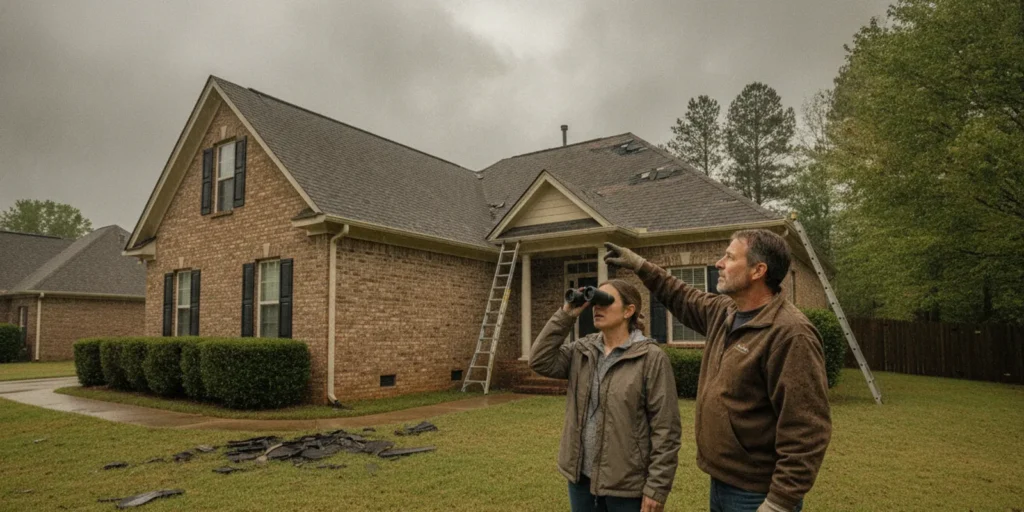
First, protect people. Do not climb onto a wet, steep, or visibly damaged roof, and keep away from downed electrical lines or unstable structures. If there is an immediate danger, follow local emergency guidance. If water is entering the building, move people and belongings away from the affected area when safe, and contact the appropriate emergency or property-maintenance resource.
Take photographs from a safe location and note the date, weather event if known, and the areas where you see signs of a problem. Do not disturb damaged materials or make permanent repairs before you understand what documentation your insurer needs, unless immediate action is necessary to protect people or limit further damage. Contact your insurer promptly and follow its instructions. Keep receipts and records for any urgent protective work.
Then request an evaluation that identifies visible conditions and next steps. A qualified roofing professional can explain whether the observed issue appears to call for temporary protection, repair, or a more complete assessment. If the roof has persistent leakage, displaced materials, damaged flashing, or signs of water intrusion, do not wait for a convenient season to ask what should be checked. The contractor’s findings still do not decide insurance coverage.
All In One Exteriors serves Georgia communities including Alpharetta, Marietta, Johns Creek, Milton, Roswell, Dunwoody, Woodstock, and Rome. You can review its storm damage repair information, learn about emergency roofing services, and read about roof repair options. For a larger residential replacement, see the company’s roof replacement information. Those pages can help you prepare questions, but the property itself must be evaluated to establish a project scope.
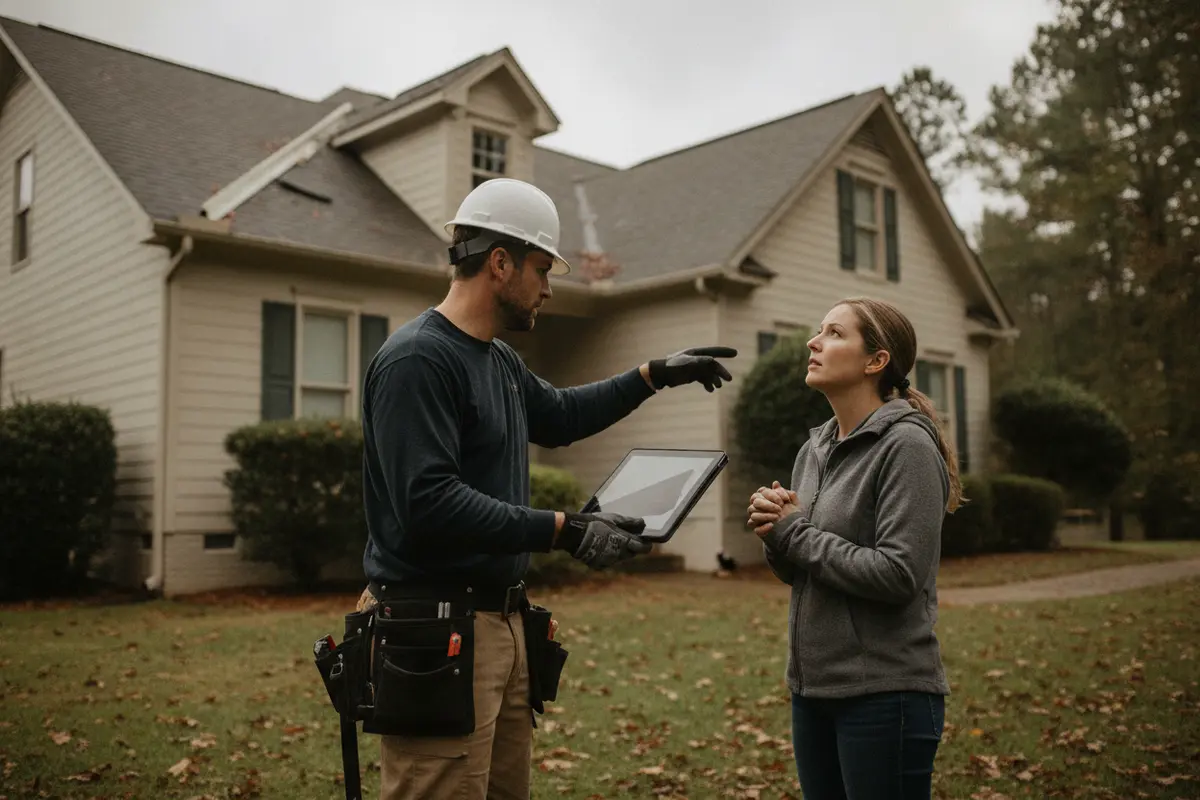
What should a clear storm-repair agreement include?
A written agreement turns a conversation into an accountable plan. It should identify the property, the contractor, the work area, and the specific work authorized. If the agreement covers only temporary protection or an initial repair, it should say so. If it covers replacement, make sure the materials and principal installation tasks are described. A broad phrase such as “repair storm damage” leaves too much room for different expectations.
Ask how the contractor will record conditions discovered after removal begins. For example, damaged decking or concealed flashing issues may not be visible during an initial visual review. The agreement should explain how the contractor will notify you, document the condition, describe added work and cost, and obtain your approval before proceeding, except where immediate action is needed for safety or to protect the building. Do not assume a verbal conversation authorizes a change.
Payment language deserves the same attention as the scope. Understand the deposit, milestones, final payment, and any conditions tied to completion. Confirm the payee and keep receipts. If an insurer issues a payment, ask your insurance representative how it should be handled under your policy; do not assume the contractor controls the claim or that a check means all work has been approved. If a contract contains unfamiliar legal terms, get independent advice before signing.
For a commercial site, confirm who has authority to sign and approve changes. The property owner, manager, tenant, lender, insurer, or board may have different responsibilities. Set a process for communicating site access, schedule changes, safety issues, and any interruption to building operations. Keep a single current copy of the agreement and revisions so that the contractor, decision-makers, and affected occupants are working from the same plan.
Finally, make sure the closeout expectations are clear. Ask what cleanup is included, how completion will be reviewed, which invoices and warranty papers will be provided, and whom to contact if a concern appears later. A documented closeout helps both residential owners and property managers understand what was done and retain a useful record for future maintenance or insurance discussions.
How can you compare contractors without rushing?
Do not compare estimates by the bottom line alone. Check whether each proposal describes the same roof areas, materials, removal, flashing, cleanup, protection, and work exclusions. Ask each contractor to explain differences in plain language. A lower estimate may leave out a task; a higher estimate may include a broader scope, but the paperwork should make that difference clear.
Consider these points side by side:
- Is the business identity consistent across the proposal and insurance documents?
- Is the inspection basis and proposed work written down?
- Are materials, system details, exclusions, and potential change approvals explained?
- Are schedule assumptions, payment terms, cleanup, and site protection clear?
- Can you get a direct answer about who supervises the project and how work is documented?
- Are warranty terms supplied in writing, with limits and responsibilities described?
Ask for the warranty documentation rather than relying on a phrase such as “lifetime.” Coverage can differ by manufacturer and product, and workmanship coverage is distinct from material coverage. Before authorizing repairs or replacement, read the terms and ask who handles registration and what records you should keep. For a more detailed checklist, see what Georgia owners should check in a roofing warranty.
Storm damage can involve more than the roof surface. Water may affect gutters, siding, windows, or interior areas, but each needs its own assessment and scope. Keep the roof as the priority when it is the source of an active problem, and ask the contractor to identify related exterior concerns separately rather than combining them into a vague work description. The company’s exterior services overview explains its broader property-improvement focus.
When should you request a roofing evaluation?
Request an evaluation when you see signs that may indicate storm-related roof trouble, such as missing or displaced roofing material, a new ceiling stain, water entry near a roof opening, or damage visible from the ground. These signs do not by themselves establish the cause or the extent of damage. An evaluation can help identify what is visible, what further inspection may be appropriate, and whether temporary protection or repair should be considered.
For commercial properties, arrange an evaluation promptly if leakage could affect occupied space, electrical equipment, inventory, or building operations. Coordinate with the property owner and insurer, establish safe access, and document any temporary measures. For a home, report the loss to your insurer according to its instructions and request a contractor evaluation to understand the roof work that may be needed.
Call All In One Exteriors at (404) 445-8136 to discuss an evaluation
The best storm-damage decision starts with safe documentation, clear insurance boundaries, verified contractor information, and a written scope you understand before work begins.