
Metal roof maintenance is less about frequent repairs and more about noticing changes, keeping drainage paths clear, and addressing small concerns before they spread. For Georgia homes and commercial buildings, seasonal rain, leaves, humidity, and storms make a simple observation routine useful. This guide explains what to look for, what not to do, and when to request a professional evaluation.
What does routine metal roof maintenance involve?
A sensible routine starts from the ground. Look over the roof after major storms and during seasonal property checks, without climbing onto it. Note changes in the roof surface, edges, flashing, gutters, and nearby branches. A visual check does not replace a professional inspection, but it can help you describe a concern clearly.
Metal roofs vary by panel profile, coating, fasteners, and installation details. Follow documentation provided for the specific system. Avoid assuming every roof should be cleaned or treated in the same way. If you cannot identify the material or finish, ask a qualified roofer before applying a cleaner, sealant, or coating. For system and installation questions, see the company’s roof installation information.
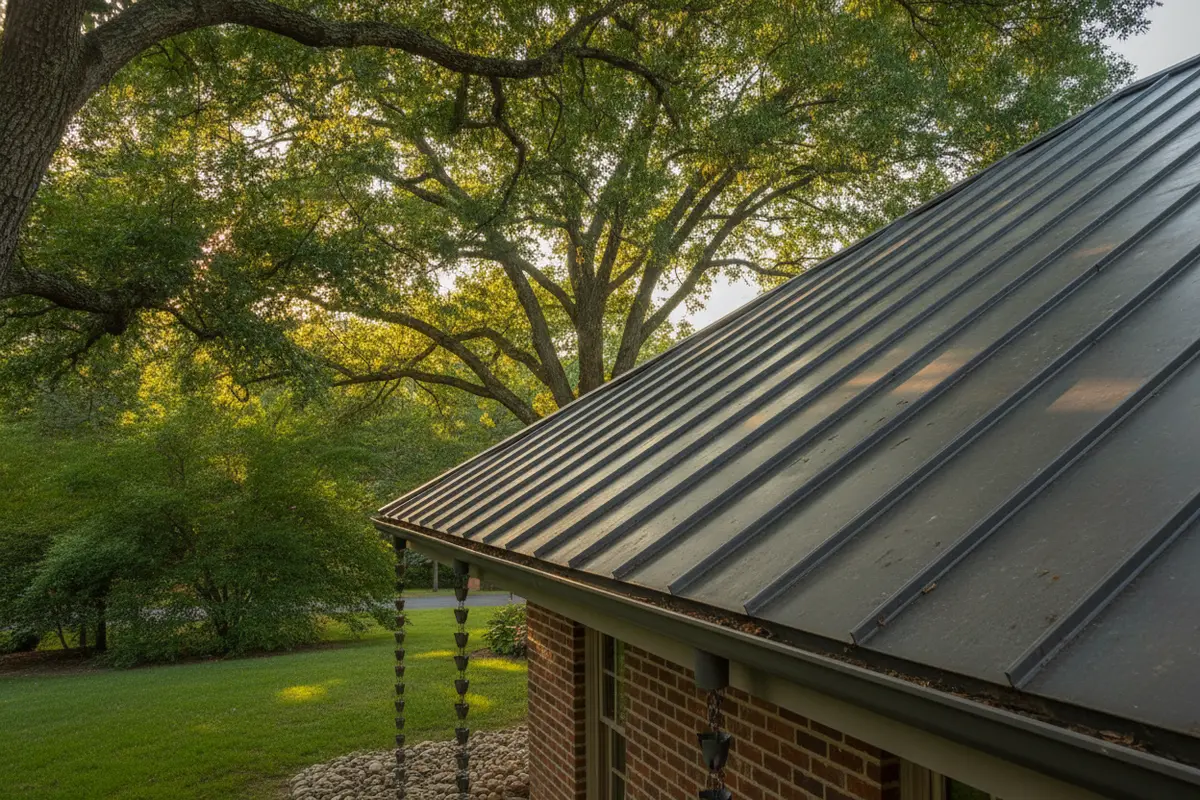
What should you look at from the ground?
- Panels and seams: Look for visible displacement, buckling, loose-looking edges, or a change in alignment. Do not press or pull on a panel.
- Fasteners and exposed details: From a safe vantage point, note missing or visibly raised fasteners, but do not attempt to tighten them. Fastener type and installation requirements vary.
- Flashing: Check areas around chimneys, vents, skylights, and roof-to-wall transitions for gaps, lifted edges, or staining below them.
- Drainage: Look for overflowing gutters, water marks, or debris buildup at roof edges. Clear ground-level downspouts only where safe.
- Interior clues: After rain, check ceilings and accessible attic areas for new dampness, staining, or musty odors. Do not enter an unsafe or poorly ventilated space.
- Nearby vegetation: Note branches that touch or hang close to the roof. Arrange appropriate trimming rather than attempting risky work from a ladder.
Photograph observations from the same safe locations over time. A dated image can show whether a stain or apparent change is new, while avoiding the risk of walking on a roof. For suspected active leakage, protect belongings and contact a roofing professional promptly.
How can you make a useful observation record?
A consistent record is more helpful than a collection of unrelated snapshots. Choose a few safe viewing points around the building and use them again when checking the roof. Include the date, recent weather, and the area you photographed. If you notice an interior stain, photograph it from a distance and note whether it changed after rain.
Keep observations factual. Write “dark mark appeared below the north roof edge after heavy rain,” rather than assuming that a particular panel or flashing detail has failed. Water can travel along a roof assembly before appearing indoors. This distinction helps a contractor investigate the source without being led toward an unsupported conclusion.
For a home, a short note might read: “October 18, after overnight rain: water mark at hallway ceiling; no water visible from the yard; north gutter had leaves.” For a commercial building, log the tenant or room, approximate time, weather, and any temporary steps taken to protect property. Avoid putting yourself or occupants in danger to gather better evidence.
How often should a metal roof be checked?
There is no single interval that fits every building. A roof beneath trees, exposed to wind-driven debris, or with a history of drainage trouble may need closer observation than a roof with open surroundings. Include the roof in ordinary seasonal property reviews and check after significant wind, hail, or heavy rain when conditions are safe.
Do not go onto a wet, icy, steep, or otherwise unsafe roof. Metal surfaces can be slippery, and walking can damage panels or coatings. A professional can assess areas that cannot be safely viewed from the ground. For a broader overview of roof evaluation and work, see the company’s roofing services page.
A seasonal checklist
- After leaf fall: Look for gutter overflow, downspout blockage, and branches resting near roof edges. Do not reach above shoulder height or use an unstable ladder.
- Before stormier periods: Make note of existing stains, loose-looking exterior details, and drainage concerns so later changes are easier to recognize.
- After a significant storm: Once conditions are safe, check from the ground for displaced material, fallen branches, new water marks, or debris accumulation.
- After any repair: Save the written scope, invoice, product information, and photographs. Record the date and the area addressed.
This is an observation routine, not a substitute for maintenance instructions from the manufacturer or a condition-specific inspection. A roof with unusual design details or recurring concerns may need a more tailored schedule.
What maintenance tasks are safe, and what should you avoid?
Property owners can keep a record of visible conditions and make sure water can drain away from the building. Keep gutters and downspouts functioning using safe access methods, and arrange branch trimming when needed. If the roof itself needs cleaning, ask what method is suitable for its particular finish and warranty documentation. The company’s roof cleaning guide offers related context, but the specific roof system’s instructions should govern.
Avoid pressure washing, abrasive brushes, harsh chemicals, or unapproved coatings. These can harm finishes or affect warranty coverage. Do not seal seams or replace fasteners as a do-it-yourself fix: the wrong material or installation method may trap water or create another leak path. Never use a ladder during storms or near power lines.
Cleaning is not the same as repair. Staining or organic growth may be visible without indicating that panels have failed, while a leak may originate at a flashing detail rather than across the panel field. A cleaning proposal should explain the method and protection of the finish. A repair proposal should identify the observed condition and the work intended to address it. For concerns involving damaged panels or roof details, review the company’s roof repair services.
Which signs deserve prompt attention?
Contact a roofing professional if you see active water entry, a panel that appears displaced, flashing that has lifted, repeated overflow at an edge, or new interior staining after rain. After hail or strong winds, damage may not be obvious from the ground. Do not climb up to confirm it; request an evaluation and document what you can safely observe.
Water can travel from its entry point before appearing indoors, so the location of a ceiling mark does not always identify the roof detail that needs attention. Share when the issue started, weather conditions, and photographs of interior or ground-level evidence. All In One Exteriors provides roof repair services and can assess reported concerns. For damage following severe weather, its storm damage repair information is also relevant.
How do you compare maintenance and repair proposals?
Ask for a written scope that describes the areas evaluated and work proposed. A useful proposal should make clear what will be cleaned, adjusted, repaired, or left unchanged, and identify relevant material assumptions. Ask how the contractor will protect surrounding property and manage debris or water during work.
| Situation | Appropriate next step | What to clarify |
|---|---|---|
| Routine visual review, no apparent issue | Record conditions and monitor safely | Manufacturer care instructions and known past repairs |
| Debris or drainage concern | Arrange safe gutter or site maintenance | Whether downspouts, drainage, or vegetation contribute |
| Loose-looking detail or suspected leak | Request a roofing evaluation | Observed condition, likely source, repair scope, materials |
| Storm-related concern | Document visible evidence and seek assessment | Areas inspected and difference between observations and estimated scope |
| Proposed cleaning | Confirm the product and method before approval | Compatibility with the roof finish and written care requirements |
Ask whether the proposed repair is compatible with the existing metal system and what documentation applies. If more than one contractor evaluates the roof, compare the work descriptions, not just the total price. A low price that omits access, disposal, or necessary detail work may not represent the same scope.
Questions that make a proposal easier to compare
- What specific condition did you observe, and where?
- Is the proposed work preventive maintenance, cleaning, repair, or replacement?
- Which material, sealant, fastener, or cleaning approach is being proposed, and why is it appropriate for this roof?
- What areas are included, and what is expressly excluded?
- How will the crew access the work area and protect landscaping, equipment, vehicles, or interior spaces?
- What records or product instructions should the owner retain?
For example, two proposals might both use the word “seal,” but one may refer to a defined flashing repair while the other proposes a broad coating without explaining the substrate or preparation. Ask for the actual scope and product details before treating these as comparable alternatives. For commercial projects, confirm which roof section, access limitations, and occupied areas are included.
What do warranties mean for metal roof care?
Warranty coverage depends on the product, installation, written terms, and circumstances of a claim. Material coverage and workmanship coverage are not interchangeable. Read the actual documents and ask which maintenance steps, cleaning products, repairs, or alterations could affect coverage. Keep receipts, installation records, inspection notes, and dated photographs together.
Do not assume that a roof is covered for every leak or that routine maintenance guarantees a particular service life. The Metal Construction Association’s report on service life assessment of low-slope metal roof systems addresses a specific system and conditions; it should not be treated as a universal forecast for every metal roof.
When asking about a concern, have the warranty documents available and identify the product or installer if known. Ask who is responsible for evaluating the reported issue, what documentation is needed, and whether proposed maintenance follows the written requirements. Avoid relying on a verbal generalization when the actual terms can be reviewed.
For installation questions or to discuss a roof’s condition, review the company’s roof installation information. Your roof’s details and paperwork matter more than a generic schedule.
How should Georgia property owners prepare for a roof evaluation?
- Write down when the concern first appeared and whether it followed a storm.
- Take photographs from the ground and indoors; do not climb onto the roof.
- Gather installation, repair, and warranty documents you have.
- Note trees, gutters, or drainage conditions near the affected area.
- Ask the roofer to explain findings, the proposed scope, and any limits of the evaluation.
Before the appointment, make access straightforward without creating a hazard. Move vehicles away from the area if requested, identify locked gates or roof-access rules, and tell the contractor about tenants, pets, or sensitive equipment. Do not remove guards or unlock restricted areas without following site procedures.
For storm-related concerns, keep the discussion factual. An inspection can describe observed roof conditions, but it cannot promise an insurance decision or coverage. Owners should review policy requirements directly with their insurer. If a claim is being considered, retain the date of loss and relevant communications and ask the insurer what documentation it requires.
What should commercial property managers consider?
Commercial roofs may include long panel runs, penetrations, equipment supports, and drainage details not present on a typical home. Managers should record access procedures, coordinate with tenants, and track leaks by location and date. Keep a log of prior work and identify areas where water tends to collect after rain.
Do not allow unqualified staff to walk a roof to investigate a leak. Coordinate evaluation with a contractor familiar with the roof system and site safety requirements. If the building has multiple roof types, make sure the proposed scope names the relevant system rather than using a generic description. All In One Exteriors also handles commercial roofing projects.
Build a useful maintenance log
For a multi-tenant property, choose a consistent location code such as building, level, and room rather than relying on descriptions like “near the back.” Record the date and time reported, weather if known, whether water was actively entering, and steps taken to protect the space. Attach photographs and note when a contractor attended and what scope was completed.
Separate an observed symptom from a diagnosis. “Ceiling tile damp near unit 204 after heavy rain” is an observation. “Metal seam failed” is a conclusion that requires assessment. This small distinction can prevent a maintenance log from becoming misleading when a later evaluation finds a different source. Managers should also communicate limits clearly to occupants: keep people away from wet electrical equipment or sagging ceiling materials and follow the building’s safety procedures.
How do roof details affect upkeep planning?
A metal roof is a system, not just a visible sheet of metal. Panel layout, edges, penetrations, transitions, fasteners, coatings, gutters, and the structure beneath them all shape what needs attention. A maintenance plan should therefore begin with identification: what type of roof is present, what documents exist, and which areas have previously been repaired?
Make a short information file with the installation date if known, product or panel information, past repair scopes, warranty documents, and photographs. If you manage several buildings, keep one file per property and label each file by address and roof section. This reduces confusion when a contractor discusses a particular elevation, penetration, or drainage area.
Do not infer that a system is defective simply because it uses exposed fasteners, or that a concealed-fastener system needs no observation. System design differs, and each roof should be evaluated on its own details and documents. If information is missing, ask the contractor to explain what was observed and what remains uncertain rather than guessing at a maintenance requirement.
How can you decide between monitoring and calling now?
Use the consequences and evidence to set the next step. A small, unchanged cosmetic mark with no water entry may be documented and discussed during a planned evaluation. Active leakage, a visibly displaced panel, or a new interior stain after rain deserves faster attention. If a condition is uncertain but appears to be changing, record it and ask a professional rather than attempting a repair.
Protect people and property first. Place a container under a minor drip only if the floor and surrounding area are safe, move belongings where practical, and keep clear of electrical hazards or sagging materials. Do not puncture a ceiling, apply sealant from inside, or climb onto the roof during rain to search for an entry point. Temporary measures should not be mistaken for a repair.
When contacting a roofer, provide a concise report: building type, roof type if known, location of visible concern, date noticed, recent weather, and whether water is actively entering. These details help arrange an appropriate evaluation while leaving diagnosis to the person who can inspect the assembly safely.
Frequently asked questions
Can I walk on my metal roof to inspect it?
It is safer to observe from the ground and leave roof access to trained professionals. Metal can be slippery, and foot traffic may damage some systems.
Should I pressure wash a metal roof?
Do not assume pressure washing is suitable. It can damage finishes or force water into details. Check system documentation and ask a roofing professional about an appropriate method.
Does every metal roof need annual maintenance?
Needs depend on roof design, surroundings, drainage, and condition. Regular visual observation and checks after significant weather are practical; a professional can recommend an interval for the specific roof.
What if I find a leak during a storm?
Keep clear of unsafe areas, protect belongings if possible, and contact a roofing professional when it is safe. Do not climb onto the roof in wet or windy conditions.
Does maintenance guarantee that a roof will not leak?
No. Observation and appropriate care can help identify concerns, but they cannot guarantee against leaks or determine warranty coverage. Follow the product documents and obtain a condition-specific evaluation when needed.
Discuss a metal roofing concern
A safe observation routine, clear records, and roof-specific care instructions can help Georgia property owners make informed decisions without taking unnecessary risks.