
Roof cleaning can improve a roof’s appearance, but the right response depends on what is growing or staining the surface and what the roofing material can tolerate. For Georgia homeowners, roof cleaning should start with identifying the issue—not climbing onto the roof or reaching for a pressure washer. A careful assessment can help distinguish a surface concern from damage that needs repair.
What does roof discoloration mean?
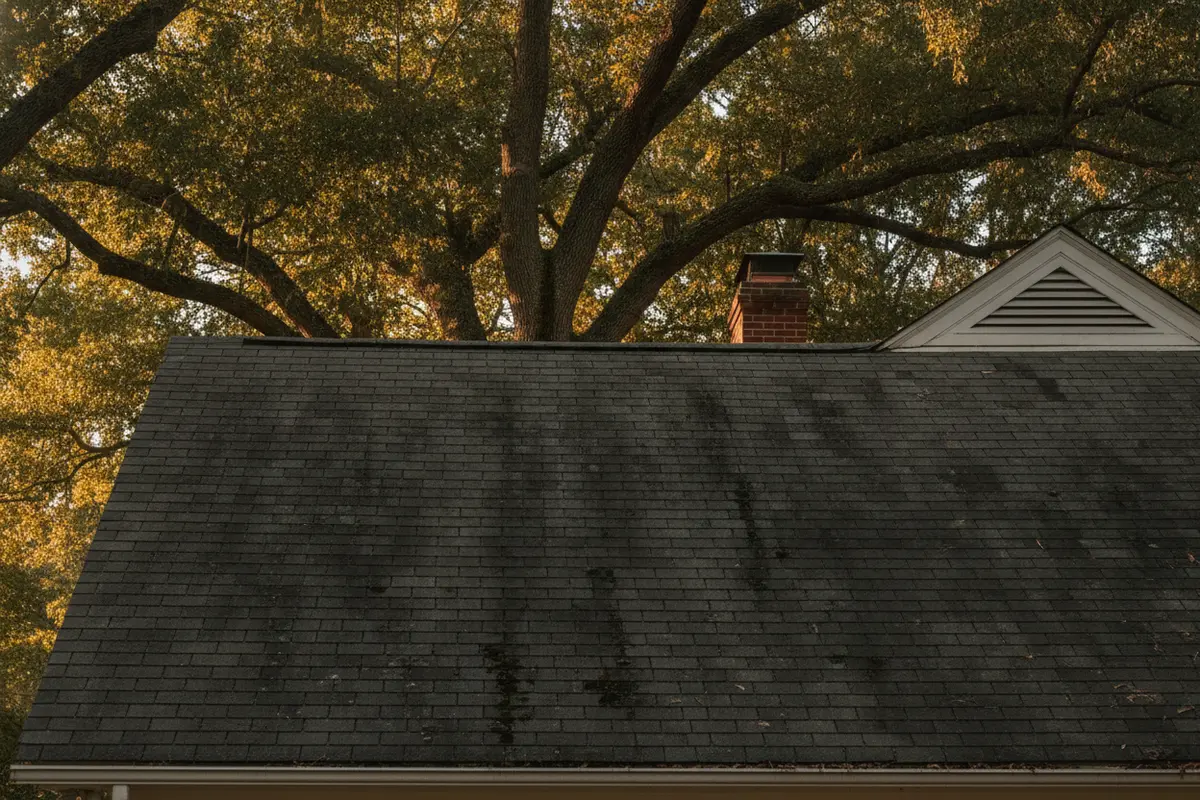
Dark streaks on asphalt shingles are often associated with algae. Moss is different: it forms thicker, raised growth, while lichen can look like crusty patches attached to the surface. Leaves, pollen, dirt, and other debris can also collect on a roof. Appearance alone does not establish whether the roof is damaged or needs cleaning. A broad dark area may have a different cause from a localized patch, and a photo from the ground cannot confirm the condition of every shingle.
Look from the ground with binoculars if needed. Note where staining appears, whether growth is concentrated below overhanging branches, and whether the roof has areas that remain shaded. Also look for missing or lifted shingles, sagging lines, exposed flashing, or water marks inside the home. Do not walk on a roof to inspect it; a sloped, wet, or aged surface can be dangerous. If you cannot see a section safely, leave that assessment to a qualified professional.
When is roof cleaning worth considering?
Cleaning may be worth discussing when algae or moss is visible and the roof is otherwise in serviceable condition. The decision should consider the roof material, age, present wear, extent of growth, and the method proposed. Moss can hold moisture against roofing materials and may lift shingle edges as it grows. A roof professional can help distinguish surface growth from broader wear, leaks, or damage that calls for a repair evaluation instead.
Cleaning is not a substitute for fixing a leak, replacing failed flashing, or addressing damaged shingles. If staining appears after a storm or alongside interior moisture, consider a roof inspection before deciding on cleaning. All In One Exteriors provides roof repair services and can help assess whether the concern appears to call for repair, replacement, or another response. If the roof is nearing the end of its service life or has widespread wear, paying to clean it may not address the main issue.
Which cleaning methods should homeowners compare?
Choose a method based on the roof material, condition, and type of growth. Asphalt shingles are not a surface to attack with high-pressure water or stiff scraping. The Asphalt Roofing Manufacturers Association describes a chemical cleaning approach for algae and moss on asphalt roofing; that guidance is specific to that roof type and should not be assumed to apply to every roof. Tile, metal, membrane, and other roofing systems can have different manufacturer instructions and care needs.
| Approach | Potential use | Key caution |
|---|---|---|
| Low-pressure, material-appropriate cleaning | May be considered for certain surface growth after assessing the roof | Products and application must suit the roofing material and its condition |
| High-pressure washing | Generally not an appropriate default for asphalt shingles | Pressure can dislodge protective granules or force water beneath materials |
| Scraping or brushing | May be suggested for limited moss in some circumstances | Aggressive contact can loosen or damage roofing materials |
| Repair or replacement evaluation | Appropriate when growth accompanies damage, leaks, or significant wear | Cleaning cannot correct underlying roofing failures |
For asphalt shingle cleaning, consult the Asphalt Roofing Manufacturers Association guidance on algae and moss and confirm that any proposed treatment is appropriate for the roof in question. Avoid mixing or applying chemicals yourself unless product instructions and safety precautions are fully understood. Runoff can affect plants and other surfaces, and working at height adds serious fall risk. A method described for one roofing type should not be transferred to another without checking its care requirements.
How can you make a useful ground-level assessment?
Before contacting a contractor, organize what you can observe without getting onto the roof. Walk around the building and note which slopes are visible, where the discoloration begins and ends, whether it follows a valley or gutter line, and whether nearby trees cast shade for much of the day. Write down the date and recent weather. A series of photographs from the same safe locations can help you notice whether a stain is spreading or simply looks different under changing light. Avoid standing beneath a damaged-looking section or using a ladder to improve the view.
Separate observations from guesses. For example, write “dark streaks on the north-facing slope, visible since late summer” rather than “the shingles are ruined by algae.” Note any raised patches you can see, but do not assume that every green or dark area is moss. Include interior clues, such as a ceiling mark, damp attic odor, or water appearing after heavy rain. These details help a professional decide whether the first priority is diagnosis of a leak, an assessment of roof wear, or discussion of surface cleaning.
A simple record can also make follow-up more useful. Keep the photos, dates, and any prior treatment information together, and identify the roof material only if you know it from project paperwork or a previous inspection. Do not scrape a sample or lift shingles to identify the material. If your view is obstructed, say so; limited visibility is better than an unsafe attempt to inspect a steep or slippery surface.
What should you check before work begins?
A useful assessment starts with a clear description of the roof and the concern. Share the approximate roof age if known, the roofing material if known, when the marks appeared, and whether they have changed. Mention leaks, interior stains, recent storms, prior treatments, and any repair history. Photos taken from a safe location can help explain where the problem appears, but they do not replace a close professional evaluation.
Ask the contractor to explain what they observed and what they did not inspect. A written scope should identify the proposed work area, method, products, preparation, and limitations. It should also say whether the work includes a roof condition assessment or only surface cleaning. If the contractor finds damaged shingles or flashing, ask how that finding changes the plan rather than assuming cleaning will proceed unchanged.
Before approving a chemical treatment, ask how landscaping, siding, gutters, windows, walkways, and neighboring property will be protected. Clarify how runoff will be managed and whether nearby plants need protection or rinsing. Ask how workers will access the roof, what fall precautions are planned, and how weather affects timing. These questions make the scope concrete and help you compare proposals on more than appearance promises.
What changes can help limit recurring growth?
After the roof has been assessed, consider the conditions around the affected slope. Branches touching the roof can leave debris and keep areas shaded; leaves that collect in valleys can slow drainage. From the ground, look for branches resting against the roofline and for visible piles of leaves after storms. A qualified tree-care professional can advise whether trimming is appropriate, particularly near power lines or large limbs. Keep the goal modest: changing nearby conditions may reduce some sources of debris or shade, but it cannot guarantee a stain-free roof.
Gutters and downspouts are part of the same exterior water path. During rain, observe whether water flows through the downspout or spills over the gutter edge. From a safe location, check for sagging sections, detached joints, or water marks on fascia and siding. Do not lean out of a window or climb an unsecured ladder to investigate. If drainage seems to be contributing to the concern, record what you see and include it when discussing the roof, rather than treating the stain as an isolated problem.
Homeowners sometimes consider adding metal strips, coatings, or a new roof product to prevent future algae. These are not universal fixes. First identify the existing roof product and review its care instructions and warranty documents. Ask whether a proposed addition is compatible with the material, how it would be installed, and whether it could affect the roof. A preventive measure should have a clear rationale and scope; avoid making a change based only on a general claim that it will stop all growth.
Routine observation is more useful than frequent roof access. Choose a couple of safe viewpoints and check the roof after periods of heavy leaf fall or severe weather. Compare photographs rather than climbing up to inspect every change. If new growth appears alongside damaged shingles, a leak, or a change in roof shape, seek a roof assessment rather than applying a treatment on your own.
How can you reduce recurring algae and moss?
Moisture and shade can make some roof areas more hospitable to growth. Keep nearby branches from resting on the roof, and remove leaves or debris from roof valleys and drainage areas when this can be done safely from the ground or by a qualified professional. Make sure gutters are not obstructed; roof runoff needs a clear path away from the home. See the company’s information on gutter systems and drainage if you are also considering exterior water management.
Tree trimming should be planned carefully. Do not climb onto the roof or lean ladders against unstable gutters to reach branches. Where branches overhang the house, consider whether a qualified tree-care professional can safely reduce contact and excess shade. Do not remove large limbs without assessing their location and the risk to the home, utilities, and people below.
Some asphalt shingles are available with algae-resistant features, but existing roofs should be assessed according to their actual product and warranty documents. Do not assume that a cleaning treatment, coating, or added metal strip is approved for a particular roof without checking the manufacturer’s instructions. Preventive changes cannot guarantee that growth will never return; local shade, moisture, and roof conditions still matter.
How can you review a cleaning proposal step by step?
Start by asking what problem the contractor believes the work will address. The answer should identify the visible concern and distinguish it from any suspected roof defect. Ask what observations support the proposed approach, what remains uncertain, and whether a closer condition assessment is needed first. If the roof has a leak or damaged materials, ask whether cleaning should wait until that issue is evaluated.
- Confirm the roof area. Have the proposal identify the slope or section to be treated and whether the scope covers only visible growth or a larger area.
- Confirm the material and method. Ask how the roof material was identified, what process and products are proposed, and why they suit the roof’s condition.
- Review protection and access. Ask how the crew will protect landscaping and exterior surfaces, manage runoff, and work safely at height.
- Clarify completion and cleanup. Ask what cleanup is included, what visible result is expected, and whether improvement may take time or marks may remain.
- Record exclusions and contingencies. Confirm what happens if the crew finds deteriorated shingles, failed flashing, or another concern outside the cleaning scope.
Then compare proposals line by line rather than judging by the lowest number alone. Two quotes may differ in treated area, preparation, protection, or cleanup. Ask for those differences in writing so you can make an informed comparison. If a contractor changes the method after seeing the roof, request an updated scope and an explanation before authorizing added work. Keep a copy of the final scope and any product or care instructions for your records.
Think through a straightforward example: one proposal covers only the dark streaks on a front slope, while another describes treatment of several slopes and plant protection around the home. Those are not necessarily equivalent jobs. Ask why the areas differ, whether the growth pattern supports the broader scope, and what the contractor expects to accomplish on each section. Specific answers make it easier to decide whether the planned work addresses your actual concern.
How does drainage relate to roof cleaning?
Cleaning the visible roof surface does not correct drainage problems. Debris in valleys, obstructed gutters, or water that repeatedly spills over an edge may contribute to ongoing moisture around the roof and exterior. From the ground, note overflowing gutters during rain, standing debris visible in a valley, or water marks on fascia and siding. Avoid reaching into gutters from an unsecured ladder.
If water is entering the home, treat that as a separate concern from cosmetic cleaning. Document the location of interior staining and whether it changes after rainfall. Do not assume the leak sits directly above the stain; roof openings, flashing, and water paths can make the source difficult to identify from inside. A roofing evaluation can help determine whether cleaning is relevant or whether a different roof issue needs attention.
How should you compare a proposed cleaning scope?
Proposals can sound similar while covering different work. Compare the stated roof areas, access plan, treatment, protection measures, cleanup, and exclusions. Ask whether the quote covers only a visible stain or the full roof area discussed during assessment. If a proposal recommends pressure washing, scraping, or a chemical treatment, ask why that approach is suitable for the specific roof material and condition.
Look for clarity about what a finished result means. Some growth or discoloration may not disappear immediately, and a cleaning treatment does not necessarily restore a worn roof to a new appearance. Ask what change the contractor expects, how soon it should be visible, and what is outside the scope. Be cautious of promises that a roof will look new when the roof’s age, wear, and material have not been considered.
Warranty terms are another reason to verify before work. Review available product and workmanship documents, and ask whether the proposed method affects either. Do not rely on a general statement that a process is safe for all shingles. If the roof has a known manufacturer or product, use its instructions as the reference point and ask the contractor to explain how the plan aligns with them.
What should you ask before hiring a roof cleaner?
- What material and roof condition did you identify, and how?
- What cleaning method and products are proposed, and are they suitable for this roof?
- How will the work protect landscaping, gutters, siding, and nearby surfaces?
- How will workers access the roof and manage fall and runoff risks?
- Will the work affect product or workmanship warranty terms?
- What is included in the written scope, and what happens if inspection finds damage?
- What result should I reasonably expect, and what visible marks might remain?
- How will weather or a wet roof affect the planned work date?
Ask for a written description rather than relying on a broad promise that the roof will look new. A professional should be able to explain the scope, limits, and risks, including why cleaning may not be the best option for a roof with deteriorated shingles or active leaks. You can also review roof replacement information when evaluating a larger roofing project, or explore the company’s roof repair information if damage is part of the concern.
How does Georgia weather affect roof cleaning?
Georgia’s humid periods, tree cover, and frequent rain can leave some roof sections damp or shaded for longer than others. That does not mean every dark roof needs treatment. The roof’s age, ventilation, material, slope, and drainage all matter. Schedule work only when conditions allow safe access and product application; wet surfaces and storms raise hazards and can disrupt the job.
Seasonal pollen and falling leaves can add temporary discoloration or debris, so consider whether a concern is persistent or appears during a particular season. A storm can also expose damage that was not obvious before. When marks appear alongside missing material, a new leak, or visible deformation, prioritize assessment over cosmetic cleaning. In areas with heavy tree cover, monitor the roof and gutters from the ground after periods of leaf fall and heavy rain.
For homes in Alpharetta, Marietta, Roswell, Milton, Johns Creek, and nearby communities, describe the roof’s age if known, the location of visible growth, and any signs of water intrusion when requesting an assessment. A safe ground-level photo may help communicate the concern, but it cannot confirm the roof’s full condition.
Frequently asked questions
Can I pressure wash asphalt shingles?
High-pressure washing is not a safe default for asphalt shingles. It can remove granules or drive water beneath shingles. Ask a roofing professional about a method appropriate for the roof and the specific growth.
Does cleaning fix roof leaks?
No. Cleaning removes or treats surface growth; it does not repair failed flashing, damaged shingles, or other leak sources. Have suspected leaks evaluated and repaired.
Will roof cleaning prevent algae from returning?
Not necessarily. Shade, moisture, debris, and roof conditions can contribute to recurrence. Reducing debris and addressing drainage may help, but no particular outcome should be assumed.
Should I clean a roof before replacing it?
Not automatically. If a roof is near the end of its useful life or has widespread damage, cleaning may not be worthwhile. Compare the roof’s condition and repair needs with a replacement evaluation.
Can the same cleaning method be used on every roof?
No. Roofing materials and product instructions differ. Ask for a method selected for the specific roof and verify it against applicable manufacturer guidance before approving work.
Discuss a roof concern with All In One Exteriors
What is the next step for a stained roof?
Start by documenting what you can see safely from the ground, then determine whether the concern is surface growth, roof damage, or both. A clear evaluation can help you choose a suitable next step without risking damage from an unsuitable cleaning method.