
Attic ventilation and roof life in Georgia are connected, but airflow alone does not determine how long a roof lasts. A roof’s condition, installation, materials, attic insulation, air sealing, moisture sources, and maintenance all matter. Understanding how these parts work together can help Georgia homeowners spot concerns and ask better questions before choosing a repair or replacement.
How can attic ventilation affect a roof?
Ventilation moves air through an attic or roof space. In a common passive design, outdoor air enters near the lower roof edge through intake openings and exits through vents higher on the roof. When the system is designed and installed for the building, that movement can help manage heat and moisture in the attic. The Asphalt Roofing Manufacturers Association describes year-round benefits of proper attic ventilation, including cooler attics in summer and drier attics in other conditions. Read its overview of attic ventilation and roofing systems.
That does not mean ventilation extends every roof’s life by a set number of years, or that adding a vent will fix a roof problem. Ventilation is one part of a larger assembly. If water is entering through damaged flashing, for example, more attic airflow will not repair the leak. If indoor air is reaching the attic through gaps, ventilation may not resolve the moisture source without air sealing and other corrections.
For Georgia homes, it is useful to think in terms of several interacting factors: rain and storm exposure, roof design, attic temperature, indoor humidity, insulation, and the condition of roof coverings and penetrations. The right solution depends on what an evaluation finds, not on one symptom or a one-size-fits-all vent recommendation.
What does a balanced attic ventilation system mean?
A balanced system generally has a planned path for air to enter and leave, with the openings working together rather than competing. Intake is often placed low, such as at soffits or eaves, while exhaust is placed higher, such as at a ridge or roof area. The exact design depends on the roof shape, existing openings, attic configuration, and applicable requirements. A contractor should assess the whole system before recommending changes.
More vents do not automatically mean better ventilation. If exhaust openings are added without suitable intake, the system may not move air as intended. If intake or exhaust openings are blocked by insulation, debris, or construction details, the visible vent may not be functioning effectively. Mixing vent types or locations without a plan can also create unintended airflow paths. These are reasons to look at the complete attic and roof rather than count vents from the ground.
Some homes use passive vents that rely on natural air movement. Others may have powered ventilation equipment. A powered fan is not a universal upgrade: its effectiveness depends on the design, controls, air pathways, and the relationship between the attic and the conditioned rooms below. Ask the evaluator to explain what the existing system is doing and why a proposed change fits the structure.
A sound recommendation should account for the size and layout of the attic, the available intake and exhaust openings, and any obstructions. Ask what design guidance or applicable requirements informed the proposal, and whether the work will affect existing roof details. Avoid relying on a single rule of thumb without checking whether it applies to your roof. If the evaluator cannot explain how the proposed openings work together, request clarification before authorizing a change.
| What you observe | Possible area to investigate | Useful next step |
|---|---|---|
| Dark marks or damp-looking areas on attic materials | Moisture entry, indoor air leakage, condensation, or a past event | Document the location and ask for an evaluation that checks both roof and attic conditions. |
| High indoor humidity or recurring attic moisture concerns | Bathroom or kitchen exhaust routing, air leaks, ventilation, or another moisture source | Identify the source before assuming a roof vent will solve it. |
| Uneven temperatures in upper rooms | Insulation, air sealing, ductwork, shading, or attic airflow | Consider an assessment of the full building enclosure, not ventilation alone. |
| Visible shingle, flashing, or roof-deck damage | Roof covering, water entry, installation details, or storm impact | Arrange a roof inspection; ventilation changes are not a substitute for roof repairs. |
| Vents that appear covered or obstructed | Insulation placement, debris, paint, or an unsuitable opening | Do not enter an unsafe attic or move materials near wiring; ask a qualified professional to check it. |
Can ventilation problems shorten roof life in Georgia?
They can contribute to conditions that affect roofing materials, but it is not possible to diagnose a roof’s remaining life from ventilation alone. Excess heat or moisture in an attic can be a concern for the roof assembly and the home. The cause may involve ventilation, but it could also involve a roof leak, inadequate insulation, air leakage from the living space, plumbing or HVAC equipment, or a combination of issues.
Roof life also varies with material, installation quality, maintenance, exposure, and the type and extent of damage. Two neighboring homes can have different roof conditions even if they were built around the same time. A general age estimate should not replace a condition assessment, and a ventilation adjustment should not be presented as a guarantee of longer service.
If you are already seeing lifted, missing, or deteriorated roofing materials, water stains, or damaged flashing, prioritize an examination of the roof itself. A roofer can check the covering, penetrations, edges, and drainage details while considering whether the attic environment points to a separate concern. See the company’s information on roof repairs in Georgia for a relevant service path.
What warning signs should homeowners look for?
Some clues appear indoors, while others are visible from outside. None of these signs proves that ventilation is the cause. Their value is in helping you describe what you have noticed and where it occurs.
- Water marks or musty odors: Note whether they appear after rain, during humid weather, or throughout the year. A leak and indoor moisture can create similar symptoms.
- Condensation or damp surfaces: The location and timing matter. Record whether the issue is limited to one area or appears across the attic.
- Persistent heat in an upper room: Heat can relate to insulation, air leakage, sun exposure, ducts, or ventilation. It is not by itself proof of a roof defect.
- Roof materials that look damaged: From the ground, you may notice missing or displaced shingles, exposed areas, or damaged edges. Do not climb onto the roof to investigate.
- Blocked openings: If an attic is safely accessible, a homeowner may be able to notice obvious stored items or insulation near an opening, but should not disturb wiring or walk on ceiling materials.
Photographs taken from a safe location can help you explain what you observed. Include a date and note recent weather or indoor changes, such as a new bathroom fan or renovation. This information does not replace an inspection, but it can make the conversation more specific.
What should you check safely before calling a roofer?
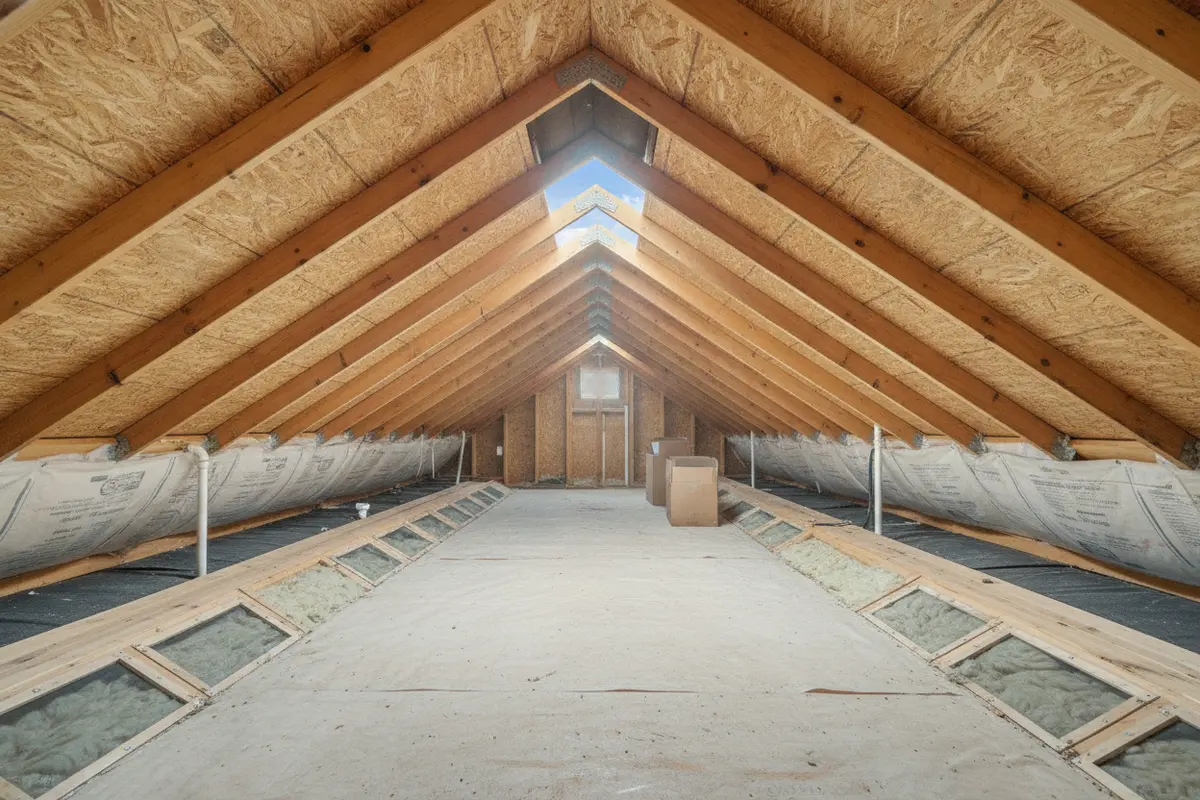
Start with observations that do not require walking on a roof or entering a hazardous attic. Look from the ground for visible roof damage, sagging gutters, or debris around eaves. From inside the home, note ceiling stains, paint changes, or odors. If the attic has safe, well-lit access and a stable floor or walkway, you may be able to look from the access point without stepping onto insulation or ceiling joists.
Do not climb a ladder during wet or windy conditions, walk on shingles, or reach into an area with exposed wiring, pests, sharp material, or signs of structural damage. Do not remove roofing materials or block vents as a test. If water is actively entering, keep clear of wet electrical fixtures and take steps to protect belongings only when it is safe to do so. An urgent leak may require attention to the roof covering before a longer ventilation assessment.
Make a short record before the visit:
- Where the symptom appears and when you first noticed it.
- Whether it follows rain, a storm, a temperature change, or a particular household activity.
- Any attic or roof work, insulation changes, or ventilation additions you know about.
- Photos from safe locations, including both close views and wider context.
For storm-related concerns, keep notes and photos of visible conditions, but avoid deciding on the cause or coverage yourself. A contractor’s assessment describes building conditions; it does not determine what an insurance policy will cover. For context on roof-related storm evaluation, see the company’s storm damage repair information.
What happens during an attic and roof evaluation?
A useful evaluation connects what is happening inside the attic with the roof exterior and the home’s known history. The evaluator may examine the roof covering and details such as penetrations, flashing, ridges, edges, and visible damage. If attic access is safe, the evaluator may look for signs of moisture, blocked openings, insulation placement, or air pathways. The exact scope depends on access, building design, and the concern reported.
Ask the evaluator to separate observed facts from possible causes. For example, a stain is an observation; identifying whether it came from a roof leak, condensation, or another source requires further assessment. Request that the findings be explained in plain language and tied to specific locations or photographs when available.
Before approving work, ask:
- What did you observe on the roof and in the attic, and where?
- Which findings point to a roof repair, and which relate to ventilation, insulation, or moisture inside the home?
- What evidence supports the recommended work?
- Are there alternate repair approaches, and what would each address?
- Will the work change the intake or exhaust balance? How will you verify the proposed design fits this roof?
- What is outside the scope, and what should I monitor after the work?
If replacement is discussed, ask whether repair is a reasonable option and which visible conditions support the recommendation. A roof replacement evaluation should make the condition and proposed scope clear rather than treating ventilation as the only factor.
How do ventilation, insulation, and air sealing work together?
Ventilation and insulation serve different roles. Insulation slows heat transfer between the living space and attic. Air sealing limits uncontrolled movement of indoor air through gaps. Ventilation provides a planned path for air movement in the attic or roof space. A well-considered roof and attic strategy looks at all three rather than expecting one measure to compensate for problems in another.
For instance, if warm, moisture-bearing indoor air escapes through gaps around fixtures or access points, adding roof vents may not address the source. If insulation blocks an intended intake path, the airflow plan may not perform as expected. If a roof opening admits rain, increasing ventilation will not correct the water entry. The order of work matters: identify the source, decide which components need attention, and coordinate the work so one change does not undermine another.
Ask whether the proposed project involves only roof work or also attic insulation, air sealing, ducts, or exhaust fans. These elements may involve different trades or scopes. A clear proposal should explain what the roofing contractor will do and what would require another professional. All In One Exteriors also provides information about insulation as part of home energy improvements; the right scope still depends on the property and evaluation.
Which ventilation options might be considered?
Vent types are not interchangeable choices from a menu. The roof’s shape, existing intake and exhaust, attic layout, and manufacturer or building requirements affect what may be suitable. The table below gives a high-level comparison, not a design specification.
| Approach | Typical placement or operation | What to ask |
|---|---|---|
| Ridge exhaust with low intake | Exhaust runs near the roof peak, with intake openings near eaves where the design allows. | Is there a continuous, unobstructed path between the planned intake and exhaust? |
| Other passive roof or gable vents | Vents use natural air movement and may be placed on roof slopes or gable ends. | Do the location and combination work with the existing system, rather than short-circuiting airflow? |
| Powered ventilation | A fan moves air when operating under its control settings. | What supplies replacement air, how is the fan controlled, and what issue is it intended to address? |
| Correct an obstruction or detail | Work may clear a blocked pathway or address a specific installation condition. | What is obstructed, and how will the corrected detail preserve the roof’s water-shedding function? |
A proposal should identify the problem it is intended to solve and explain why the selected option fits the roof. If the recommendation is simply to add vents, ask how the existing intake and exhaust were assessed. If a powered fan is proposed, ask what happens when it runs and whether the building has a suitable source of replacement air.
Does the same attic guidance apply to commercial roofs?
Not always. Many commercial buildings have low-slope roof assemblies and interior conditions that differ from a house with an open attic. The right questions depend on the roof construction, insulation location, drainage design, HVAC equipment, and the way the space below is used. A residential vent layout should not be copied onto a commercial roof without considering its specific assembly.
For a commercial property, note where water or condensation appears, whether the issue follows rain or equipment operation, and whether it affects one area or several. Document roof access conditions and any recent work. Do not assume a ceiling stain identifies the entry point: water can travel before it becomes visible indoors. A contractor familiar with the type of roof can assess the membrane and details alongside the reported symptoms.
Commercial roofing systems may include TPO or EPDM, among other assemblies. If your building has a low-slope roof, discuss the actual system rather than asking for a residential attic vent solution. Review the company’s information on commercial roofing and TPO roofing systems as starting points for a project conversation.
What should you revisit after roof or attic work?
After repairs or improvements, confirm that the completed work matches the agreed scope. Ask which areas were addressed, whether the original concern was resolved, and whether any related work remains outside the project. Keep the proposal, invoices, product details, and photographs with your home records. If the work involved ventilation, retain a note of which openings were changed and how the contractor intended them to function together.
Continue to observe the area that prompted the work, especially after the weather or household conditions that previously made the symptom noticeable. A new stain or recurring dampness deserves follow-up; it should not be dismissed simply because a vent or roof component was replaced. Conversely, a symptom that does not return does not establish that every part of the attic is problem-free. Follow the contractor’s maintenance instructions and ask who to contact if the concern continues.
If a roof replacement and attic improvements are planned together, coordinate the scopes before work begins. Clarify whether insulation, air sealing, exhaust ducts, or other building systems are included, and who is responsible for work beyond roofing. This helps prevent assumptions that a roofing proposal covers every attic or indoor moisture issue. For example, a roof contractor may identify an exhaust duct concern but not include duct relocation in the roofing scope.
How can Georgia homeowners plan for roof longevity?
Ventilation is one maintenance and design consideration, not a substitute for caring for the entire roof. A practical plan includes watching for visible changes, addressing leaks promptly, and arranging professional assessment when the roof shows damage or recurring moisture concerns. Avoid assuming that one repair will solve symptoms that have several possible causes.
Keep records of roof work, product information, and any ventilation or insulation changes. If a contractor recommends a material or system, ask what it is designed to do, how it works with the existing roof, and what maintenance or warranty conditions apply. Warranties vary by product and installation and should be reviewed in the specific documents; do not assume that a ventilation change automatically changes a roof warranty.
For homes in Alpharetta, Marietta, and surrounding Georgia communities, local weather exposure can make regular attention to roof condition valuable, but no calendar schedule can predict when a particular roof will need work. After severe weather, use safe ground-level observations and seek an assessment for concerning damage. For broader information about the company’s residential roofing work in Georgia, review the relevant service details and discuss your home’s specific conditions.
Talk with a roofer about your roof and attic concerns
Frequently asked questions
Does better attic ventilation guarantee a longer-lasting roof?
No. Appropriate ventilation can help manage attic heat and moisture, but roof life also depends on materials, installation, exposure, maintenance, and damage. No ventilation change can guarantee a specific roof lifespan.
Should I add more vents if my attic feels hot?
Not without assessing the full system. Heat may relate to insulation, air leakage, ducts, roof exposure, or ventilation. A qualified evaluation can identify whether the existing intake and exhaust are functioning as intended and whether another issue needs attention.
Can a ventilation issue cause a roof leak?
Ventilation does not normally repair or replace roof flashing or damaged coverings. Moisture in an attic can have multiple sources, including roof entry and indoor air movement. Have the source identified before choosing a repair.
Can I inspect my attic myself?
You can make observations only if access is safe. Do not step on ceiling materials or insulation, touch wiring, or enter an area with hazards. Ground-level photos and notes are useful when attic access is unsafe.
What is the best next step if I suspect a ventilation problem?
Record what you see, note when it occurs, and arrange an evaluation that considers both roof and attic conditions. Ask for the observations, likely causes, and proposed scope to be explained separately.
Attic ventilation is most useful to assess as part of the whole roof and home, not as a stand-alone fix. A careful evaluation can help you distinguish roof damage from airflow or moisture concerns and choose a practical next step.