
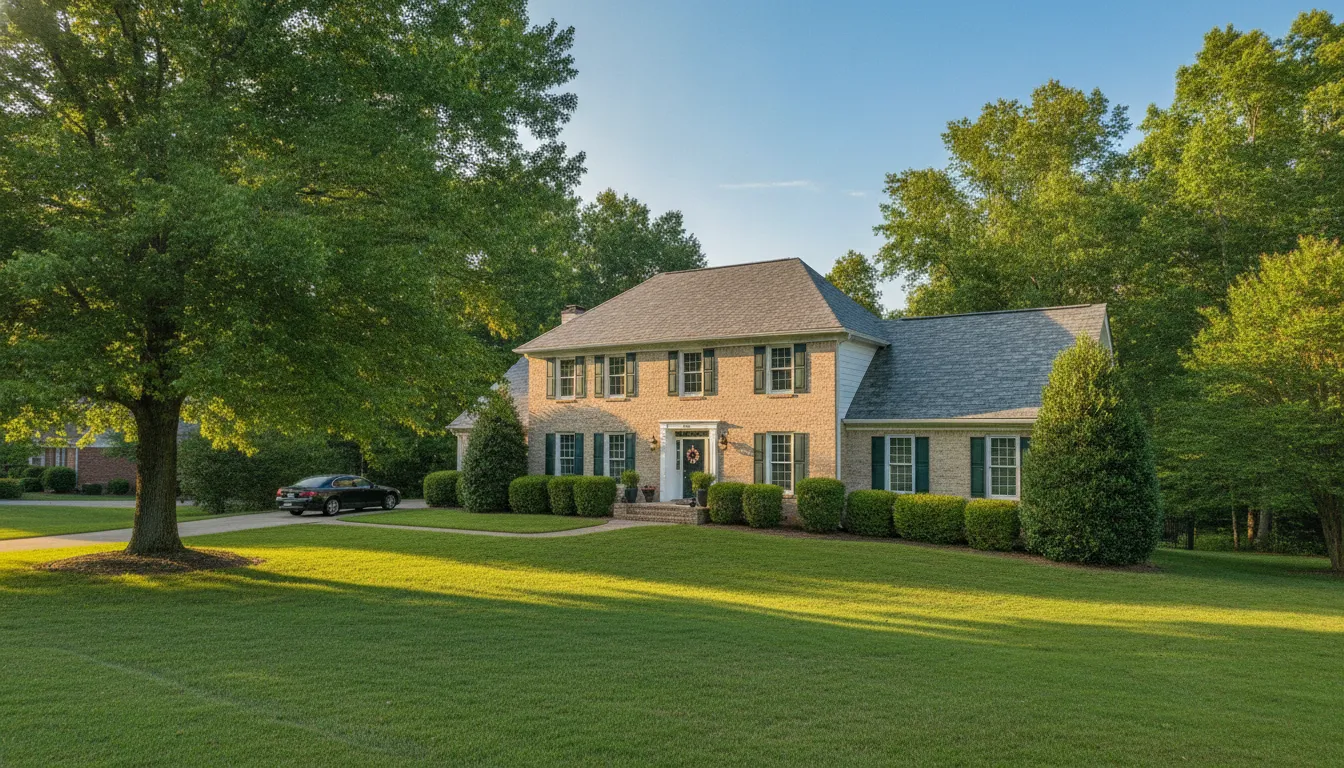
A roof with GAF Camelot II shingles can give an Alpharetta or Milton home a distinctive slate-inspired appearance, but an older installation eventually raises practical questions. Is the same product still available? Can a replacement match the existing profile? Will the HOA approve a new color or material?
For homeowners researching gaf camelot 2 roof replacement georgia, the right next step is a professional inspection that separates repairable wear from end-of-life conditions. Then compares a verified like-for-like option with current upgraded roofing systems. Availability, exact matching, roof complexity, local requirements, and community covenants all affect the recommendation.
Camelot II is more than a decorative shingle. GAF describes it as part of a complete roofing system, with coordinated layers and installation details that matter when planning replacement. Before choosing a color or assuming a direct substitute exists. It helps to understand what the original product was designed to do and how its current status should be confirmed.
What Is the GAF Camelot 2 Shingle, and Is It Still Available?
GAF Camelot II is a premium fiberglass asphalt shingle designed to give a roof the dimensional appearance of slate or wood shakes without using those traditional materials. Its artisan-crafted shapes, oversized tabs. And European-inspired styling make it a popular choice for homeowners who want a more distinctive roof profile than a standard three-tab or architectural shingle. GAF presents Camelot II as a lower-cost alternative to traditional slate or wood shakes, but the final project cost depends on the home and installation requirements.
The shingle is intended to function as part of a complete roofing system, not as a standalone surface layer. That system can include underlayment, starter products, hip and ridge accessories, flashing, ventilation, and properly installed decking. GAF product information identifies DuraGrip Adhesive as part of the shingle design. Standard installations also require at least four nails per shingle. Those details matter when evaluating an older roof or comparing a proposed replacement, because the appearance of the top shingle is only one part of roof performance.
Product specifications homeowners may see
The Camelot II data sheet identifies fiberglass asphalt construction, an approximate shingle size of 17 inches by 34 1/2 inches, a 7.5-inch exposure, and four bundles per square. Listed color options include Antique Slate, Charcoal, Barkwood, Royal Slate, and Weathered Timber. TimberTex or TimberCrest products may be listed for hip and ridge applications, while WeatherBlocker is identified as a starter product. Confirm the current product documentation and accessory requirements before ordering materials.
Some Camelot II packages carry a Class 4 impact-resistance classification under UL 2218. And the data sheet also lists a Class A fire rating, ASTM D7158 Class H, and ASTM D3161 Class F. The Class 4 designation applies only to packages bearing the applicable UL 2218 statement. It should not be treated as a promise that a roof will not be damaged by hail. Similarly, warranty coverage can depend on the specific package, qualifying accessories, installation method, and other manufacturer conditions. For example, GAF states that certain wind coverage requires special installation and GAF Starter Strip shingles.
GAF continues to publish information about Camelot II, but product availability, colors, accessories, and approved installation details can change. That means homeowners should not assume the shingle is discontinued or that an exact one-for-one match is available. Check the current GAF Camelot II product page and have a qualified roofer verify availability and compatibility. If you are comparing alternatives, review the company’s GAF shingle options alongside your HOA requirements, roof condition, and the complete system specification.
Signs Your Camelot 2 Roof Is Ready for Replacement
A Camelot II roof does not need replacement simply because it has reached a certain calendar age. The installation date, previous repairs, attic conditions, exposure to Georgia weather, and the condition of the underlying roof system all matter. If you do not have the original paperwork, look for permit records, closing documents, prior invoices, or clues from the home’s construction and maintenance history.
Visible shingle deterioration
Walk the property from the ground, or have a professional inspect the roof surface. Curling edges, cracked tabs, exposed fiberglass, brittle shingles, and widespread loss of granules are meaningful warning signs. A few isolated damaged shingles may be repairable, but deterioration across multiple roof slopes points to a broader system decision. Granules collecting in gutters can also indicate that the surface is losing protective material, especially when combined with other age or weather-related damage.
Leaks, stains, and damaged roof components
Water stains on ceilings or attic framing, damp insulation, musty odors, and recurring leaks should be investigated promptly. The visible stain may not be directly below the entry point, so interior evidence alone cannot identify the correct repair. An inspection should also examine flashing around walls, chimneys, valleys, skylights, and roof penetrations. Rusted or deteriorated vents and roof jacks may need replacement when they no longer integrate properly with the new covering.
The roof deck is another deciding factor. Georgia reroofing guidance says warped, cracked, or delaminated sheathing should be repaired or replaced, and the deck must provide a rigid surface for a complete tear-off. That is one reason a surface-only patch can be inadequate when water has reached the decking.
Storm damage or repeated repairs
Hail, wind, falling branches, and driven rain can damage Camelot II shingles even when the roof looks acceptable from the driveway. Missing or lifted shingles, bruised surfaces, exposed underlayment, and new leaks after a storm warrant documentation and an inspection. Repeated repairs in the same areas can also signal that a full replacement is more practical, though an inspection should establish the cause rather than assume it.
The right outcome may be a localized repair, partial replacement, or complete replacement. A qualified roofing professional can compare the shingle field with the flashing, ventilation, underlayment, and decking, then explain the options. For homeowners considering roof replacement services in Alpharetta, Milton, or nearby Georgia communities, that evaluation is the starting point for selecting a compatible system without assuming an exact one-to-one match.
Choosing a Compatible or Upgraded Replacement System
A replacement decision should account for appearance, roof design, installation requirements, and the condition of the underlying system. Camelot II has a distinctive slate-like profile, so a similar-looking shingle may be important in an established Alpharetta or Milton neighborhood. However, an exact one-to-one match is not something to assume from photographs or an old product name. Current availability, color, profile, and installation requirements should be confirmed with the manufacturer and an experienced installer.
| Path | What it may provide | What to verify |
|---|---|---|
| Closest visual or design match | A dimensional, slate-inspired appearance that respects the home’s existing character and may align with community design expectations. | Whether a current product matches the original profile, exposure, color, and application details. Confirm availability rather than assuming Camelot II can be sourced. |
| Current architectural asphalt shingle | A widely used asphalt option with updated product specifications and color choices that can suit many Georgia homes. | Roof pitch, ventilation, underlayment, flashing, fastening, and the manufacturer’s current installation instructions. Review GAF shingle options as one starting point. |
| Premium alternative | A higher-end appearance or a different material approach, such as a premium architectural shingle, tile, or metal system, when the home’s design and structure support it. | Weight, structural requirements, maintenance expectations, HOA rules, local approvals, and whether the material is appropriate for the home’s slope and details. |
| Complete roofing-system review | A coordinated replacement that addresses the covering along with the deck, underlayment, starter, ridge components, ventilation, and flashing. | Deck condition, required repairs, code and permit requirements, compatible accessories, and the exact warranty or coverage terms that apply to the selected products and installation. |
GAF describes Camelot II as part of a complete roofing system, with accessories and installation details working together rather than functioning as an isolated shingle. That principle still matters when selecting a replacement. A contractor should inspect the deck and roof edges, confirm fastening and underlayment requirements, and assess ventilation before recommending a system. Product labels, manufacturer documentation, and the completed installation should support any claims about impact ratings, wind performance, fire classification, or warranty eligibility.
For homes governed by an HOA, bring the proposed color, profile, material, and product documentation into the approval process. The most attractive replacement is not useful if it conflicts with current community requirements. Compare options based on fit, documented performance, and installation quality, not on a claimed exact match that has not been verified.
HOA Rules for Camelot 2 Replacements in Alpharetta and Milton
Replacing a Camelot II roof in Alpharetta or Milton is both a construction project and an architectural review issue when your neighborhood has an HOA. Approval is community-specific and never automatic, even if the proposed roof has a similar shape or color to the existing one. Start the review before ordering materials or scheduling tear-off. A Georgia reroofing guide also advises homeowners to contact their HOA before changing roof-covering materials.
- Review the covenants and application rules. Request the current architectural guidelines, not an older copy saved by a previous homeowner. Look for requirements covering shingle type, color families, visible exposure, profile, manufacturer, underlayment, ridge caps, and whether repair or full replacement requires approval. Rules can differ between communities in Alpharetta, Milton, and nearby North Atlanta neighborhoods.
- Confirm approved colors, profiles, and materials. Do not assume that a GAF Camelot II color or a visually similar replacement is permitted. The product data sheet lists options such as Antique Slate, Charcoal, Barkwood, Royal Slate. And Weathered Timber, but your HOA may approve only some colors or may require a different profile. Ask the association to confirm whether the proposed material is currently allowed and whether an exact match is required.
- Request samples and written specifications. Give the HOA a clear package that shows the proposed shingle, color, profile, accessory colors, ridge treatment, and any material changes. Physical samples can look different from online images in Georgia sunlight. If exact Camelot II availability or compatibility is uncertain, have the contractor verify current manufacturer information rather than promising a one-to-one replacement.
- Submit the complete application. Include the contractor’s scope of work, roof plan or photographs if requested, color and material documentation, and the expected installation schedule. Keep a copy of everything submitted and record the date. Wait for written approval before proceeding. An HOA response is separate from local building approval, so one does not replace the other.
- Coordinate permits and inspections. Confirm which party will obtain the required permit and call for inspections. Georgia reroofing guidance notes that a permit allows the building department to inspect for hazards and unsafe construction. And that a final roof inspection must be called by the permit holder. Local requirements may also address sheathing, underlayment, fasteners, and the number of roofing layers.
- Document the completed installation. Save the approval letter, final material details, permit records, inspection results, delivery information, and completion photographs. Ask the contractor to note any approved change made during construction. This file can help with future maintenance, resale questions, or a later HOA review. Homeowners looking for local guidance can also review roofing services in Milton.
What Does a GAF Camelot 2 Roof Replacement Cost in Georgia?
There is no reliable one-size-fits-all price for a GAF Camelot 2 roof replacement in Georgia. A contractor must evaluate the existing roof, measure the actual work area, and account for local requirements before preparing a project-specific quote. GAF identifies roof size, slope, complexity, location, building codes, and permits as important cost variables. You can review the company’s roof replacement services to see how an evaluation fits into the planning process.
What the roof itself requires
Roof size is a primary factor because it affects the quantity of shingles, underlayment, starter materials, hip and ridge products, flashing, fasteners, and labor. Pitch and complexity matter as well. A steep roof, multiple roof planes, dormers, valleys, skylights, or detailed edges can require additional setup, cutting, safety measures, and installation time. GAF explains that pitch and complexity may influence both the materials selected and the cost of the project.
The condition beneath the shingles can change the scope after tear-off begins. Warped, cracked, or delaminated sheathing may need repair or replacement so the new system has a rigid surface. Flashing around walls, chimneys, skylights, and penetrations may also need replacement rather than being covered. A quote should make clear whether it includes tear-off, disposal, decking allowances, underlayment, drip edge, ventilation work, and related accessories.
Georgia conditions and project requirements
Ventilation is another item to inspect, not an automatic add-on. The right approach depends on the attic design, existing intake and exhaust paths, insulation, and current condition of vents. Improving or correcting ventilation can require additional materials and labor.
Access affects the work plan too. Limited driveway space, landscaping, detached structures, steep site conditions, or restricted staging areas can influence delivery, protection, cleanup, and labor. Georgia building codes and permit requirements vary by jurisdiction, and the permit process may include required inspections. Local climate, code compliance, and permit costs are among the variables GAF says can affect a new-roof estimate.
Finally, HOA requirements can affect material selection, color approval, documentation, and scheduling. Communities in Alpharetta, Milton, and elsewhere may have different covenants, so confirm approved profiles and colors before ordering materials. A detailed evaluation should separate known costs from allowances and identify any conditions that could change the final scope.
Why Specialty Expertise Matters for This Replacement
Replacing an older Camelot II roof is not simply a matter of selecting a shingle that looks similar. An experienced roofing professional should first determine whether the roof needs a targeted repair, partial replacement, or full replacement. That decision depends on the condition of the shingles and the components beneath them, not appearance alone.
Look beyond the visible shingles
A proper evaluation should consider the roof deck, underlayment, flashing, valleys, penetrations, drip edge, and ventilation. Georgia reroofing guidance calls for a rigid roof-sheathing surface and says warped, cracked, or delaminated boards should be repaired or replaced between supports. It also addresses underlayment, fastener penetration, and inspection requirements. Those details affect how a new system performs and whether hidden conditions need to be addressed during tear-off.
Ventilation deserves specific attention in Georgia homes. The inspection can identify blocked intake paths, deteriorated vents, or an imbalance between intake and exhaust. A replacement project is an opportunity to review the entire roof assembly instead of covering an unresolved problem with new materials.
Confirm current materials and installation requirements
Product availability, color matching, accessory selection, and installation instructions can change. A contractor should verify current manufacturer information rather than promise an exact one-to-one replacement. Camelot II was installed as part of a complete roofing system, so the conversation should include starter products, hip and ridge components, underlayment, flashing, and fastening methods. Ask which current system is being proposed, why it suits the home’s design, and which manufacturer requirements apply.
All In One Exteriors documents factory training or certifications across GAF, CertainTeed, IB Roof Systems, and Eagle systems. That background can help homeowners compare system options with greater clarity, but it should not replace a project-specific inspection or written scope.
Coordinate local requirements before work begins
Permit requirements and inspection steps depend on the property’s jurisdiction. If the home is in a planned community, contact the HOA before changing roof-covering materials. Confirm approved colors, profiles, materials, application forms, and supporting photographs or samples. HOA review is community-specific and should not be treated as automatic approval.
For a closer look at the planning and workmanship considerations, review All In One Exteriors’ Georgia roofing installation information. A roof evaluation or replacement assessment can then clarify whether repair or replacement is appropriate and identify the system, documentation, and local coordination the project will require.
Frequently Asked Questions
Is GAF Camelot II discontinued?
Availability can change by market, distributor, and color, so do not assume an exact Camelot II replacement is in stock. Ask a roofing professional to confirm current availability and whether the existing profile can be matched. If it cannot, compare a compatible-looking architectural or premium shingle system based on appearance, performance, warranty terms, and the roof’s installation requirements.
Is GAF Camelot II a Class 4 shingle?
GAF’s Camelot II data sheet says the shingle passes the UL 2218 impact-resistance test with a Class 4 rating. That rating applies only to packages bearing the UL 2218 Class 4 statement, so verify the packaging and product documentation for the shingles being quoted. Class 4 is not a promise that a roof will avoid hail damage.
What is the cost of GAF Camelot II shingles per square foot?
There is no reliable single per-square-foot price for a Camelot II replacement. The estimate depends on roof size, pitch, complexity, location, materials, labor, permits, code requirements, tear-off, decking, flashing, and ventilation. Request a written inspection-based quote that separates the shingle system from necessary roof preparation and project work.
What is the average cost of replacing a roof in Georgia?
Georgia roof replacement costs vary too widely for a responsible statewide average to predict an Alpharetta or Milton project. A contractor must evaluate the roof’s dimensions, slope, access, existing layers, deck condition, selected system, local requirements, and any HOA specifications. Compare detailed scopes of work rather than choosing a bid from a generic online average.
Ready to Plan Your Roof Replacement?
An evaluation can help clarify whether your Camelot 2 roof needs repair, partial replacement, or a complete replacement system. All In One Exteriors can review the roof’s condition and discuss options appropriate for your Georgia home, including project factors that may affect the assessment. To request a roof evaluation and replacement assessment, contact All In One Exteriors through the roof replacement page.