
A roof in Georgia often lasts about 15 to 30 years when it is properly installed and maintained. But material, ventilation, storm exposure, and installation quality can move that range significantly. For homeowners in Alpharetta, Marietta, Johns Creek, Milton, and nearby North Georgia communities, age is a useful starting point, not a final diagnosis.
So, how long does a roof last in georgia? Many asphalt shingle roofs serve for roughly 15 to 30 years, while metal and tile systems can last longer. But Georgia heat, humidity, severe weather, and maintenance history all affect the actual service life.
A roof that is nearing the end of its expected life may show curling or missing shingles. Granules in the gutters, recurring leaks, sagging areas, or changes in indoor comfort. Those signs do not automatically mean replacement is necessary. A professional evaluation can help separate localized damage from broader aging and identify ventilation or moisture concerns before they spread. Commercial roofs use different systems and maintenance considerations, so this guide focuses on residential roofing. All In One Exteriors provides residential roofing in Georgia, including climate-suited material selection, inspections, and quality control. The right expectations begin with understanding how each roofing material typically performs in Georgia conditions.
How Long Does a Roof Last in Georgia by Material?
Roofing material is one of the biggest factors in answering how long a roof lasts in Georgia, but a published range is an estimate, not a promise. Sun exposure, humidity, storm damage, ventilation, installation quality, and maintenance can move a roof toward the shorter or longer end of its expected service life.
| Material | Range | Context |
|---|---|---|
| Three-tab asphalt shingles | 15 to 20 years | Often reaches the shorter end when exposed to severe weather or poor ventilation. |
| Architectural asphalt shingles | 20 to 30 years | Heavier and generally more durable than three-tab shingles. |
| Premium asphalt shingles | 25 to 40 years | Actual performance still depends on the complete roof assembly and upkeep. |
| Metal roofing | 40 to 70 years | The cited Georgia range assumes the roof is well installed. |
| Concrete tile | 40 to 50 years | Tile is durable, but the supporting components also need evaluation. |
| Clay tile | 50 to 60 years | Maintenance can support longer service in some cases. |
The asphalt ranges above come from a Georgia roofing source. It reports 15 to 20 years for three-tab shingles, 20 to 30 years for architectural shingles, and 25 to 40 years for premium shingles. Another Georgia source reports 40 to 70 years for well-installed metal roofing and 40 to 50 years for concrete tile. Clay tile is reported at 50 to 60 years, with longer service possible when it is maintained. These figures are useful for planning, but they should not be treated as a guaranteed replacement date.
It is also important to distinguish the life of the visible material from the life of the roof system. A roof system includes more than shingles or tile. It can include structural elements, moisture barriers, insulation, and ventilation. Virginia Cooperative Extension explains that roof-system design should match local weather conditions. A material may still appear serviceable while other parts of the roof system need attention.
For Georgia homeowners comparing materials for a new project, roofing installation in Georgia should begin with the full assembly and the property’s exposure. An inspection can help determine whether age, visible wear, or system conditions are the more urgent concern.
How Georgia’s Heat and Humidity Affects Shingle Life
Georgia weather does not age every asphalt shingle roof at the same rate. A roof in Alpharetta or Marietta may face long periods of heat and strong sun, followed by heavy rain, thunderstorms, wind, hail, or occasional winter temperature swings. The roof’s orientation, shade, ventilation, material, installation, and maintenance all affect how those conditions add up.
Ultraviolet radiation gradually changes the asphalt and exposed surfaces of shingles. Heat can accelerate that weathering, while repeated heating and cooling create thermal cycling that stresses materials and connections. The National Institute of Standards and Technology identifies extreme heat, UV exposure, thermal cycling, wind uplift, and hail impacts as conditions that can affect asphalt shingles during service. Its research also examines combinations of temperature and relative humidity because moisture and heat can work together during aging. NIST’s shingle durability research describes possible changes such as discoloration, altered mechanical properties, and changes to adhesive strips.
Humidity does not automatically mean a roof is failing, but persistent moisture makes good drainage and airflow more important. Poor attic ventilation can allow heat and moisture to remain trapped beneath the roof assembly. That can contribute to an environment where materials age differently from a comparable roof with balanced intake and exhaust ventilation. Ventilation is only one part of the system, however. Moisture barriers, insulation, structural components, and the roof covering must work together. A roof system should be designed for the weather conditions in its local area, not selected from a lifespan chart alone.
Storm exposure can change the timeline
Heavy rain tests flashing, valleys, penetrations, and the shingle surface. Wind can lift or loosen vulnerable shingles, while hail can bruise or fracture them without creating an obvious interior leak. Weather exposure may also reduce a shingle’s ability to resist later mechanical loads. That is why a roof can appear serviceable after a storm yet still deserve a closer assessment.
Installation quality matters from the first day. Correct material selection, fastening, underlayment, flashing, ventilation, and final inspection help the roof shed water as intended. A professional roofing installation in Georgia should account for local climate and the complete roof system. So, when asking how long does a roof last in Georgia, treat the answer as a range, not a promise. Regular observation and timely inspections can identify climate-related wear before it becomes a larger repair.
Signs Your Georgia Roof Is Reaching the End of Its Life
How can you tell when a Georgia roof may be nearing the end of its service life? Look for several warning signs together, including deteriorated shingles, recurring leaks, sagging, granules in the gutters, visible aging, or damage after severe weather. One symptom does not automatically mean the entire roof needs replacement. Material, installation quality, ventilation, maintenance, roof age, and the extent of the damage all affect the diagnosis.
- Curling, cracked, or missing shingles: Shingles that no longer lie flat can allow water beneath the roof covering. Missing sections deserve prompt attention, especially after high winds.
- Recurring leaks or water stains: A ceiling stain may reflect a localized flashing or penetration issue, but repeated leaks can indicate broader deterioration. Do not assume that sealing the visible spot has addressed the source.
- Sagging rooflines: A dip or bow can signal moisture damage or a structural concern. This is not a do-it-yourself inspection item. Keep people away from the area and arrange professional evaluation.
- Granules collecting in gutters: Asphalt shingles shed protective granules as they age. A small amount may occur normally, while a noticeable or increasing buildup is a reason to have the roof assessed.
- Discoloration or an aged appearance: Fading, uneven color, and visible surface wear can reflect prolonged sun and weather exposure. Discoloration alone is not proof of failure, but it adds useful context when combined with other symptoms.
- Storm-related damage: Hail impacts, wind-lifted shingles, fallen limbs, and exposed roof areas can shorten a roof’s remaining service life. After severe weather, request a storm-damage roof inspection rather than climbing up to check it yourself.
Why context matters
These signs are useful for deciding when to ask questions, not for making a replacement decision from the ground. Asphalt shingle roofs are commonly reported to last about 15 to 25 years, but poor ventilation, storm damage, and limited maintenance can reduce longevity. A preliminary inspection is not exhaustive, and potential problems may warrant a detailed professional inspection, as Missouri Extension explains at its home-repair guide.
Never walk on a roof to investigate loose shingles, soft spots, or storm damage. Roofing surfaces can be slippery, and hidden damage may make them unsafe. A qualified professional can evaluate the roof from safe access points, document visible conditions, and explain whether localized repair, monitoring, or broader replacement planning makes sense.
The GAF Camelot 2 Factor: When Specialty Shingles Age Out
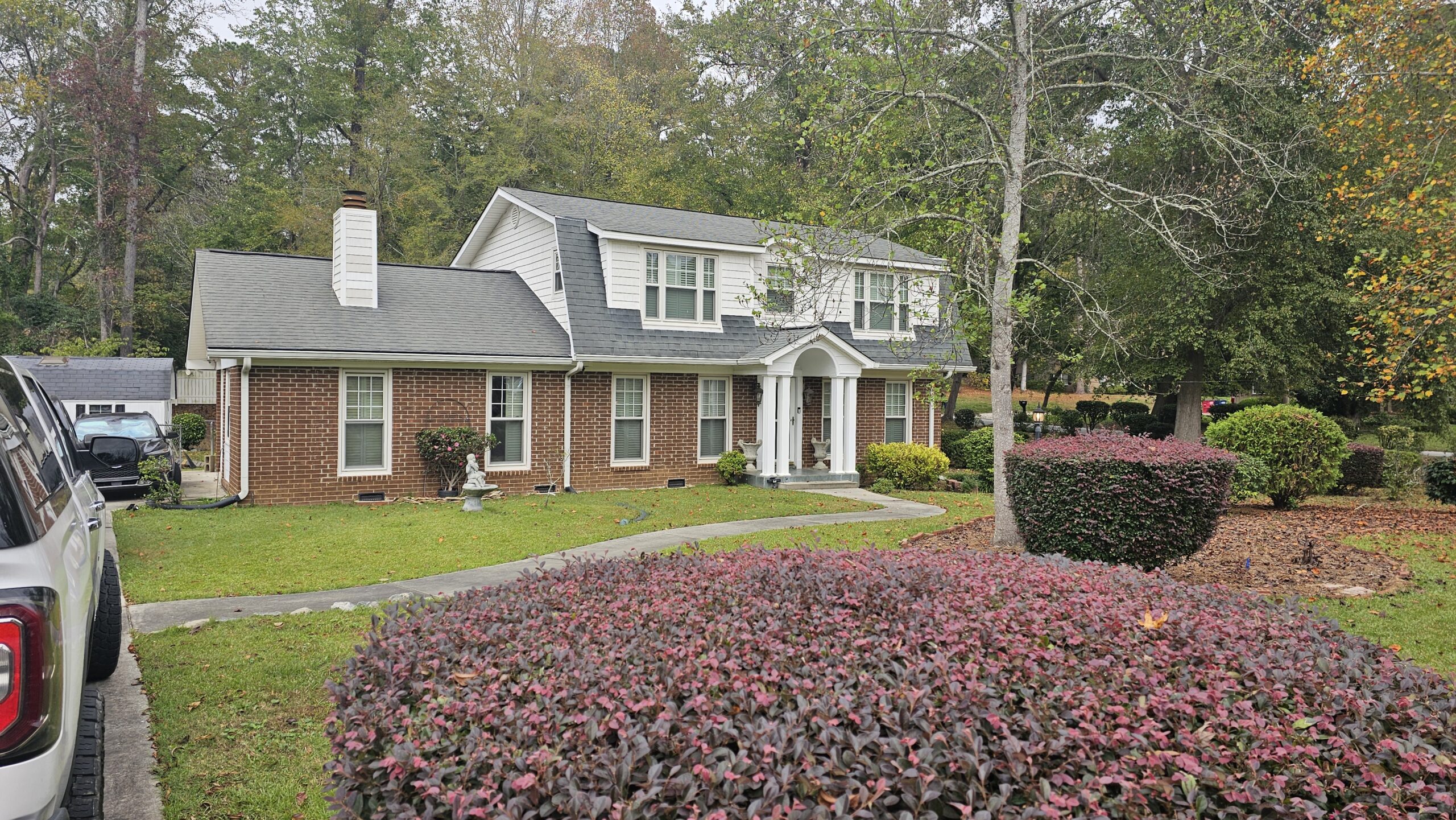
A GAF Camelot 2 label can help identify what is installed on a roof, but it should not be treated as a standalone expiration date. For homeowners asking how long does a roof last in Georgia. The more useful question is how the specific roof has performed in its environment and whether the complete roof system remains sound.
Start by documenting the installation date if it is available. Look for an original invoice, permit records, inspection reports, warranty paperwork, or photographs from the installation. The shingle name, color, and appearance can provide clues, but they may not establish the exact installation year. If ownership changed, prior owners or the roofing contractor may have records that help fill in the gap.
What else affects the roof’s condition?
Age is only one part of the evaluation. A specialty shingle roof can experience different wear depending on sun exposure, heat, humidity, wind, hail, falling limbs, and maintenance history. Attic ventilation and the condition of the underlayment, flashing, deck, and drainage details also matter. A roof that looks acceptable from the ground may still have vulnerable areas around penetrations, valleys, chimneys, or roof edges.
During a visual review, note missing, cracked, lifted, or curling shingles, exposed underlayment, granules collecting in gutters, stains, or signs of interior moisture. Do not walk on the roof to investigate. Shingles can be damaged by foot traffic, and steep or weathered surfaces create a fall hazard.
When the product identity or installation history is uncertain, request a roof evaluation that considers the shingles and the supporting system together. An inspection can help distinguish isolated damage from broader aging and clarify whether monitoring, maintenance, repair, or replacement deserves attention next.
When to Repair vs. When to Replace Your Roof
The right choice depends on more than one missing shingle or a roof’s age on paper. A small, localized problem on a younger roof may be a good candidate for repair, especially when the underlying decking, flashing, and roof structure remain sound. A professional roof repair and leak assessment can help identify whether the visible symptom is isolated or connected to a larger issue.
When repair may make sense
Repair is often considered when damage is limited to one area. Such as a few wind-damaged shingles, a small flashing failure, or a leak with a clearly defined source. The roof’s overall condition matters. If most shingles are still secure, the roofline is straight, and there are no signs of widespread moisture intrusion. Correcting the affected area may be a practical way to extend service life.
Storm damage should be evaluated as its own situation rather than treated like ordinary aging. Wind, hail, and falling branches can create problems that are not obvious from the ground. Avoid walking on the roof after a storm. Look for visible changes from a safe location and arrange an inspection if you notice missing materials, exposed underlayment, new leaks, or damaged vents and flashing.
When replacement deserves serious consideration
Replacement becomes more likely when damage is widespread, leaks occur in multiple areas, or the roof is approaching the end of its expected service life. Repeated repairs can also be a warning that the roof system is deteriorating beyond one fixable spot. Curling or brittle shingles, sagging areas, persistent moisture, and compromised decking may point to problems beneath the surface.
Age alone does not require replacement, and an average lifespan is not a guarantee. Georgia roofs experience heat, humidity, storms, and changing temperatures, while ventilation and installation quality also affect performance. For that reason, a roof that appears old but remains sound may not need immediate replacement. A younger roof with widespread storm or moisture damage may require more extensive work.
An inspection can separate routine wear from storm-related damage and help clarify the next step. If replacement is appropriate, review the scope, material options, ventilation needs, and project requirements through roof replacement planning rather than deciding from a single symptom.
What a Free Roof Inspection Can Tell You
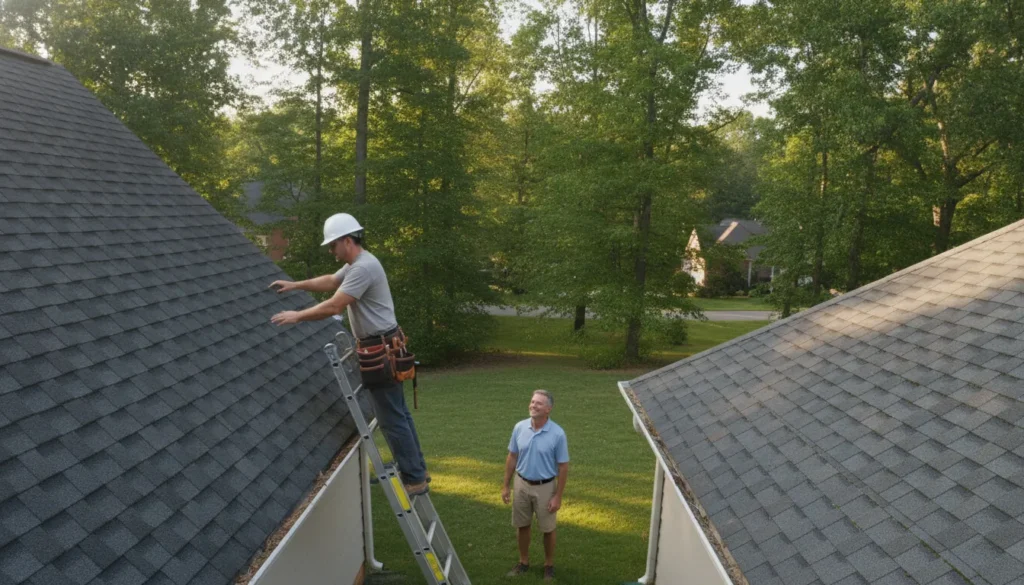
A professional roof inspection is a practical way to replace guesswork with a clearer picture of your roof’s condition. The evaluation can document visible wear, missing or damaged shingles, exposed areas, staining, and signs that water may be reaching the roof assembly. It can also examine flashing around roof-to-wall transitions, chimneys, skylights, vents, and other penetrations, where small failures can lead to leaks.
An inspector may look for clues related to ventilation, such as heat and moisture patterns in the attic or conditions that could contribute to premature material aging. Storm-related concerns receive separate attention. Hail impacts, wind damage, fallen branches, and displaced components may not look the same as routine wear, so the next step depends on what the inspection finds.
The roof should be considered as a system, not just a layer of shingles. Structural elements, moisture barriers, insulation, and ventilation all contribute to how the assembly performs. Material selection and installation should also suit local weather conditions. All In One Exteriors’ roofing installation in Georgia process includes climate-suited material selection, inspections, and quality control.
What the inspection cannot confirm by itself
A free evaluation is a preliminary assessment, not an exhaustive investigation or a guaranteed diagnosis. The University of Missouri Extension explains that a preliminary inspection provides basic repair and maintenance information, while potential problems may warrant a detailed professional inspection. Conditions hidden beneath shingles, decking, insulation, or flashing may require closer examination.
For safety, do not climb onto the roof to investigate. From the ground, note visible changes, ceiling stains, damp areas, or active leaks, then share those observations with the inspector. A thorough roof repair and leak assessment can help identify underlying issues and clarify whether localized work, monitoring, or broader planning makes sense.
For homeowners in Alpharetta, Marietta, Johns Creek, Milton, and nearby metro Atlanta or North Georgia communities, the useful outcome is a documented set of options. That may include maintenance, repair, storm-related follow-up, or a replacement discussion, based on the roof’s actual condition rather than age alone.
Frequently Asked Questions
How long does a roof typically last in Georgia?
Roof life depends on the material, installation, ventilation, maintenance, and weather exposure. In Georgia, three-tab asphalt shingles are commonly reported at about 15 to 20 years. Architectural shingles may last about 20 to 30 years, and premium asphalt products about 25 to 40 years. Well-installed metal roofing is often reported at roughly 40 to 70 years. These are planning ranges, not guarantees, and a roof exposed to repeated storms or moisture problems may need attention sooner. Georgia roofing lifespan estimates provide additional material comparisons.
What affects roof lifespan in Georgia?
Heat, ultraviolet exposure, humidity, heavy rain, wind, hail, and temperature changes can all accelerate roof aging. Research from the National Institute of Standards and Technology identifies heat, thermal cycling, UV exposure, humidity, wind uplift, and hail as factors that affect asphalt shingle performance. Ventilation and installation quality also matter because a roof is a system, not just a visible layer of shingles. Regular inspections can help identify ventilation, flashing, moisture, or storm-related problems before they become more extensive.
How can I tell whether my roof needs repair or replacement?
Localized damage on a relatively young roof with a sound underlying structure may be appropriate for repair. Widespread damage, multiple leaks, sagging, recurring problems, or a roof that is near the end of its expected service range may point toward replacement. Curling or missing shingles, granules collecting in gutters, and visible water intrusion deserve prompt evaluation. A professional inspection is more reliable than judging the decision from one symptom or from roof age alone.
Should I replace my roof after a storm?
Not necessarily. Storm damage should be evaluated separately from ordinary aging, and the appropriate response depends on what the inspection finds. Wind may loosen or remove shingles, while hail can damage surfaces without being obvious from the ground. Avoid walking on the roof, especially after severe weather, and arrange a roof inspection if you notice leaks, missing materials, dents, or debris impact. An inspection can distinguish localized storm damage from broader wear and help define the next step.
How often should a Georgia roof be inspected?
An inspection is especially useful when a roof is aging, after a significant storm. Or when you see warning signs such as leaks, a sagging line, or deteriorating shingles. A preliminary inspection is not exhaustive, so suspected problems may require a more detailed professional assessment. During an evaluation, ask about the roof covering, flashing, ventilation, moisture evidence, visible structural concerns, and recommended maintenance. Homeowners in Alpharetta, Marietta, and nearby North Georgia communities can use those findings to plan repair, replacement, or continued monitoring.
Ready to Check Your Georgia Roof?
If your roof is showing warning signs, nearing the end of its expected service life. Or you are unsure what recent weather may have changed, an inspection can help clarify the next step. All In One Exteriors can evaluate your Georgia home and discuss whether repair, maintenance, or replacement makes sense for the roof’s current condition. Schedule a free roof inspection or project evaluation by calling All In One Exteriors at (404) 445-8136. You can ask questions about visible concerns and get a practical starting point without assuming that replacement is necessary.